

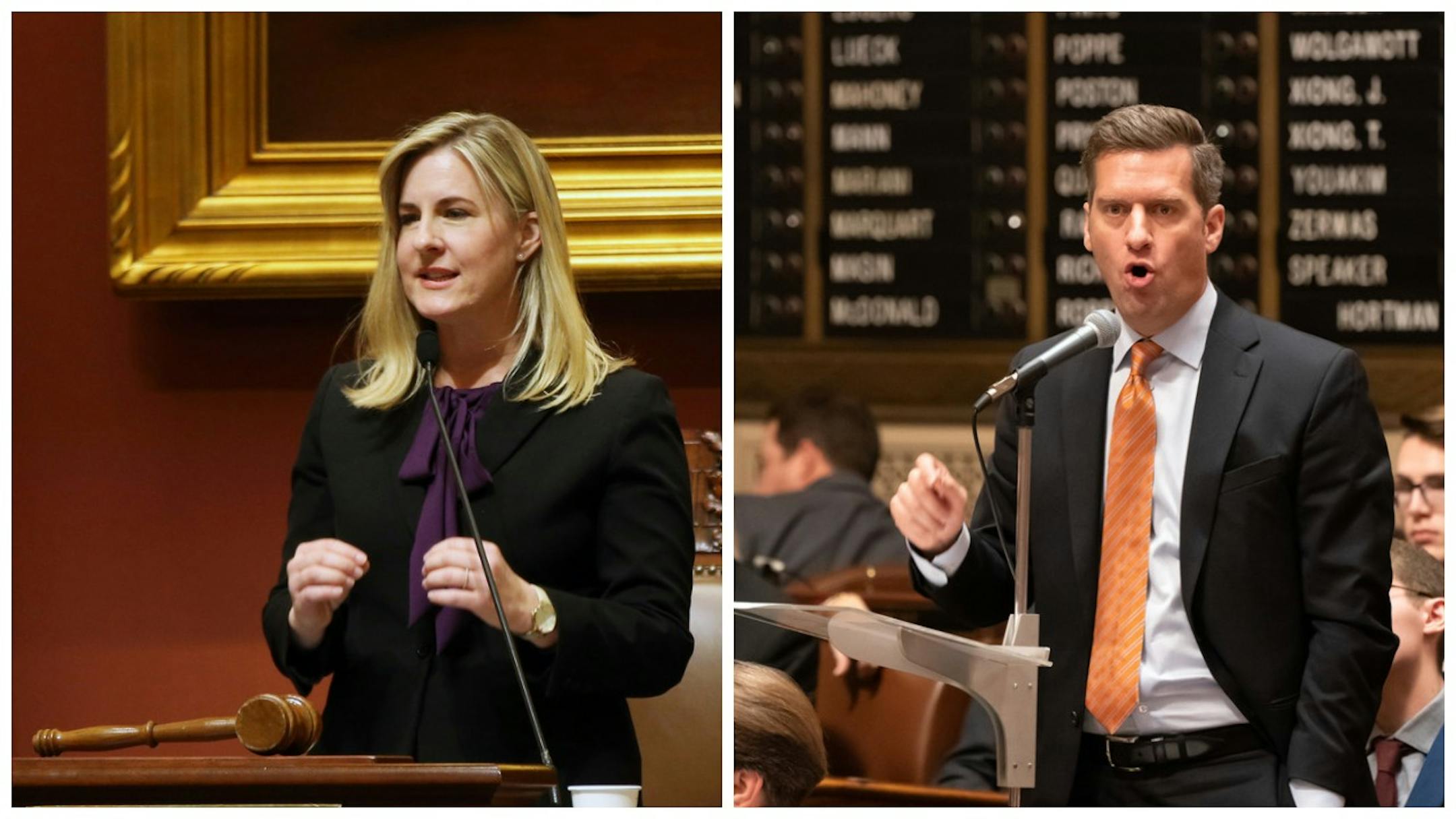
Minnesota House Democrats approved late Thursday a sweeping health and human services budget that would reshape the state's insurance and prescription drug markets, setting the stage for an end-of-session clash with Senate Republicans over the future of health care in Minnesota.
The House majority's spending proposal, which would funnel $15 billion to health and human services programs over two years, is a vehicle for some of the biggest policy debates looming over the nation's only divided Legislature. It includes a proposal from Democratic Gov. Tim Walz to allow all Minnesotans to buy into a public option on the state insurance marketplace and ends a private insurer subsidy program that lowered premiums on the individual market, replacing it with direct consumer discounts. A 2% tax on providers set to sunset later this year would be extended to pay for key health programs.
"We're working to provide affordable and accessible health care to all Minnesotans, and Minnesotans know health care isn't free," Speaker Melissa Hortman, D-Brooklyn Park, said. "And so we have to pay for it. Our budget honestly pays for what we're doing."
The DFL plan, which passed after a full day of debate, faces stiff opposition from Senate Republicans, whose support will be needed to reach a final budget deal. Republicans in both chambers criticized Democrats' spending as excessive and argued that the proposal will raise costs for Minnesotans.
"We think this bill falls woefully short of what we could and should be doing to take care of Minnesotans in this state given our financial position," said Rep. Kurt Daudt, the GOP leader in the lower chamber. "Frankly, we think this should go back to the drawing board and start over."
In addition to the funding and tax mandates, the 1,043-page bill is peppered with contentious policy changes. The DFL plan would raise the minimum age for buying cigarettes to 21, establish new rules for for-profit health plans and guarantee insurance coverage for birth control.
It seeks to tackle rising drug costs by banning "unconscionable" increases for essential prescriptions, leveraging the state's purchasing power to negotiate for lower prices and allowing people with diabetes to access emergency insulin if they can't afford the medicine. Supporters of those proposals, which face staunch opposition from the pharmaceutical industry, rallied outside the House chamber Wednesday, distributing empty pill bottles with messages to lawmakers.
"We are here today begging for our lives," said Nicole Smith-Holt, a Richfield resident whose son Alec died at 26 after rationing insulin he could no longer afford. "We need action. We need affordable prescription medications. Without it, we die."


