

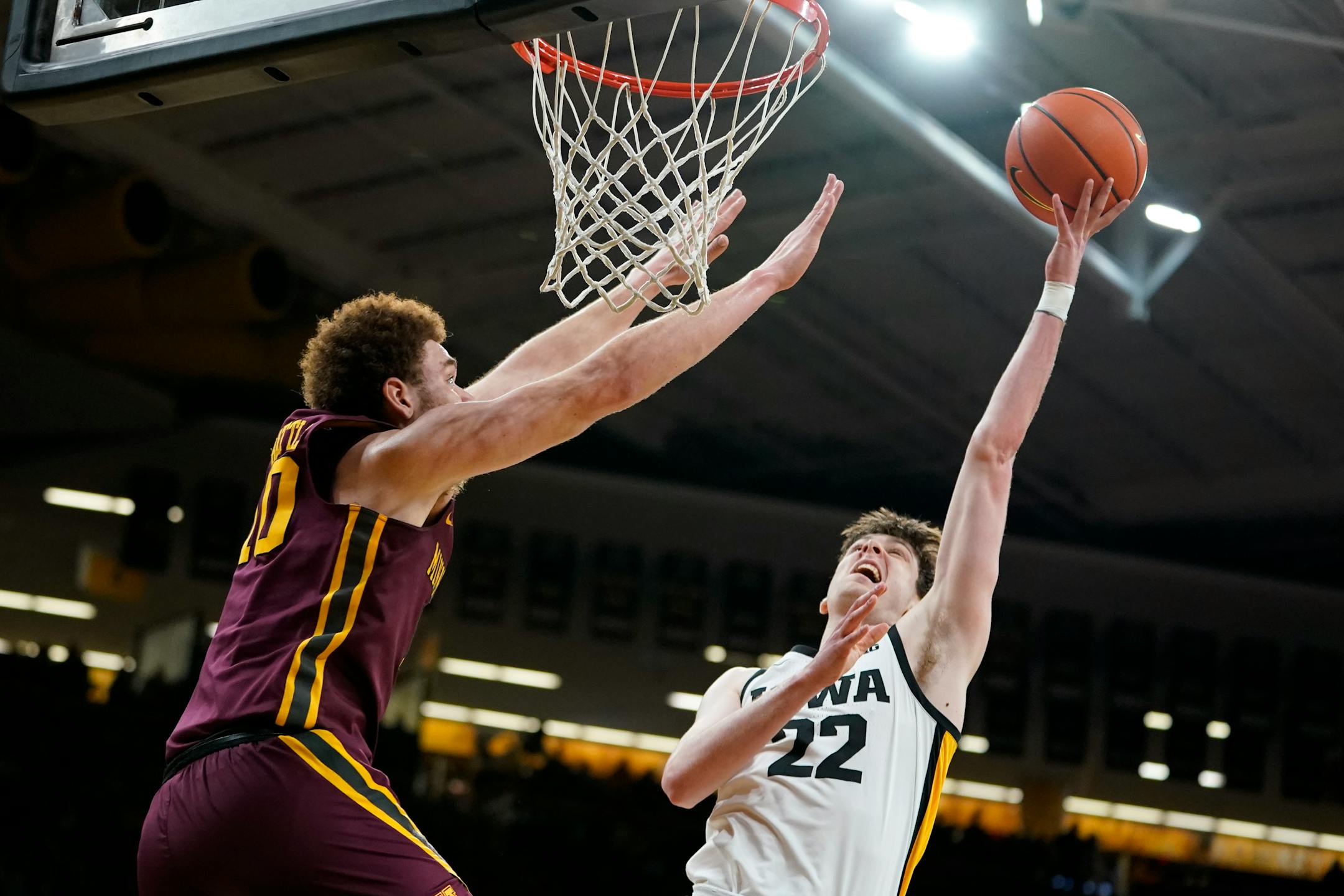
Gophers forward Jamison Battle had empathy for Patrick McCaffery when he saw that his former AAU teammate was taking a leave of absence last month from the Iowa men's basketball team.
McCaffery, the son of Hawkeyes coach Fran McCaffery, needed time to deal with anxiety that affected his performance on the court. Like many college athletes, Battle understands that mental health is something many of them need help to maintain during the season.
"Patrick had a lot of stuff going on, and taking a step back from basketball was huge for him," Battle said. "Shoutout to him for doing that because in the end, you have to make sure you're OK before anything."
Nearly a month later, McCaffery returned to the Hawkeyes, contributing to three wins in the last four games entering Sunday's game at Williams Arena. The Gophers (7-15, 1-11 Big Ten) are back from a COVID-19 pause.
How athletes handle mental health has become more public in some cases recently. Battle's ex-DeLaSalle teammate Tyrell Terry, a former Stanford and NBA guard, announced on social media in December that he was quitting professional basketball because of anxiety. Terry is 22 years old.
Five years ago, former Timberwolves star Kevin Love chronicled his decades-long battle with anxiety and depression in a Players' Tribune essay. Before that, former Hopkins standout Royce White went on a mission to raise awareness about the anxiety disorder that derailed his NBA career after he starred at Iowa State.
"That's something a lot of people don't really know because athletes are put on such a pedestal," Battle said. "People don't always look at what the mental health factors are."
More than 60% of students met at least one criterion for a mental health problem during the 2020-21 school year, according to a Healthy Minds Network study of close to 400 colleges and universities.


