
Minnesota farmers welcome certainty, substance of farm bill

Reshaped policies end subsidies, enhance insurance, cut food stamps.

January 31, 2014 at 3:56PM
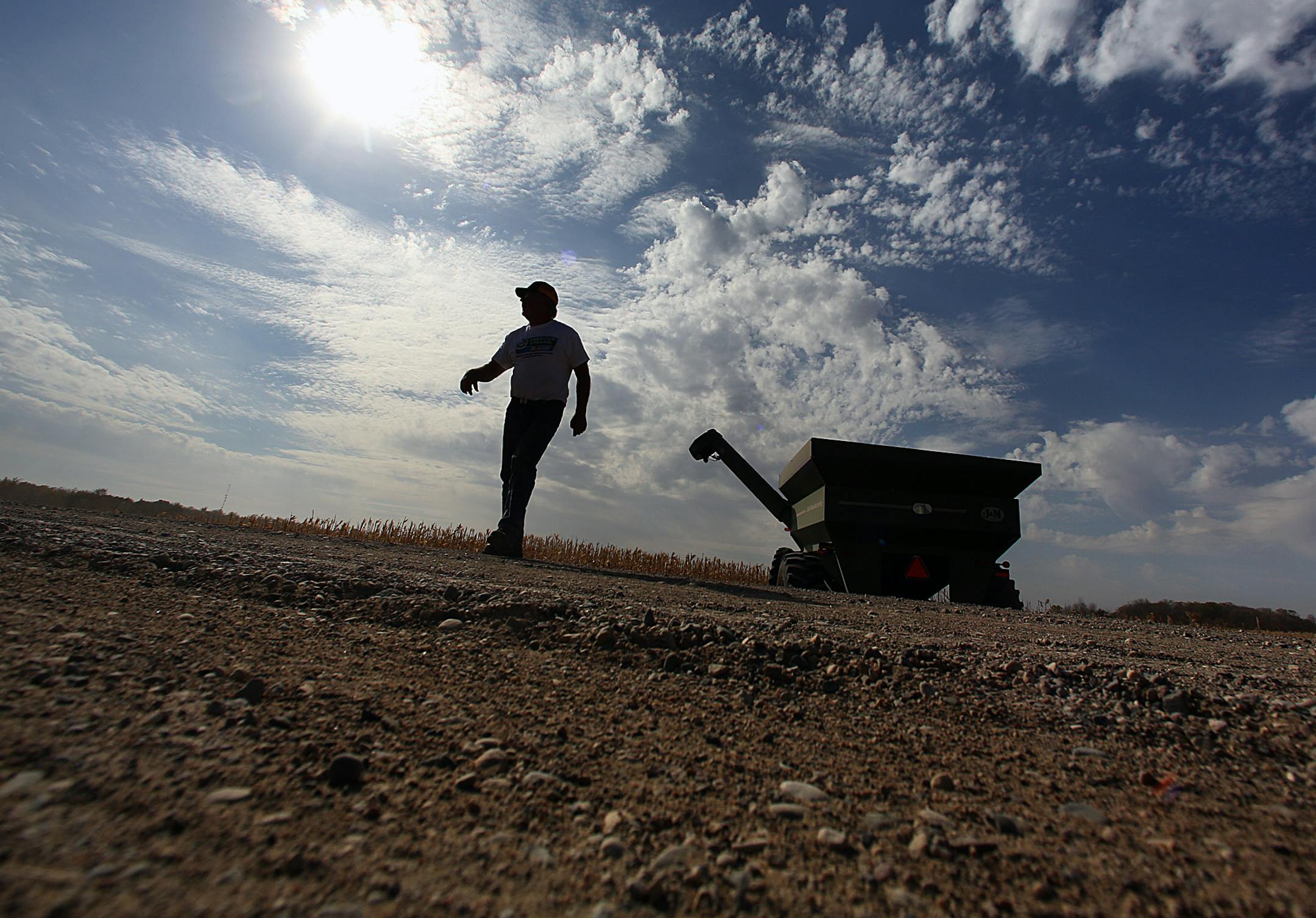
Tom Haag checked on equipment used to haul corn after he had emptied a wagon load of the grain into a semi trialer.
Tom Haag checked on equipment used to haul corn after he had emptied a wagon load of the grain into a semi trialer. (Star Tribune/The Minnesota Star Tribune)

WASHINGTON -- Minnesota's 80,000 farms finally got a clear view of the help they can expect from the federal government in coming years with Wednesday's House passage of a new set of agricultural policies.

The 949-page farm bill, which is expected to win quick approval in the Senate, replaces direct subsidies with enhanced crop insurance and new price protections. It preserves land conservation programs as well as sugar beet price guarantees that benefit Minnesota's many growers.

The bill was due to pass in 2012, and in fact twice cleared the Senate, but it languished in the House amid partisan battles over its food stamp provisions. Republicans who control the House wanted more cuts, Democrats wanted fewer.

Kelly Erickson, who grows corn, wheat, soybeans and sugar beets on 4,000 acres in Minnesota's Red River Valley, greeted news of the bill's passage with more relief than celebration. "It has been hard to get anything done in Washington," Erickson said. "Farmers need to know [policies] two or three years in advance in order to make investment decisions."

The 251-166 House vote saw a majority of Republicans voting for the bill and a majority of Democrats against it. A bipartisan group of four Democratic and two Republican representatives from Minnesota voted for the bill.

Minnesota Rep. Collin Peterson, the ranking Democrat on the House Agriculture Committee and one of the architects of the bill that came through a Senate-House conference committee, called the legislation "what is needed to actually get things done."

Kevin Paap, a Blue Earth County corn and soybean farmer who serves as president of the Minnesota Farm Bureau, called the bill "a landmark rewrite of farm policy."

For farmers used to collecting direct payments from the government based on past plantings, the new law offers a change in focus. Direct payments have long been unpopular, while crop insurance and programs triggered by falling commodity prices are more politically palatable.
"It's important for us to move forward and look at the farm bill as risk management," said Lance Peterson, a soybean, corn and wheat farmer near Fergus Falls and a director of Minnesota's soybean trade group.

The bill also extends financial assistance including low-interest loans to livestock farmers in case of weather-related crises like herd-decimating blizzards.

"It can benefit us in time of disasters," said rancher Dar Geiss, president of the Minnesota State Cattlemen's Association. "Normally, livestock people have less benefits coming from the farm bill than the grain sector."

The nation's sugar program, which guarantees prices, limits imports and allows sugar producers to repay government loans with sugar if prices fall below established limits, survived unscathed after millions of dollars in lobbying and political contributions by the sugar producers.

Minnesota is the nation's largest sugar beet producer, and much of the money spent to lobby for the sugar program came from Moorhead-based American Crystal Sugar.

Critics of the farm bill say too much of the savings from eliminating direct crop subsidies has been plowed back into overly generous crop insurance and price protection programs that taxpayers help underwrite.

"These new subsidies are worse for taxpayers and the environment than the subsidies they are replacing," the Environmental Working Group charged. The farm bill also adds "to the already bloated crop insurance program."

But the costs and benefits of the farm bill are in the eye of the beholder. "From a taxpayer viewpoint, I accept the argument that this is too much subsidy [to farmers]," said Kent Olson, a professor of applied economics at the University of Minnesota and Extension economist. "But from an agriculture viewpoint, this is really a good set of rules."

Other provisions of the bill offer a new dairy supply protection plan, cut food stamps by changing qualification standards and include money for research and to give young people an incentive to farm.

In the end, a clear majority of representatives compromised on a net $8 billion cut over 10 years in the Supplemental Nutrition Assistance Program, or food stamps. Replacing the old subsidies with a less-expensive safety net adds up to roughly $9 billion in savings over 10 years.

The food stamp savings will be realized by closing a loophole used in some states — but not Minnesota — to qualify residents for food stamps. People who received as little as $1 from the federal Low Income Home Energy Assistance Program were deemed eligible for nutrition assistance.

Democrats Rick Nolan and Betty McCollum joined Republicans Erik Paulsen and John Kline in voting for approval.

The state's dissenters came from the left — Fifth District Rep. Keith Ellison, a Democrat — and the right — Sixth District Rep. Michele Bachmann, a Republican. Each mentioned food stamps in explaining their votes.

Bachmann said nutrition, which makes up $756 billion of the farm bill's $956 billion price tag, should be separated from agricultural programs. Ellison said cuts to food stamps were too severe when wealthy farmers were allowed to benefit from crop insurance and price protection.

"This bill is not perfect," Rep. Tim Walz, the Democrat who represents Minnesota's First Congressional District, said on the floor of the House. "Someone said you get perfect in heaven. Sometimes this place can be hell."

Jim Spencer • 202-383-6123


Sept. 18, 2013: Dan Erickson, regional representative for the Minnesota Corn Growers Association examined his corn crop at his Alden farm.
Sept. 18, 2013: Dan Erickson, regional representative for the Minnesota Corn Growers Association examined his corn crop at his Alden farm. (Star Tribune/The Minnesota Star Tribune)
Tom Haag shoveled what remains of last seasons crop. This storage bin will soon be filled with the coming harvest. Tom Haag, president of the Minnesota Corn Growers Association travelled to China with Governor Dayton last year and expects Chinese imports of U.S. grain to increase as more Chinese gain a higher standard of living. Thursday, August 15, 2013 ] GLEN STUBBE * gstubbe@startribune.com ORG XMIT: MIN1308151504413056
Tom Haag, president of the Minnesota Corn Growers Association, made room in a storage bin for the coming harvest last year. (The Minnesota Star Tribune)
about the writers

about the writers

Jim Spencer

Washington Correspondent

Washington correspondent Jim Spencer examines the impact of federal politics and policy on Minnesota businesses, especially the medical technology, food distribution, farming, manufacturing, retail and health insurance industries.  

See Moreicon

Mike Hughlett

Reporter

Mike Hughlett covers energy and other topics for the Minnesota Star Tribune, where he has worked since 2010. Before that he was a reporter at newspapers in Chicago, St. Paul, New Orleans and Duluth.

See Moreicon

More from Business

See More
card image
Fairview Health Services

The school is changing an elective course while still working with the Eden Prairie-based health care giant after students raised concerns.

This transmission electron microscope image shows SARS-CoV-2, the virus that causes COVID-19, isolated from a patient in the U.S., emerging from the surface of cells cultured in the lab. (NIAID/TNS) ORG XMIT: 1659810
card image