

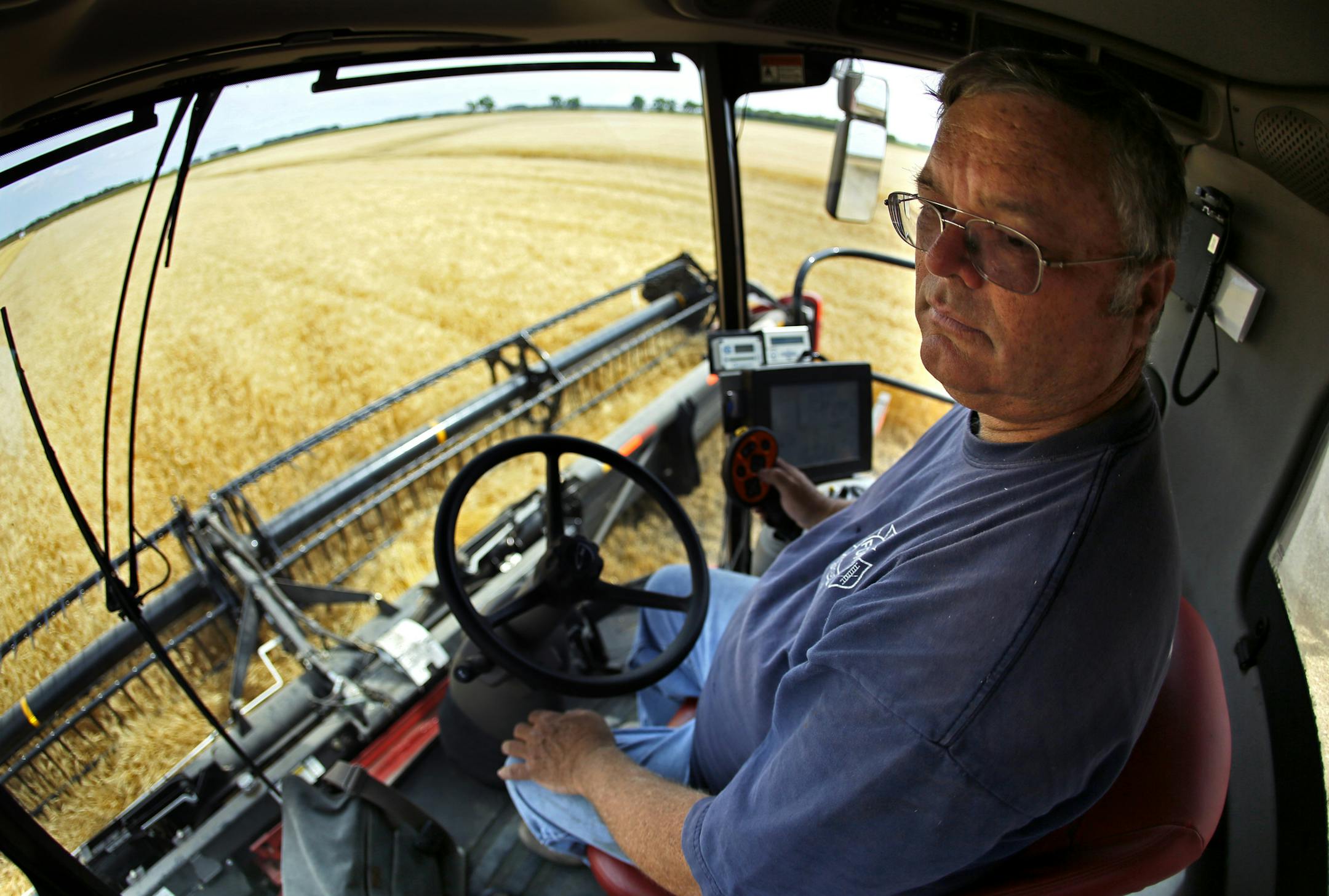
WOLVERTON, Minn. – Jay Nord surveyed his wheat field from the seat of a combine as he mowed down this year's crop.
The impressive machine is a new Case IH with 60 percent more horsepower than his old combine and the ability to harvest one-third more grain with each pass.
Of course, if he grew only wheat, he wouldn't be driving it.
The big money to reinvest in new equipment for Nord's Red River Valley farm comes from his soybean and cornfields. Wheat makes up a shrinking percentage of his production — and it's a similar story at farms throughout the state.
Once the lifeblood of Minneapolis, the nation's onetime flour milling capital, wheat's presence has been fading. Minnesota's wheat acreage in 2012 was 60 percent less than it was during the grain's heyday in the late 1970s and early 1980s.
"King wheat," as it was known in Minnesota long ago, simply isn't as good an investment as corn and soybeans. Prices for those crops have been robust in recent years. Both are easier to grow than wheat, partly because of genetic engineering, and they tend to bring better yields.
"When I was in high school, wheat was a big deal," said Nord, 55. He recalls hoping for early August harvests: "We wanted to get it out of the way before football practice started."
While there's still plenty of wheat worldwide, the decline in traditional growing regions has repercussions for the supply chain.
![Wheat acreage has been continually declining for years, as more farmers plant corn and soybeans. The latter, particularly corn, offer better investment returns, and yield growth in corn and beans has far outpaced that of wheat. Plus, corn and beans use GMO seeds, which cut down on farmers' work and labor costs, and can increase yields. In the world of wheat, GMO is forbidden. Here Jay Nord harvests wheat from an 80 acre plot near Wolverton, MN. ] BRIAN PETERSON • brianp@startr](https://arc.stimg.co/startribunemedia/RHNPWMLRY36SQNT5ARCWMUATTI.jpg?&w=1080)



