

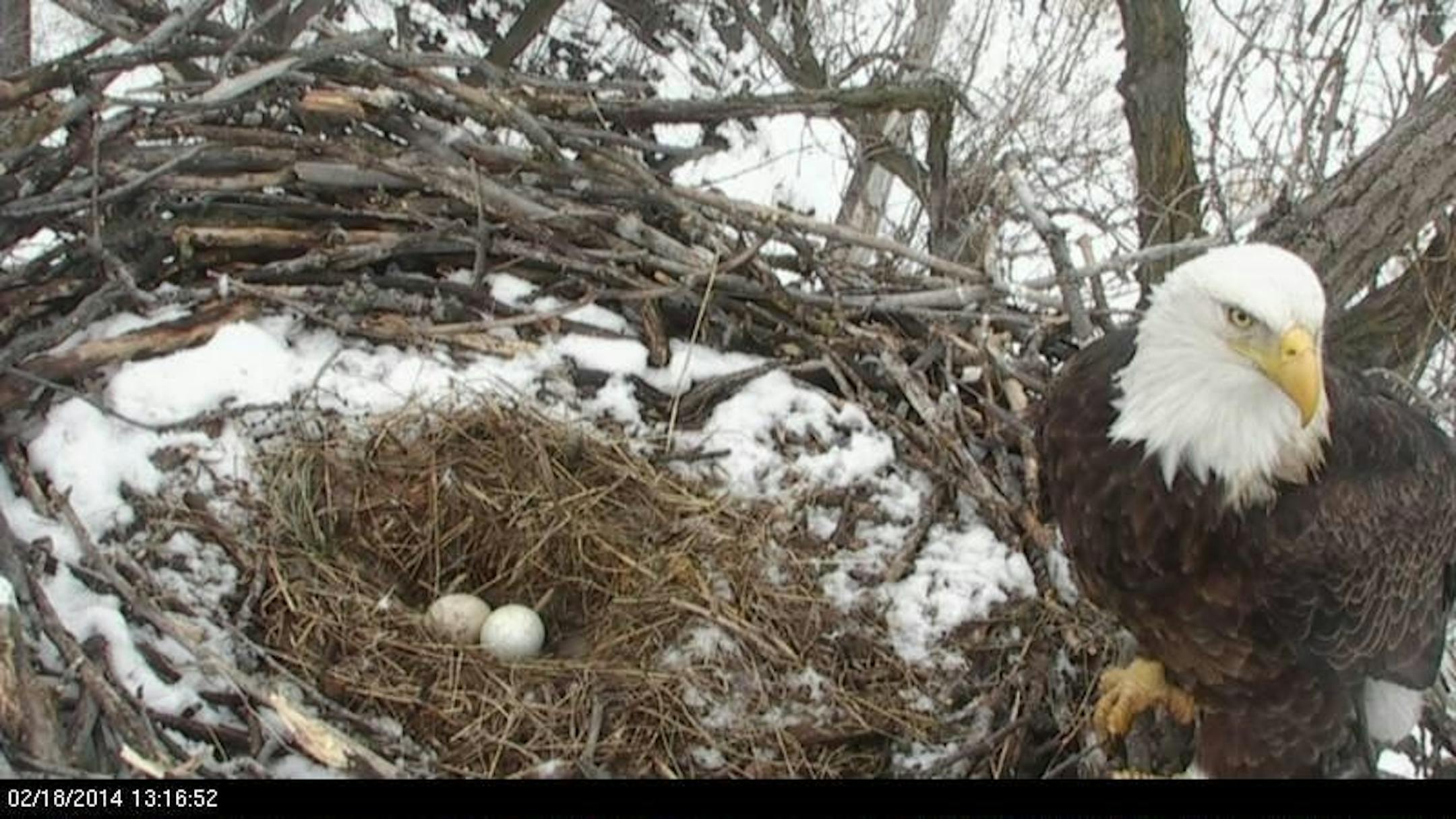
There was a situation with some bald eagles on the Internet the other day. The drama played out in a large, disheveled nest somewhere in Minnesota, in front of a camera that had been streaming the lives of those birds onto the Internet for the last two years.
Maybe you were watching. Or maybe you'd clicked over to one of the hundreds of other cameras set up around the world to funnel the real-time activities of various wild animals online: polar bears, hummingbirds, sea lions, wolves, jellyfish, whooping cranes, wood ducks. These wildlife cams aren't delivering the kind of cheeky, viral animal video that the Internet is famous for - the tiny hamsters eating tiny burritos; Buttermilk the goat jumping over other goats - but a weird genre of non-narrated, unedited nature documentary that demands a lot more of its audience. All they offer is a sustained stream of animals doing whatever they happen to be doing, which, let's be honest, often doesn't look like that much. Bison stand around in Saskatchewan. A beaver sleeps in its dam. Every blip of action - every swipe a grizzly takes at a salmon in Alaska - tends to be offset by hours of moping and loafing. Often, you click on one of these cameras and there aren't even any animals standing in the shot.
We spend our days racing around an Internet of BuzzFeed quizzes and Upworthy headlines and umbrage and porn - this churning, digital machine, increasingly optimized to dole out quick bursts of dopamine and wring all the clicks from our fingers. And still, loads of us also apparently like to keep a bunch of puffins open in another browser tab, just doing their thing. Last year, people spent more than a million hours watching the Audubon Society's three seabird cameras alone. The Decorah eagle cam - set up at a bald eagle nest in Iowa in 2007, and generally credited, like a kind of avian "Sopranos," with giving birth to this entirely new genre of slow-paced, binge-watched prestige drama - gets about a hundred million views a year.
Watching a wildlife cam dials down the loneliness of office life, maybe. Or it fills those last, hauntingly quiet hours before the kids come home from school. Or it's a way to Zen out. Or it's voyeurism. I'm not sure; until recently, I'd never given the appeal of these things much thought. All I know is, as I type this, I am, according to the counter at the bottom of the screen, one of 556,749 global Internet users watching a family of great horned owls sit in a tree in Texas. All the owls are asleep.
In any case, the bald eagle incident in Minnesota started like this: One Thursday night in early May, people watching the "EagleCam" run by the Nongame Wildlife Program of the state's Department of Natural Resources noticed that one of the three eagle chicks in the nest was immobile. It appeared to be suffering. Bald eagle chicks are endearing, but not, in any traditional sense, cute: Their unwieldy, disproportionate wings and legs wind up contorting into all kinds of crazy tangles when they lie around the nest. (Go online and look for yourself, but to my eye, they look like coils of uncooked sausage coated in dryer lint.) The EagleCam audience had grown intensely attached to these young birds, though; after all, many had been following them since their eggs were laid back in February. The Nongame Wildlife Program makes a point of not naming the birds. But on Facebook, fans had taken to calling the chicks "Snap," "Crackle" and "Pop." Snap was the one having trouble. The little bird couldn't get up to eat. Clearly, it wouldn't survive much longer.
By the next morning, the Nongame Wildlife Program was bombarded by emails, phone calls and notes on social media, pleading with it to step in and get Snap some medical attention. Many people speculated - or at least hoped - that Snap was merely stuck in the muddy floor of the nest, and would need only a little jiggle to get free. (There was a good basis for this theory: Apparently, some EagleCam viewers also watch another bald eagle cam, set up elsewhere in Minnesota, and two years ago a chick there named Harmon had a similar problem.)
The Nongame Wildlife Program, however, had a policy to let nature play out and not intervene; it doesn't want to compromise the essential eagleness of the eagles on its EagleCam. In an informational video about the EagleCam that the agency produced, a public relations specialist, Lori Naumann, addresses this exact situation hypothetically: "We're not going to turn the camera off," she says. "We're not going to climb in the nest to try and save any chicks." The agency had posted the video the previous day, only hours before anyone noticed Snap struggling.
The public outcry, Naumann later told me, was "getting more hostile as the day went on." It became hard to ignore. At one point that Friday afternoon, she found herself on the phone with a woman who simply couldn't accept the agency's refusal to help Snap. "She was crying and crying and could not be consoled," Naumann said.


