

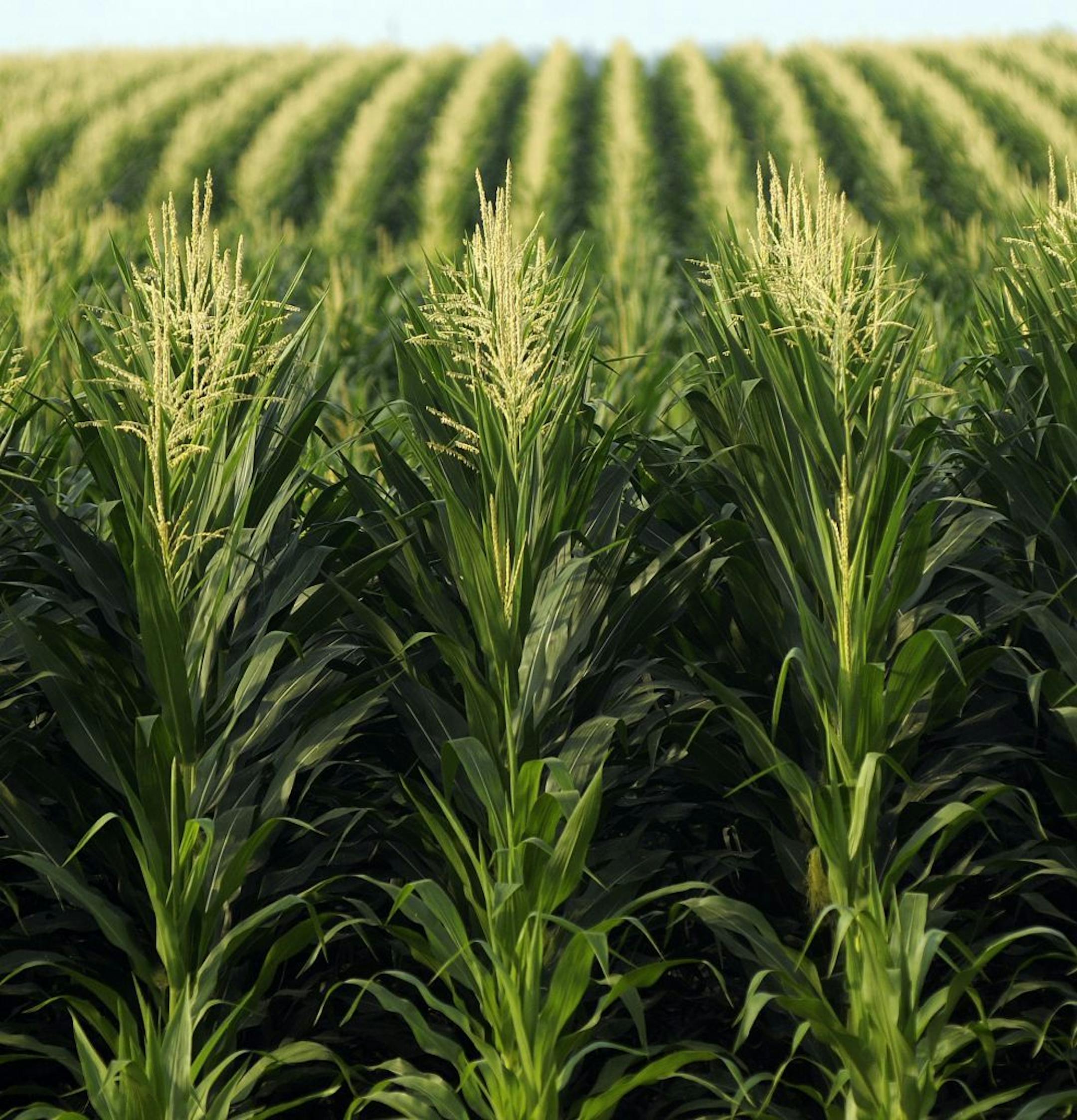
Minnesota crops are still running behind schedule due to a cold, sodden spring, but warm weather the past couple of weeks has picked up the grain growth pace.
Planting delays of two weeks or so afflicted farmers across the state and nation this spring. Indeed, only 18 percent of the main U.S. corn crop is experiencing silking now, compared with a five-year average of 35 percent in mid-July, according to data released Monday by the U.S. Department of Agriculture.
Silking, a crucial reproductive stage, is well behind in Minnesota, too. "We're not quite to tasseling, and normally we would be," said Liz Stahl, a crop educator for University of Minnesota Extension in the state's southwest. Tasseling occurs just before silking.
Still, Minnesota's corn crop grew a healthy 14 inches over the week ending July 14, standing at 44 inches tall, according to USDA data. That's below the 59-inch average height at this time during the past five years. But this week, Minnesota corn was at 75 percent of its five-year average height, up from 65 percent a week ago.
"With the warmer temperatures, we are seeing the crops looking better," Stahl said. "Things have greened up."
Minnesota is one of the nation's larger corn producers, and corn is the state's biggest crop. Soybeans are number two. So far, the state's soybeans are 12 inches high, 50 percent taller than a week ago, though still below the five-year average of 16 inches.
Spring wheat, Minnesota's third-largest crop, looks to have made up for the late planting. By the week ending July 14, 87 percent of the spring wheat crop had "headed" — a key step in grain formation — compared with a five-year average of 85 percent.
"If we're close to that five-year average, we are caught up," said Dave Torgerson, head of the Minnesota Association of Wheat Growers. "The crop is looking better than we had expected."



