
Minnesota Chippewa plan their own environmental survey of Enbridge's Line 3 proposal

First of five public hearings begins next week.

October 14, 2017 at 2:08AM
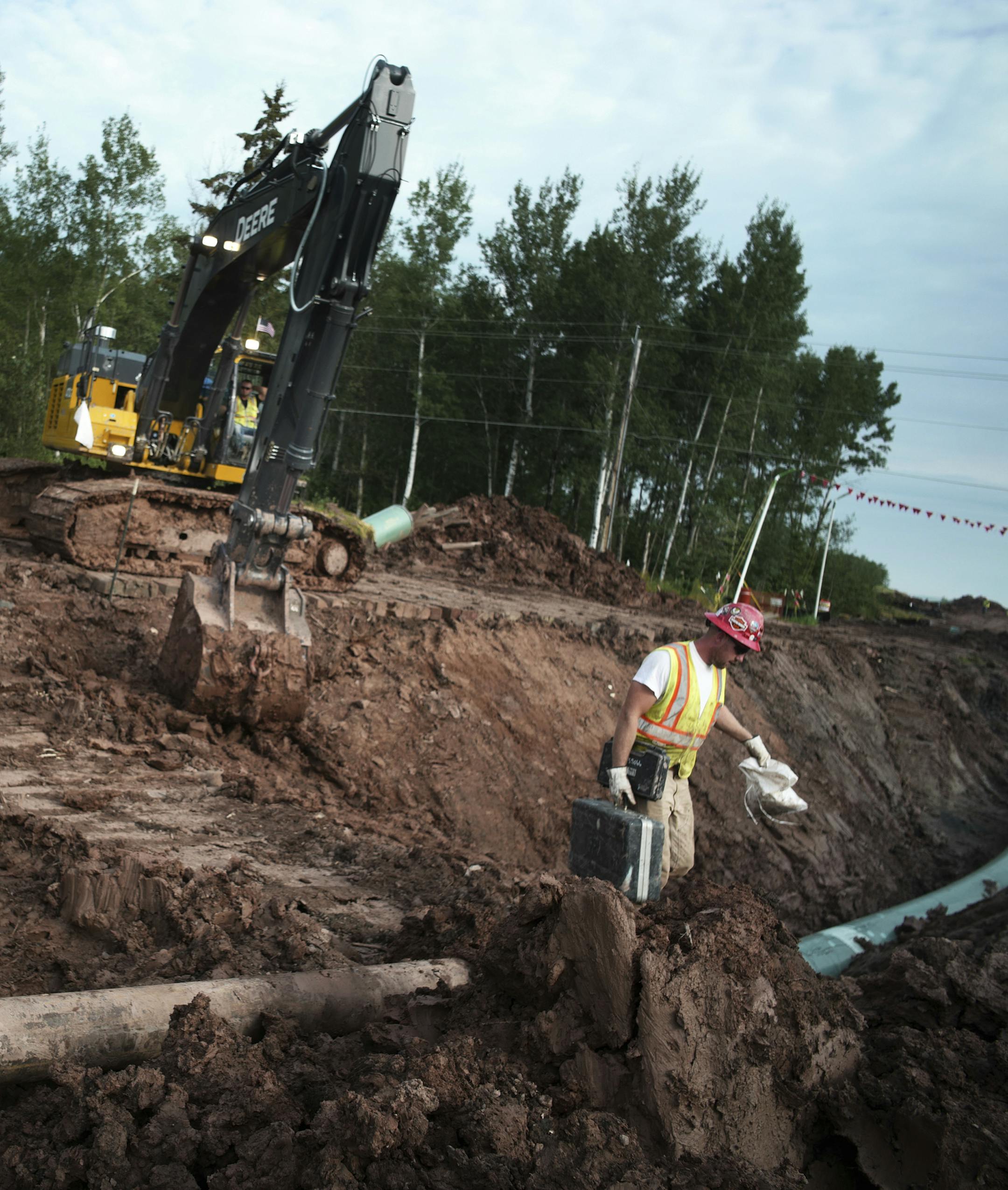
In an Aug. 21, 2017 photo, workers make sure that each section of the replacement Line 3 that is joined passes muster. Enbridge already has started building the 14-mile stretch of Line 3 from the Minnesota line to its terminal in Superior, Wis. In filings with the Public Utilities Commission Monday, Sept. 11, The Minnesota Department of Commerce says Enbridge Energy has failed to establish the need for its proposal to replace its aging Line 3 crude oil pipeline across northern Minnesota. Instead
Enbridge has started building a 14-mile stretch of Line 3 from the Minnesota line to its terminal in Superior, Wis. (The Minnesota Star Tribune)

Minnesota Chippewa bands will do their own assessment of Enbridge's Line 3 proposal, looking at the "cumulative impact" of the pipeline on American Indians.

The Chippewa, also known as the Ojibwe or Anishinaabeg, have long been opposed to Enbridge's plan to replace its aging and corroding Line 3 pipeline. The new 340-mile pipeline would run across northern Minnesota to Enbridge's terminal in ­Superior, Wis.

While the new Line 3 wouldn't cross any reservations in northern Minnesota, it would go through lands where Indians have treaty rights to hunt, gather and fish. They are concerned about the effect of a spill.

The Chippewa bands' assessment, to be conducted with the environmental activist group Honor the Earth, will produce an "Anishinaabe-centric" report on environmental, social and legal issues, according to a statement.

The report will be submitted to the Minnesota Public Utilities Commission, which is slated to decide Line 3's fate in April.

There are seven Chippewa bands in Minnesota, and five of them — White Earth, Leech Lake, Fond du Lac, Mille Lacs and Red Lake — are intervenors in the PUC process, meaning they individually have made formal comments. The Nett Lake band will also join the study.

The bands, as well as environmental groups, have been critical of the Minnesota Department of Commerce's environmental impact statement, or EIS, on the Line 3 project.

The EIS contained "blatant inadequacies," Joe Plumer, legal director for the White Earth band, said in a statement. The department could not successfully integrate the tribes' "worldview" into the impact statement, he said.

The department's assessment did conclude that the proposed pipeline — and any of its alternative routes — would have disproportionately negative impacts on American Indians.

As part of the bands' report, they will include information from five public hearings for tribal and nontribal members beginning Wednesday at the Shooting Star Casino on the White Earth Reservation in Mahnomen, Minn. Further meetings will be held on other ­reservations.

Mike Hughlett • 612-673-7003

about the writer

about the writer

Mike Hughlett

Reporter

Mike Hughlett covers energy and other topics for the Minnesota Star Tribune, where he has worked since 2010. Before that he was a reporter at newspapers in Chicago, St. Paul, New Orleans and Duluth.

See Moreicon

More from Business

See More
card image
Fairview Health Services

The school is changing an elective course while still working with the Eden Prairie-based health care giant after students raised concerns.

This transmission electron microscope image shows SARS-CoV-2, the virus that causes COVID-19, isolated from a patient in the U.S., emerging from the surface of cells cultured in the lab. (NIAID/TNS) ORG XMIT: 1659810
card image