
How are Minnesota’s Winter Olympic hopefuls training this summer for the 2026 Games?

From roller skiing on concrete to neck-strengthening drills, nine Minnesota athletes are trying to turn unconventional summer routines into peak performance for an Olympic year.

The Minnesota Star Tribune
August 28, 2025 at 3:00PM
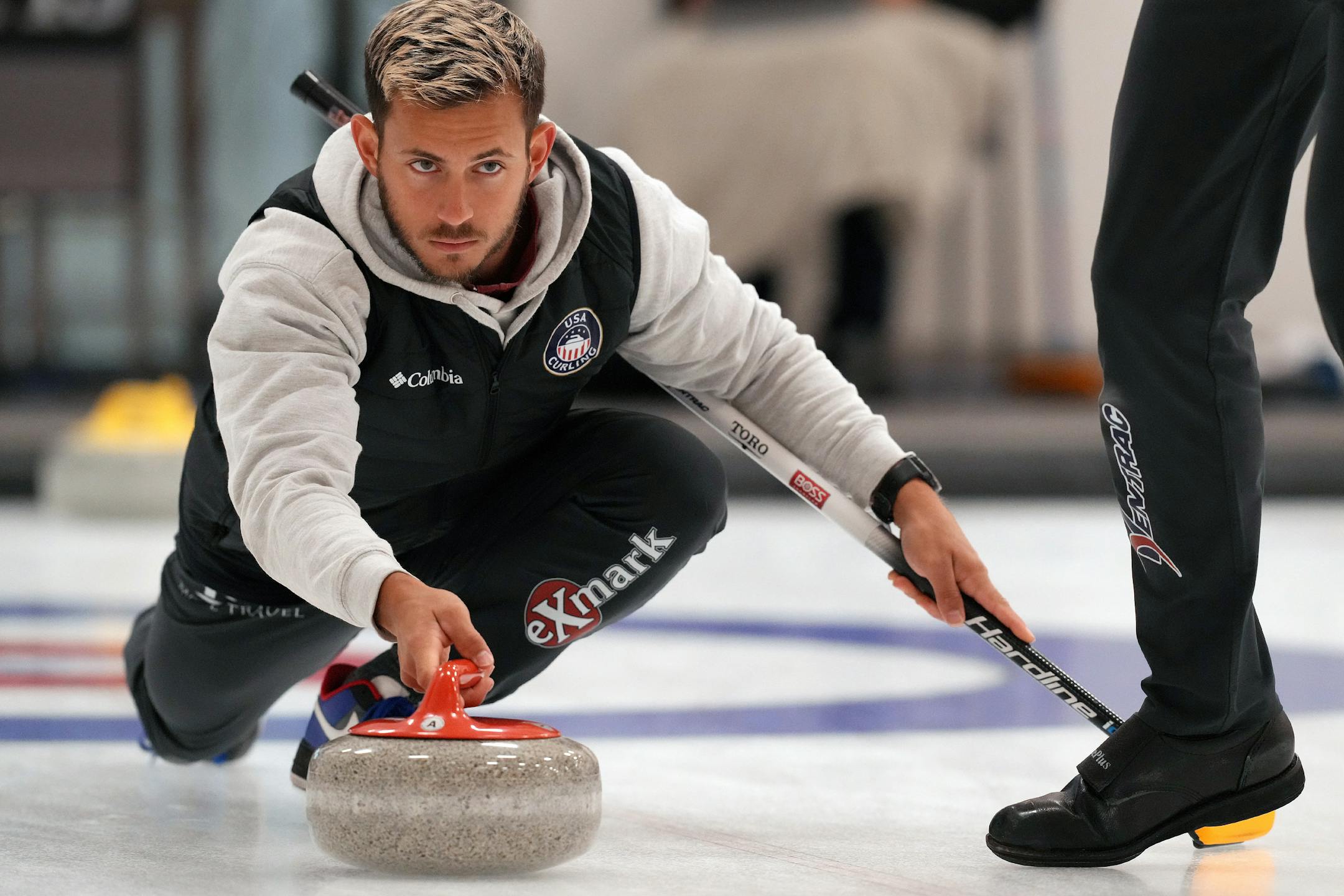
Korey Dropkin of Duluth competes in the Pan Continental Championship Playdown at the Chaska Curling Center on Aug. 8. (Anthony Souffle/The Minnesota Star Tribune)

Alpine skier Camden Palmquist sometimes takes his summer workouts to his hometown YMCA in Eagan. It can get uncomfortable.

Palmquist’s gym sessions are, well, unusual. He chucks medicine balls. He’s following up sets of back squats with 20-meter sprints. He completes core workouts with bands where “you basically just tie yourself up.”

“Like, sorry, I’m just gonna take up half the gym here,” Palmquist said with a laugh, “and four of the machines. ... There are some crazy things that we do, but at the end of the day, it’s pretty simple.”

Palmquist must have a different definition of “simple.” Because for Minnesotans preparing for qualifying for the 2026 Winter Olympics in Italy, summer routines are anything but routine.

Isaiah Nelson, Palmquist’s teammate on the national team, built a home gym setup in his basement in part because it was “awkward” at the public gym. “People are looking at you, kind of thinking, ‘What is he doing over there?’” he said.

The summer is when the foundation is built — with bands and barbells, on roller skis and air bags, in bike saddles and on hiking trails. The Minnesota Star Tribune caught up with nine Minnesotan pro athletes preparing for Olympic qualifying to see how they’re turning strange summer days into winter wins.

‘We kind of look like lab rats’

In Craftsbury, Vt., biathlete Margie Freed clips into her roller skis at 8 a.m. for the first of two daily workouts. The session might stretch as long as four hours — mostly roller skiing, with some cross-training. She’s back out for another workout in the afternoon, even if the heat can make things uncomfortable.

“I don’t want to be just doing some easy distance at 4 p.m. when it’s 80 degrees out,” said Freed, who competed in Nordic skiing for Eastview High in Apple Valley. “That’s really hard.”

ADVERTISEMENT

The first leg of U.S. Biathlon’s international team trials in October are on roller skis. Some athletes, she said, excel with roller skiing — especially on “twisty, turny downhills.”

But Freed?

“We’re skiing on concrete, and I get scared sometimes,” she said with a laugh. “So I try and work on my roller ski, downhill agility abilities throughout the summer to prepare myself for these trials.”

She’s training alongside 2022 Olympian Jake Brown of St. Paul at the Craftsbury Outdoor Center, a hub for national team athletes. Brown’s summer, like Freed’s, follows a careful rhythm: three weeks on, one off.

One of Brown’s favorite parts of the summer came during a three-week training camp in Lake Placid, N.Y. There, Montana State’s Human Performance Lab runs VO₂ max and biomechanics tests. Force sensors are tucked inside ski boots. A mask measures oxygen intake.

“We kind of look like lab rats,” said Brown, who went to Minnehaha Academy and St. Olaf.

View post on Instagram
 

But Vaclav Cervenka, a Grand Rapids native in the Army World Class Athlete Program, would attest that the summer experience of a biathlete — even with the fancy equipment and travel – isn’t as glamorous as it seems.

“You’re not like: ‘Oh, I’m in Oslo this week. How cool is this? Let’s go check out the city,’” Cervenka said. “It’s like: ‘I’m in Oslo this week. I’m trying to hit this benchmark. ... There’s an hour ride from the venue to the hotel, and after that, I’m cooked. I need to lay down, to take a break.’”

Luci Anderson of Golden Valley takes her rest seriously. She said it’s crucial to make sure “your body absorbs the training.”

Her recovery activities include knitting, playing cards and reading. Her book of choice lately, perhaps fittingly, has been “The Hunger Games.”

“I had a moment the other day [in training] that I was like, ‘Oh my God. I feel like I’m in ‘The Hunger Games,’” Anderson said.

‘Gnarly’ mental prep

The Chaska Curling Center hums with a quiet precision — and some small talk over a pint of IPA.

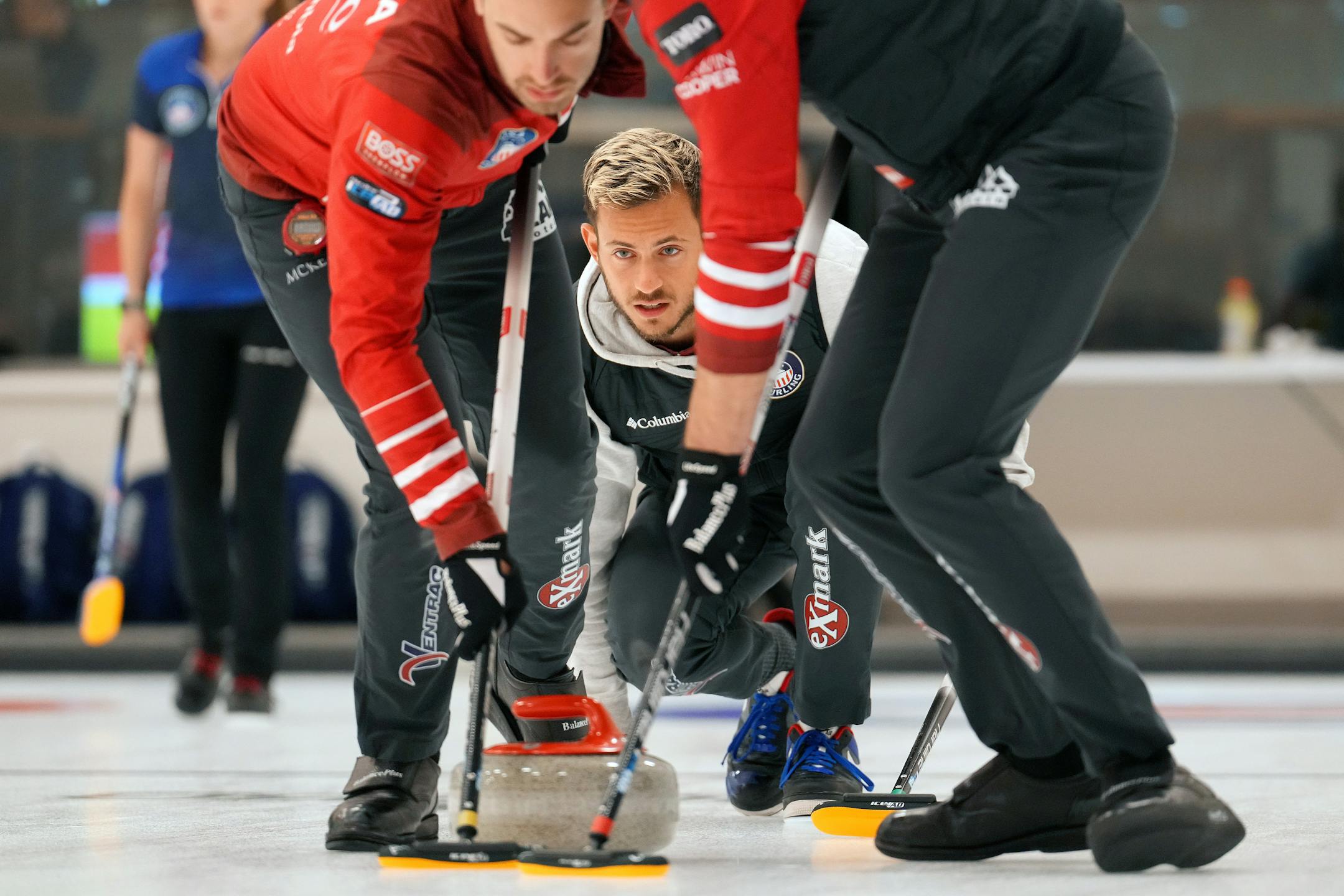
Beyond the wall of nearly floor-to-ceiling windows, stones slide over pristine ice. Olympic curlers sweep intensely at a qualifying event for the Pan Continental Curling Championships as onlookers watch from an adjoining restaurant-bar.

Korey Dropkin, fresh off the sheet, juggles this world with another: real estate.

“As a realtor, I’m sort of at the will of my clients,” Dropkin said, “and whenever they need me, I try to be available — especially during the summer — whether it’s showing homes or working with first-time home buyers.”

Korey Dropkin, center, has already qualified for the 2026 Olympics in mixed curling but continues to fine-tune his skills as a skip this summer. (Anthony Souffle/The Minnesota Star Tribune)

This winter will inevitably be busier for Dropkin, who has already qualified for the Olympics with his mixed doubles partner, Cory Thiesse.

Luckily, they both live in Duluth, making their three-times-a-week training sessions much easier. They’ve leaned into fine-tuning touch shots and draw weight.

Dropkin’s focusing this summer on his mental preparation; he’s also the skip for a men’s team that will trying to qualify for the Olympics at the USA Curling team trials in November. He said he wants to stay sharp without letting the magnitude of the moment overwhelm him.

Rebecca Flynn, a 19-year-old snowboarder from Victoria, is also training her brain in preparation for the Winter Games. She works with a program called BrainKanix, which reads her brain waves to help her hit her flow state. She said the “gnarly” process involves six to eight wires hooked to her head.

It’s one of many workouts Flynn admitted might look odd to outsiders. Another “not-public-gym-workout” involves pressing her head into a yoga ball to strengthen her neck for crash protection.

“I definitely get a lot of stares because people don’t think to work out your neck ever,” Flynn said.

Coming back from a broken shoulder and wrist suffered last year, Flynn is reclaiming tricks and building her balance, core and leg strength. As for big tricks she’s chasing? “Gotta keep it on the DL,” she said.

Running up that hill

From Buck Hill to the world stage, Alpine skier Paula Moltzan is another Minnesotan who has made the pilgrimage to Vermont.

She trains at Green Mountain Valley School’s state-of-the-art gym and rehabs at its attached physical therapy clinic. Moltzan, from Prior Lake, is working on regaining her range of motion and strength following left shoulder surgery in April. She balances that with outdoor work, gravel biking or running Vermont’s Long Trail.

Nelson, meanwhile, stayed closer to his hometown of Wayzata.

“The other week, I went to Buck Hill and we just ran straight up the mountains,” he said in a July interview. “It was a minute [and thirty seconds], and that was absolutely exhausting.”

Alpine skiing, he explained, is “super high intensity for about a minute and 15 seconds,” with long rests between runs. His offseason training mirrors that: explosive intervals, long recovery.

“A normal person would talk about, when they work out, ‘Thursdays are my leg days,’” Nelson said. “Well, for me, every single day is leg day, it just depends what type.”

Nelson splits time between leg strength and intense core sessions with his younger brother Josh, aiming to replicate race demands without the snow.

For Palmquist, a park behind his house in Eagan offered a wooded hill for running intervals. Like Moltzan and Nelson, he was preparing for the U.S. Alpine Ski Team’s training camp this month in New Zealand. (Afton’s Jessie Diggins headed off to New Zealand with the Nordic skiing team a few weeks ago, too.)

“I think I’m most excited about the actual skiing,” he said. “We’ve had a couple months off now. It’s just been time in the gym, time on the bike, time out doing field workouts. ... It’s what all the physical training is for in the summer, so you can finally go and see how much you stronger you’ve actually gotten.”

The takeaway? Alpine racing, like all elite winter sports, is a year-round commitment.

“It honestly never ends,” Palmquist said, “and it’s actually pretty awesome that it doesn’t.”

View post on Instagram
 
about the writer

about the writer

Shelby Swanson

Intern

Shelby Swanson is an intern for the Minnesota Star Tribune sports department.

See Moreicon

More from Olympics

See More
card image
Sean Kilpatrick/The Associated Press

Brodie Ziemer, Max Plante, Logan Hensler and Adam Kleber are back from a team that won the gold medal in last year’s under-20 tournament.

card image
card image