

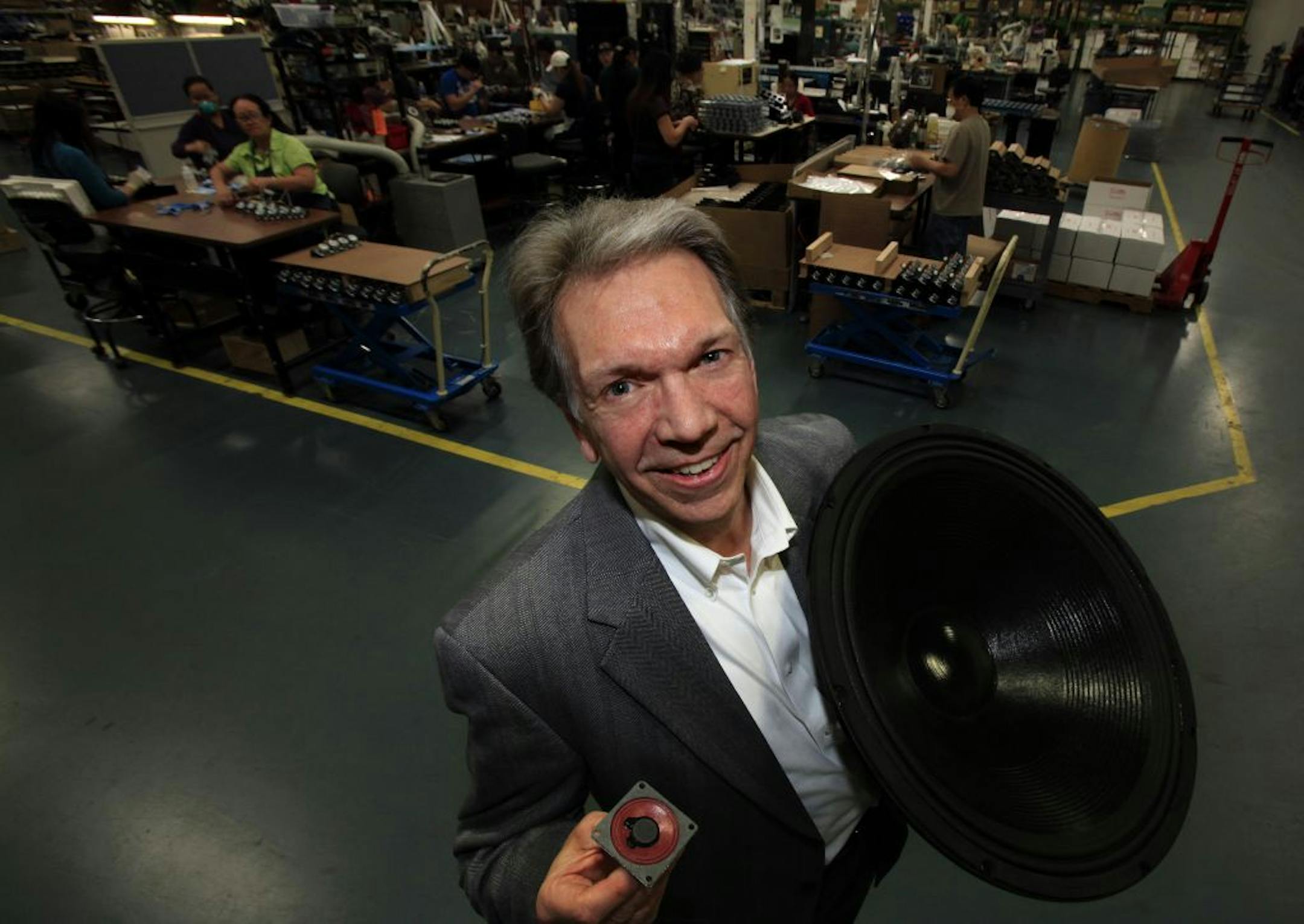
The late Cliff Digre was a handy guy who turned his wife's broken radio into a speaker business whose products today are heard by millions of people worldwide.
Digre, a gunner and radio operator in the U.S. Army Air Force during World War II, founded MISCO -- short for the Minneapolis Speaker Co. -- in 1949. Digre, who died at 89 last November, was a frugal innovator who lived modestly and raised a family with wife Bernice not far from their Minneapolis shop. All four kids worked there part time as they grew up.
The low-profile MISCO remains a niche player in an industry that's largely moved production to cheaper labor markets in Asia.
"MISCO would not be here were it not for my dad's frugality," said president Dan Digre, 56, who joined MISCO in 1984. "He understood 'lean manufacturing' before it was popular."
A conservative guy by nature who eschewed debt, Digre also could play the role of risk taker. Nearly 80 years old in 2001, Cliff Digre invested more than $1 million -- essentially his retirement savings -- to build a new south Minneapolis factory. Over the past decade, the company has doubled employment to 50-plus workers and revenue to $15 million.
"We grew 20 percent last year, and we're growing and hiring this year," Dan Digre said. "I think there's an opportunity for this to be a $40 or $50 million company. Dad would approve."
That would be something for a business started on a whim. After surviving the war and marrying his hometown sweetheart, Cliff Digre worked several laborer jobs and attended radio-repair school in St. Paul. One day, he brought Bernice's broken radio to an instructor. He told Digre that the speaker was broken. Digre didn't like getting stuck $4.50 for a new speaker, instead of the $1.50 that he'd been told a repair would cost. The St. Paul repair shop owner told Digre he'd lost the old speaker.
"The $3 price difference was a lot of money in 1948," Digre recalled in his memoirs about harrowing World War II flights, business and family. So he started his own Minneapolis radio-repair shop on Jan. 1, 1949, in a storefront on Cedar Avenue S. That eventually led to a manufacturing shop on 38th Street and Grand Avenue S.



