
Minneapolis police chief apologizes for ‘deeply offensive’ comments made by activist at training

Harry “Spike” Moss talked about Nazi uniforms in police lockers, cops shooting people in the back, and said a fallen cop was dirty.

The Minnesota Star Tribune
August 6, 2025 at 6:25PM
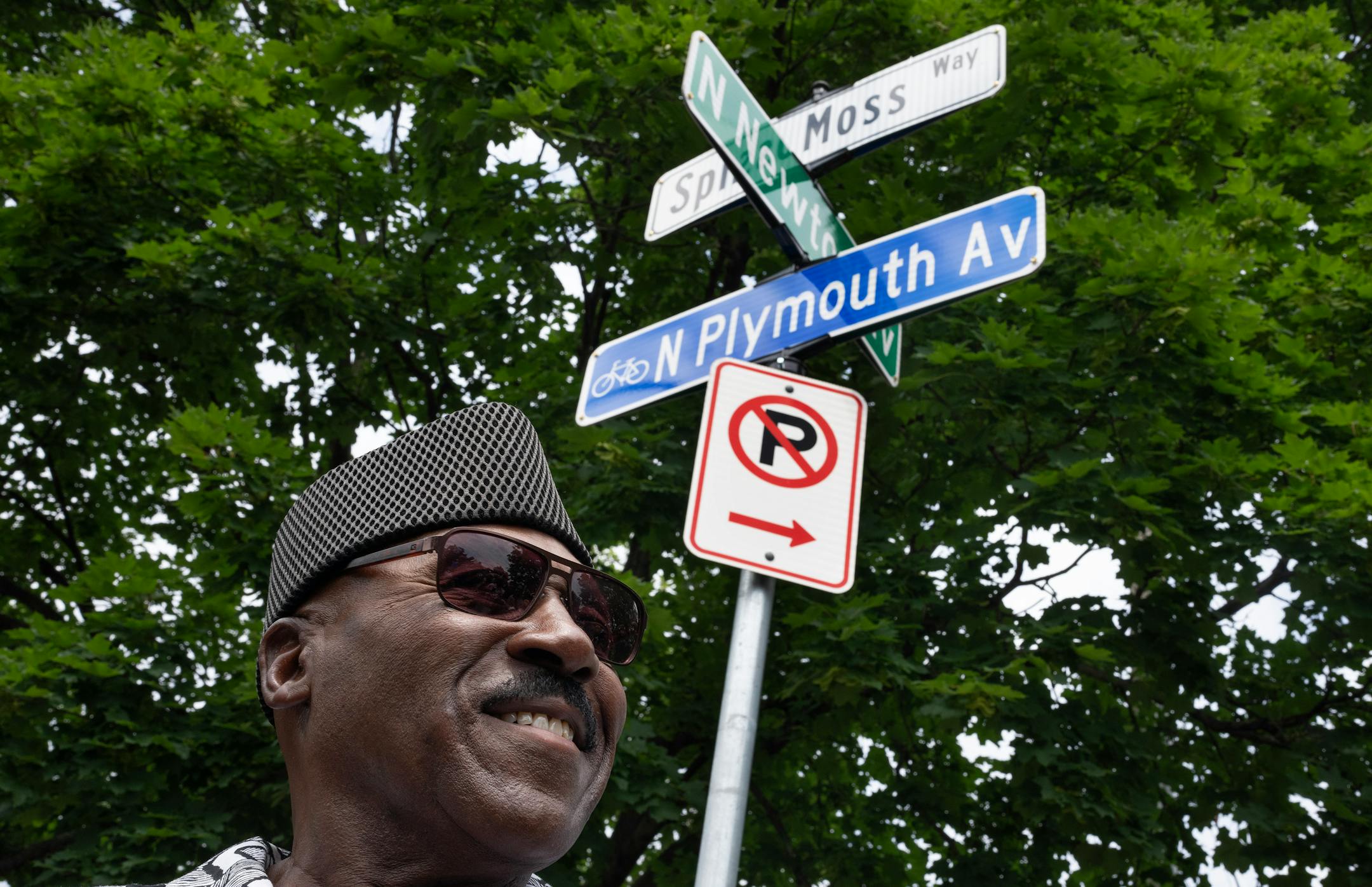
Longtime activist Harry "Spike" Moss stands underneath the sign for Spike Moss Way in Minneapolis. (Jerry Holt/The Minnesota Star Tribune)

The Minneapolis police chief apologized for comments made by longtime Minneapolis activist Harry “Spike” Moss during police training last week in which Moss talked about Nazi uniforms in police lockers and police shooting people in the back.

Chief Brian O’Hara called Moss’ comments “deeply offensive and inappropriate,” saying he met with the police union president to talk about their “mutual concerns,” according to his email obtained by the Minnesota Star Tribune.

O’Hara wrote that he was particularly disappointed by Moss’ assertion that Jerry Haaf was a dirty cop stealing money from the Vice Lords gang. Haaf was shot to death by gang members as he read a newspaper in a Lake Street pizzeria in 1992, months before he planned to retire.

Four young Vice Lords were convicted in connection with the execution-style killing, which was one of the most shocking murders in Minneapolis history. Prosecutors alleged the killing was revenge for the alleged mistreatment of a blind Black man on a bus the day before.

At the time of the murder, Moss was a leader at City Inc. — a controversial Minneapolis program that worked with gang members to combat street violence. He told the Star Tribune in 2022 that one of the men convicted of the crime should be released if he’d done his time.

O’Hara said he reached out to Haaf’s daughter to express his “disappointment and sorrow” and ensure “something like this never happens again.”

O’Hara noted the professional development seminar was meant to be an honest conversation about where the department has been, and where it’s going. He said the vast majority of the sessions were constructive.

The head of the Minneapolis police union also expressed concern about Moss’s statements, writing in a letter to union members that Moss made references to Nazi uniforms in police lockers in the 1970s and made “unsubstantiated claims that nine out of 10 police shootings involved suspects being shot in the back.”

Lt. Sherral Schmidt, president of the Police Officers Federation of Minneapolis, said in a statement to the Star Tribune that Moss’s remarks were “deeply offensive, inaccurate, and disrespectful to all the men and women who wear or have worn the Minneapolis Police uniform.”

“These types of inflammatory comments do nothing to advance productive dialogue, improve public safety, or build trust between the community and law enforcement,” she said. “Our officers were forced to listen to this divisive rhetoric. These harmful generalizations, outright falsehoods, and targeted attacks on those who protect and serve have no place in MPD training.”

Moss is one of the most well-known and outspoken activists in the city’s history: Last year, the city renamed a North Side street after Moss — a rarity to do so for someone still alive. A stretch of Plymouth Avenue is now called Spike Moss Way — a nod to The Way Community Center, which Moss helped found in 1966 as a gathering space for young Black people, including a young man who grew up to be Prince.

During the renaming ceremony, Moss was credited with helping desegregate the Minneapolis Fire Department, getting the city to hire more Black police officers and fighting the mistreatment of Native Americans.

Attorney General Keith Ellison said during the event that Moss inspired numerous people, like him, to become leaders, and former Minneapolis Police Chief Medaria Arradondo said Moss supported good policing and protested police brutality. Moss served five years on the city’s Police Community Relations Council.

Moss could not be reached for comment.

O’Hara’s email said the seminar was organized by Shawn Williams, who oversees MPD’s training division. But MPD spokesman Garrett Parten said O’Hara “invited/approved the invitation to Spike.”

Parten said Moss was the keynote speaker at a January academy graduation, and his speech was the basis for his invitation to last week’s training. O’Hara introduced Moss as a “man who has spent his life fighting for justice, equality and for the betterment of our community.”

“Spike Moss is not just a leader; he is a voice for the voiceless and a lifelong advocate for civil rights,” O’Hara said before Moss gave a rousing speech about his work trying to get people of color into jobs as police and firefighters.

about the writer

about the writer

Deena Winter

Reporter

Deena Winter is Minneapolis City Hall reporter for the Star Tribune.

See Moreicon

More from Minneapolis

See More
card image
Dymanh Chhoun/Sahan Journal

Many situations call for knowledge of resources and mental health rather than a police response, advocates say.

card image
card image