
Counterpoint | Safety takes a back seat: Moriarty’s traffic stop policy is foolish.

Here’s why it will backfire.

October 2, 2025 at 9:08PM
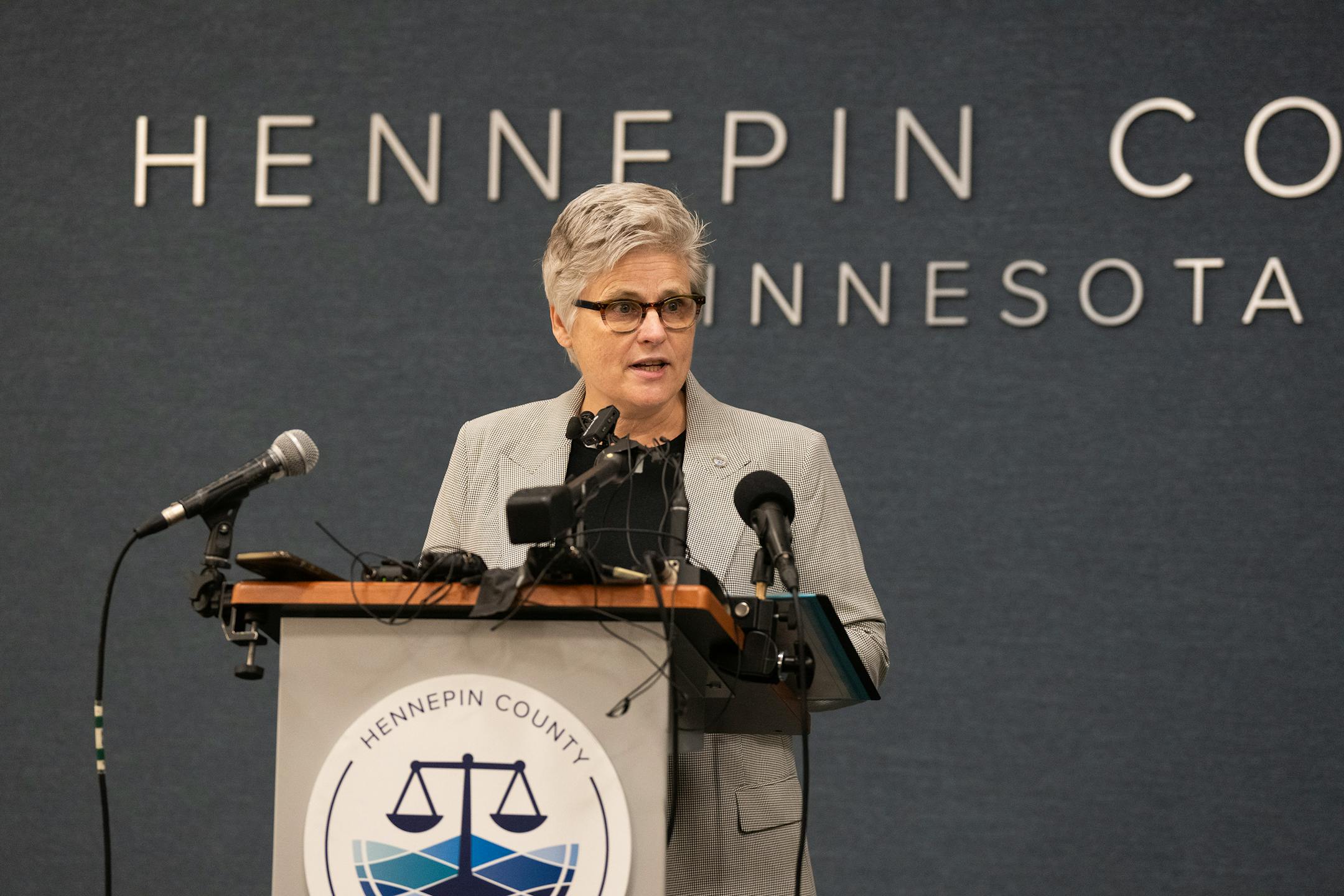
Hennepin County Attorney General Mary Moriarty says that her office will no longer prosecute felonies stemming from routine traffic stops. (Richard Tsong-Taatariii/The Minnesota Star Tribune)

Opinion editor’s note: Strib Voices publishes a mix of guest commentaries online and in print each day. To contribute, click here.

•••

I’m a Republican. I believe racial bias exists.

But Hennepin County Attorney Mary Moriarty’s new charging policy — that her office will no longer prosecute felonies stemming from routine traffic stops — is foolish, counterproductive and will harm the very communities of color she claims to protect (“Moriarty got it right: Pretext stops are biased and ineffective,” Strib Voices, Sept. 24).

Safety is the foundation of a free society. That’s why we ask police to do an incredibly hard and dangerous job: keeping us safe. Minneapolis Police Officer Jamal Mitchell’s heroic sacrifice last year is a tragic reminder of that high calling.

Police officers are human. They’re among the best of us and carry the same virtues and biases we all do, including racial bias. One landmark study found identical résumés received about 50% more callbacks when they had stereotypically white-sounding names compared to Black-sounding names. Bias exists — it’s a reflection of society and not unique to officers.

But acknowledging bias is not a license to abandon public safety. When Moriarty cites racism, claims to speak for “Black and brown people,” and argues that routine traffic stops rarely produce contraband, she ignores the key question: Does her policy make us safer? It does not.

Pretext stops — when officers pull over drivers for legitimate reasons while pursuing broader investigations — are a crucial tool. They help protect cases and vulnerable informants, who are often abuse victims or recovering addicts.

Routine traffic stops uncover major crimes. As a former state and federal prosecutor, I personally charged cases where officers discovered illegal guns, narcotics and other evidence of serious felonies during what began as a minor stop. Under Moriarty’s directive, most of these cases would be tossed.

Her reasoning is flawed. Saying traffic stops fail to produce contraband 99% of the time, so let’s stop charging crimes when they do, is like saying TSA metal detectors fail to produce contraband 99% of the time, so let’s get rid of them altogether. Nonsense.

Nor does Moriarty speak for communities of color. Poll after poll shows we don’t want less policing, we want more — and yes, better — policing. A 2020 Gallup poll found 81% of Black respondents wanted police presence to stay the same or increase. The reason is obvious: Black Americans are disproportionately victims of crime. One statistic is emblematic: Black Americans are about 14% of the population, but account for 54% of homicide victims.

We want more policing because it reduces crime. That more cops means less crime should not be controversial. The same reason I slow down when I see a state trooper on Interstate 35 explains why hot-spots policing — deploying more officers to high-crime areas — works. If you see police regularly in your neighborhood, you change your behavior. A 2019 meta-analysis of hot-spots policing across America showed a statistically significant effect on reducing crime. Visible police presence deters crime.

Policies shape behavior. When police departments, by policy, stopped chasing fleeing suspects, the result was predictable: More suspects fled — because they knew they could. And anyone who has driven in Minneapolis since 2020 and noticed the surge in blatant traffic violations like red-light running shouldn’t be surprised to hear, per policy, police stopped enforcing low-level traffic violations around that time. Another factor was the Ferguson effect — officers being less proactive out of fear of public backlash.

Who can blame them? But the primary victims of Moriarty’s policy won’t be the police — though their jobs will get harder. The victims will be the community members who will live with the consequences of less active policing: more carjackings, shootings, overdoses and fleeing businesses.

Moriarty’s motivations are naive at best, and vindictive at worst. Even if well-intentioned, her policy will increase harm. Her failed prosecution of state trooper Ryan Londregan — who saved his fellow officer — is Exhibit A of her bias against police.

No one denies policing can improve. Philando Castile should not have died. But abandoning proven tools of public safety is throwing the baby out with the bathwater. Moriarty’s policy strips law enforcement of an effective tool, making impactful policing more difficult. Improving policing doesn’t mean tying officers’ hands behind their backs. It means holding them to a high standard.

Proactive policing and real accountability for offenders make neighborhoods safer and help communities hurt most by high crime.

Moriarty’s policy does neither.

Joe Teirab is an attorney, was the 2024 Republican nominee for U.S. Congress in Minnesota’s Second District and was a federal prosecutor at the U.S. Attorney’s Office in Minneapolis.

about the writer

about the writer

Joe Teirab

More from Commentaries

See More
card image
Richard Tsong-Taatarii/The Minnesota Star Tribune

If you are approaching the holidays with an ache in your heart, remember that love continues to shape life, even in loss.

card image
card image