
The park worker, her baby and the Minneapolis Park Board’s $13K invoice for her maternity leave pay

The Laborers’ Union is objecting to the treatment of a worker who tried to resign to care for her prematurely born child.

The Minnesota Star Tribune
July 23, 2025 at 11:00AM
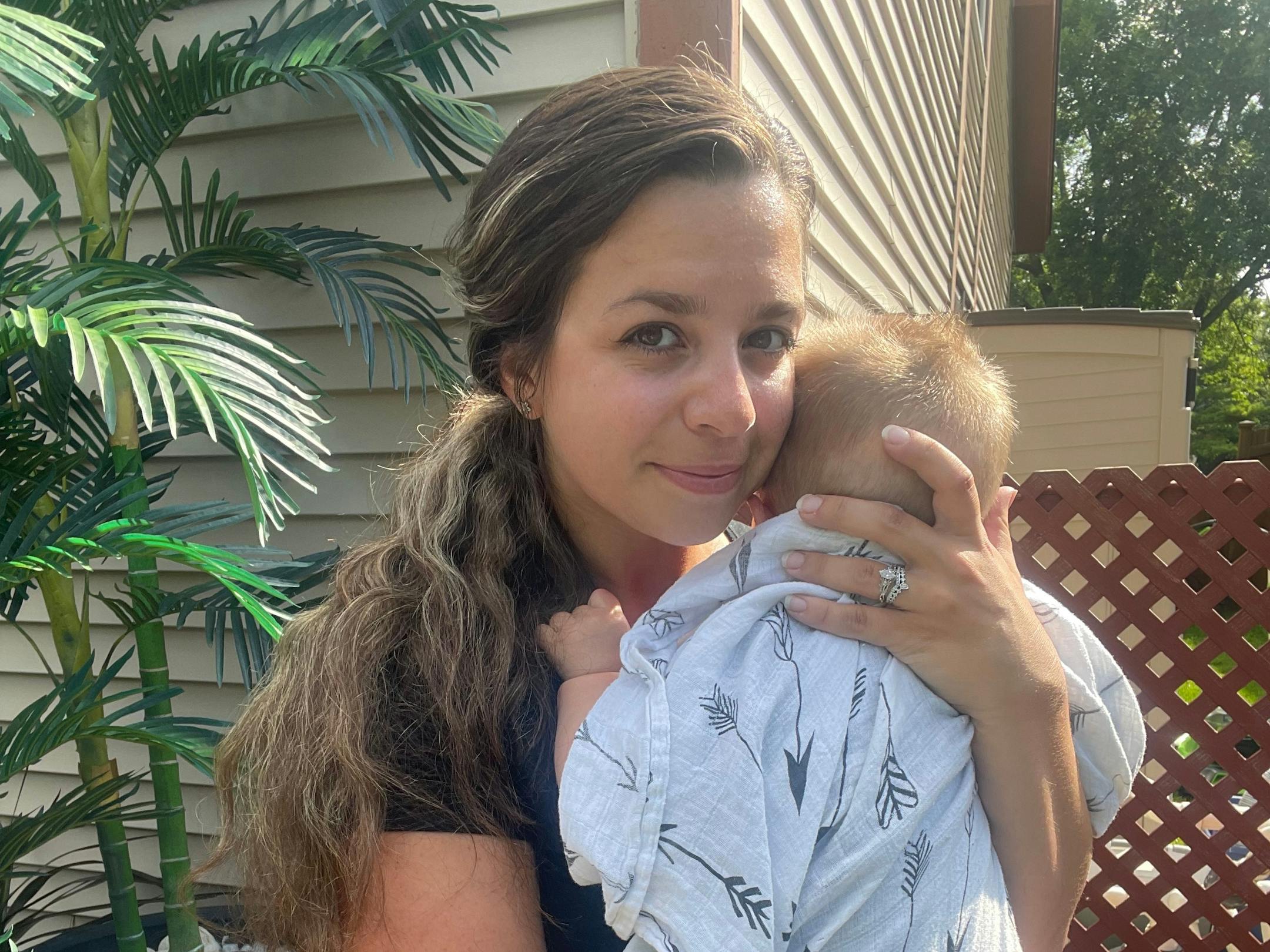
Former Minneapolis parkkeeper Indica Medeiros took maternity leave at the end of 2024 and tried to resign at the end of it. The Minneapolis Park and Recreation Board has demanded she repay over $13,000. (Provided by Indica Medeiros)

A Minneapolis park workers union has filed a complaint with the state after a maintenance worker was asked to repay over $13,000 of maternity leave wages when she tried to resign to care for her premature newborn.

Indica Medeiros, a parkkeeper doing general park maintenance since 2020, went on maternity leave in September after giving birth to a preterm son with challenging care needs. Ten days before she was due to return to work in December, she notified the Park Board that she was going to resign and stay at home full time with her children (two under 2 years of age).

The Park Board said she would be on the hook for giving back all the money she received on maternity leave if she did not return to work for at least four weeks. Medeiros said she was surprised to learn of the requirement, which no one had brought up before she took leave.

“It was scary to think that we would have to not only pay back this massive bill, but on top of our hospital bills,” Medeiros told the Minnesota Star Tribune. “I was very shocked, because had I known that, I probably would have made different decisions, and it was very stressful on our family the first few months.”

She asked to use her accrued sick and vacation time as she tried to find child care, according to emails submitted with the unfair labor practice complaint. The Park Board denied those requests, terminated her employment and sent Medeiros an invoice for $13,403.

In May, the Park Board’s lawyers followed up with a letter warning Medeiros they would file a claim in small claims court if she did not pay.

The Laborers’ Union Local 363, which represents parkkeepers, arborists and other park maintenance workers, responded with a complaint to the Minnesota Public Employment Relations Board. The union alleged the Park Board implemented a unilateral change to its paid parental leave policy without notifying the union and providing an opportunity to bargain.

“They certainly never sent [the policy] to us,” said Local 363 business manager AJ Lange. “They’ve never enforced this rule before. I did a data request. They confirmed that they don’t have any records of enforcing it, so they seem set on making an example of her.”

Local 363 park workers went on strike last summer for the first time in the Park Board’s 140-year history. This year, a number of candidates running for the board have cited labor relations as their impetus for challenging incumbents. Park Board arborist Kerrick Sarbacker told Medeiros’ story onstage Saturday at the Minneapolis DFL convention.

Park Board spokesperson Robin Smothers said in a statement that the agency’s paid parental leave policy, which came into effect in 2023, provides 12 weeks of paid leave subject to the requirement: “If an employee voluntarily separates from employment either without returning to work or within four weeks of returning to work following a paid parental leave, the employee will be responsible for repaying all amounts received under the Paid Parental Leave Policy.”

A 2022 email informed employees of the policy and its conditions, which were brought into alignment with the city of Minneapolis’ parental leave policy, she said.

“Neither LIUNA Local 363 nor any other union has ever requested to bargain over the policy until the former employee failed to return to work,” Smothers said. “The idea of a leave policy is to support employees who return to the workplace as it helps the employer and the public by keeping the employee’s skills and knowledge in the workplace, which justifies the spending of public funds.”

The city of Minneapolis also requires employees to return to work for at least four weeks in order to keep parental leave payments because it “helps void operational disruptions, reduce last-minute or unplanned staffing gaps and ensure smoother transitions,” said city spokesperson Jess Olstad. She said the city has required employees to repay parental leave wages “only two or three times.”

University of Minnesota professor Colleen Flaherty Manchester of the Carlson School of Management said she had never heard of parental leave policies requiring employees to return to work. It is a far more common practice when employers reimburse an employee’s tuition for continuing education, she said, because in those cases employers expect to get returns on an investment that is supposed to help the employee do a better job.

By making parental leave contingent on returning to work, even for just a few weeks, employers may be hoping to get employees back into the swing of things mentally, Flaherty Manchester said.

“There could be some amount of uncertainty that people have during a leave about whether they want to return or not, and then by having that requirement, they at least have to try it out again to see what like work looks like,” she said. “They might make a different decision when they come back and say ... ‘Oh, I did miss this,’ or, it might just affirm your decision to exit.”

Federal labor law protects many employees’ jobs and health care when they have kids by providing up to 12 weeks of unpaid leave. Many competitive employers go above and beyond by offering paid leave.

Starting January 2026, the state of Minnesota will require most workplaces to offer paid leave. Employers that already have their own paid leave plans can keep them, but their coverage must “meet or exceed” the state’s, and they “are not allowed to impose additional restrictions or eligibility requirements beyond what’s explicitly authorized under the state program,” Mary Haugen, Department of Employment and Economic Development spokesperson, said in a statement.

The state paid leave program does not mention any sort of “return-to-work” requirement.

“In preparation for the launch of paid leave benefits in 2026, we encourage employers to review their current leave and benefit offerings,” Haugen said. “The Minnesota Paid Leave Law requires that paid leave benefits cannot be made conditional due to a policy of the employer. This guidance applies to all employers, regardless of if they are covered by the state plan or an equivalent plan.”

Local 363’s unfair labor practice charge is pending with the Minnesota Public Employment Relations Board.

Medeiros’ husband and father-in-law continue to work in Minneapolis parks.

All grandparents on both sides of her family still work and couldn’t help with child care, Medeiros said. She and her husband couldn’t find anyone within their budget to take the kids before 6 a.m., when parkkeepers report to work.

“It was difficult trying to find [a day care] that suited both our needs,” Medeiros said. “And pricing, obviously, of day care is pretty outrageous. We were trying to find something that suited us, and it was pretty difficult to find something that checked all the boxes.”

about the writer

about the writer

Susan Du

Reporter

Susan Du covers the city of Minneapolis for the Star Tribune.

See Moreicon