

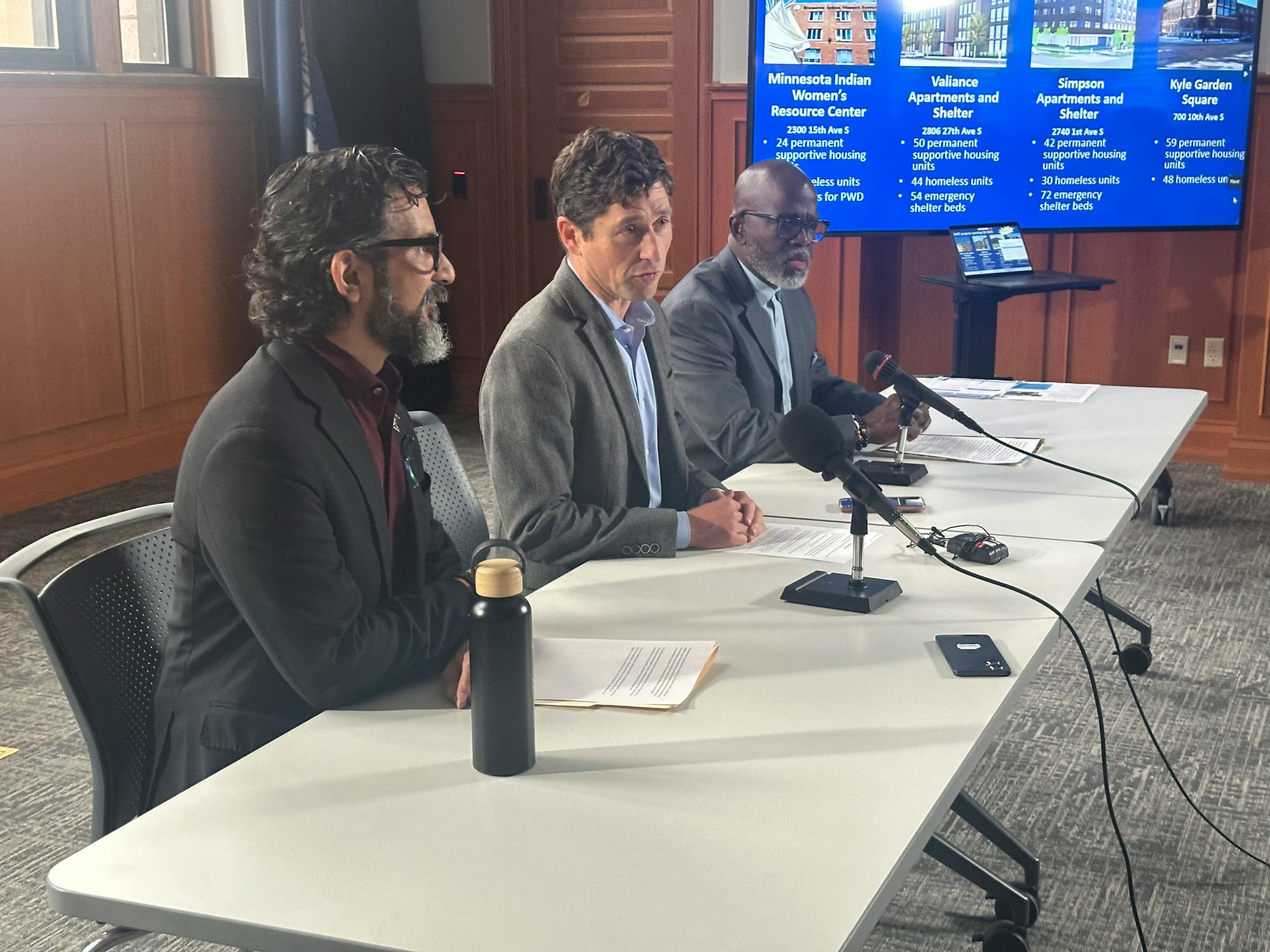
As cold sets in and and major federal cuts loom for housing the homeless, Minneapolis city leaders and service providers are fearful of what some are calling a “code red” situation that could force thousands to move back onto the streets.
On Nov. 14, the Department of Housing and Urban Development (HUD) announced it would be making massive changes that include slashing how much it offers for long-term “permanent supportive housing” to about a third of the $3.9 billion in aid, rather than 90%, instead prioritizing programs that require services like substance abuse treatment or work rules in exchange for housing.
Minneapolis Mayor Jacob Frey on Thursday addressed efforts the city has made in recent months to help the homeless, including the addition of nearly 130 new shelter beds and more than $14 million awarded by the City Council to jumpstart 11 affordable rental housing projects.
But it’s unclear if it will be enough to offset the overhaul to federal funding from HUD. Frey said the cuts are “deeply concerning” but was optimistic about the ongoing city efforts and partnerships to address the funding falloff anticipated for January.
“We need that money to provide the kind of basic city service that gives people dignity, and when those dollars are lost, we lose dignity along with it,” Frey said.
Minnesota received around $48 million last year from HUD for homeless services, 82% of which went to supportive housing. That amount would be massively reduced if HUD’s plans go through in January.
An estimated 170,000 people nationwide would be in danger of losing their homes due to the cuts, and at least 3,600 households in Minnesota are at risk, according to Chris LaTondresse, CEO of the Minnesota housing nonprofit Beacon.
These changes, announced earlier this month, “represent a five-alarm fire, a true code red for decades of bipartisan progress on proven solutions to homelessness,” LaTondresse said.


