Federal immigration agents in Minneapolis appear to be downshifting aggressive tactics

The caravans of agents rolling around town seem smaller, but intense clashes between agents and protesters are still occurring.

The Minnesota Star Tribune
February 4, 2026 at 12:00PM
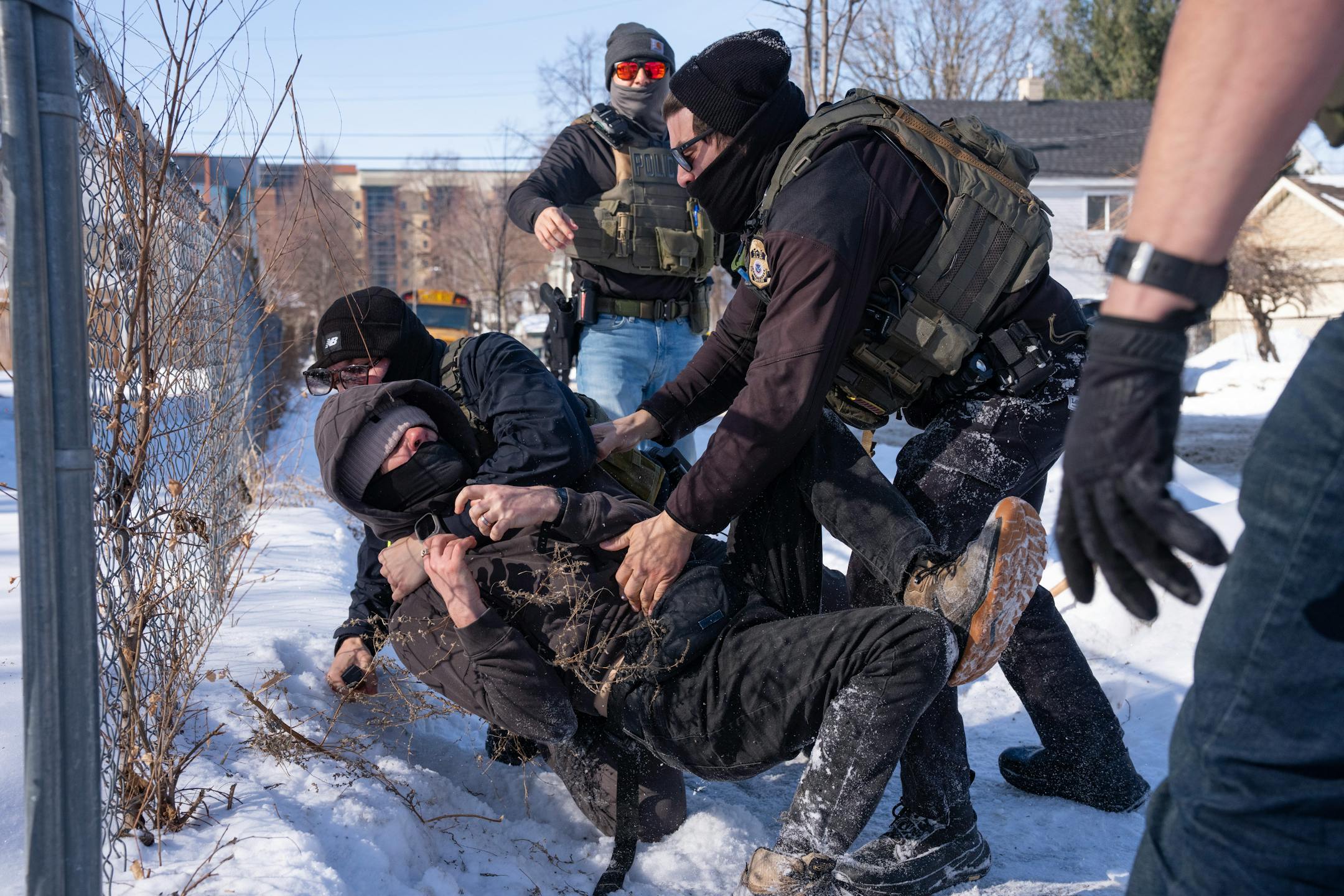
A federal immigration agent tackles a protester to the ground after another protester broke a window on an agent's vehicle with a hammer as the agents tried to leave the intersection of E. 27th Street and 14th Avenue S. in Minneapolis on Tuesday, Feb. 3. Two federal vehicles had their windows broken by protesters during the incident. (Alex Kormann/The Minnesota Star Tribune)

Kaegan Recher’s phone lit up with notifications of federal agent sightings Tuesday morning, Feb. 3, as he drove through south Minneapolis, much like it has for weeks now.

When White House border czar Tom Homan came to Minneapolis to take over the lead of Operation Metro Surge last week, he said there was a plan in the works to reduce the number of agents in the area.

After talking with President Donald Trump last week, Minneapolis Mayor Jacob Frey said he was told that “some federal agents will begin leaving the area tomorrow.”

Since then, Recher is one of many residents, observers and protesters who have told the Minnesota Star Tribune they have not seen indications that some of the 3,000 agents who flooded into the Twin Cities starting in December are leaving.

But they are reporting a seeming change in agents’ tactics, including fewer large caravans of federal agent vehicles, fewer agents on foot questioning or arresting pedestrians they come across, and fewer confrontations with protesters.
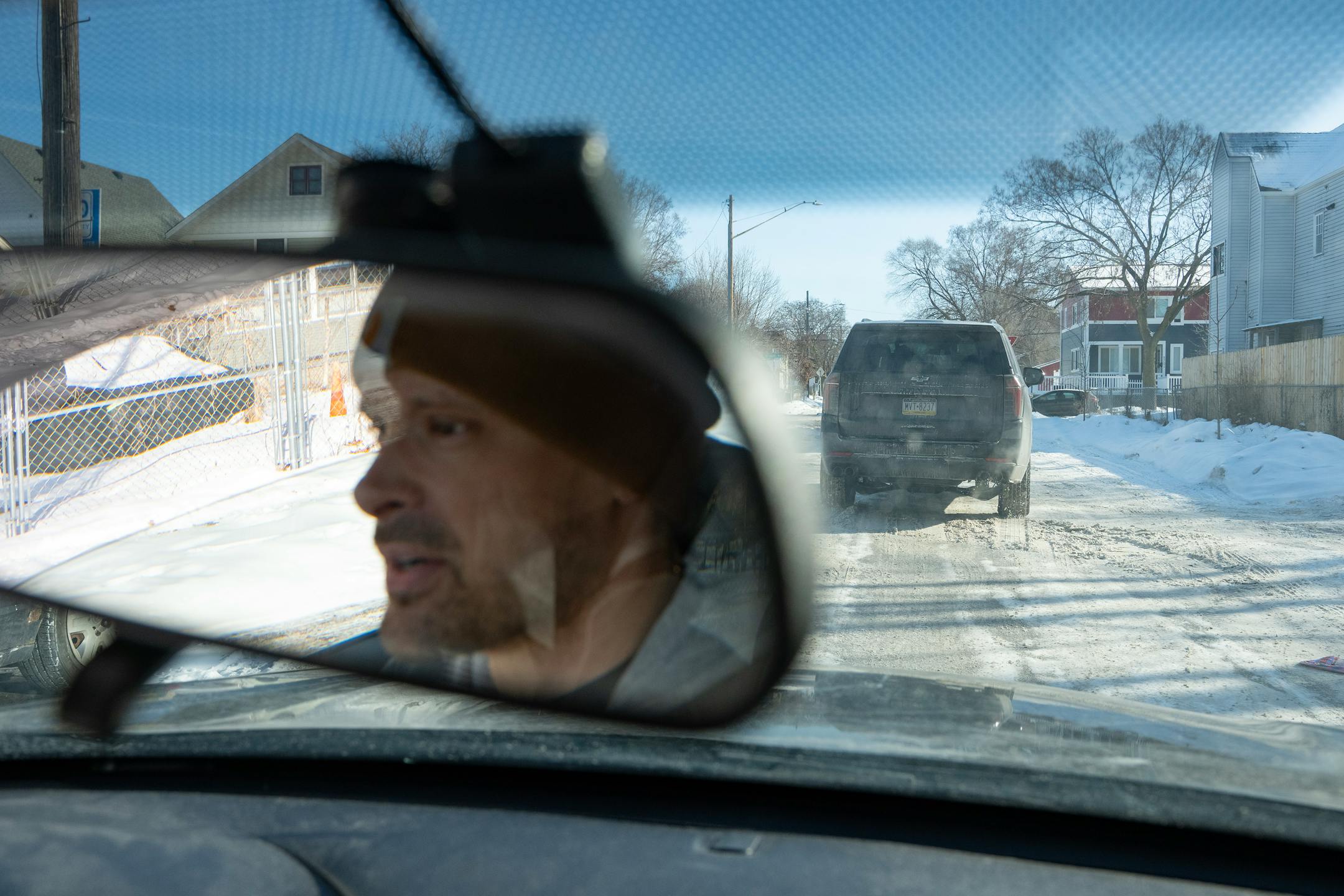
Kaegan Recher, a commuter and volunteer community observer, follows a vehicle driven by U.S. Border Patrol agents through Minneapolis on Tuesday, Feb. 3. (Alex Kormann/The Minnesota Star Tribune)

“It seems like they are more hesitant to exit their vehicle now, and I don’t know if that’s by directive, but I would get a lot of warnings in the past,” Recher said. “They would get out of their cars with assault rifles drawn and say, ‘Stop following us.’ ”

ICE and the Department of Homeland Security declined to discuss whether federal agents have shifted their approach to immigration enforcement in response to the arrival of Homan and the more intense public scrutiny following the killings of Minneapolis residents Renee Good and Alex Pretti.

“For operational security we do not disclose resources or numbers of personnel on the ground,” a DHS spokesperson said in a statement to the Star Tribune.
Trump said on social media that he ordered DHS to “under no circumstances” get involved with protests in Democratic-led cities unless they ask for federal help or federal property is threatened.

Ongoing confrontations

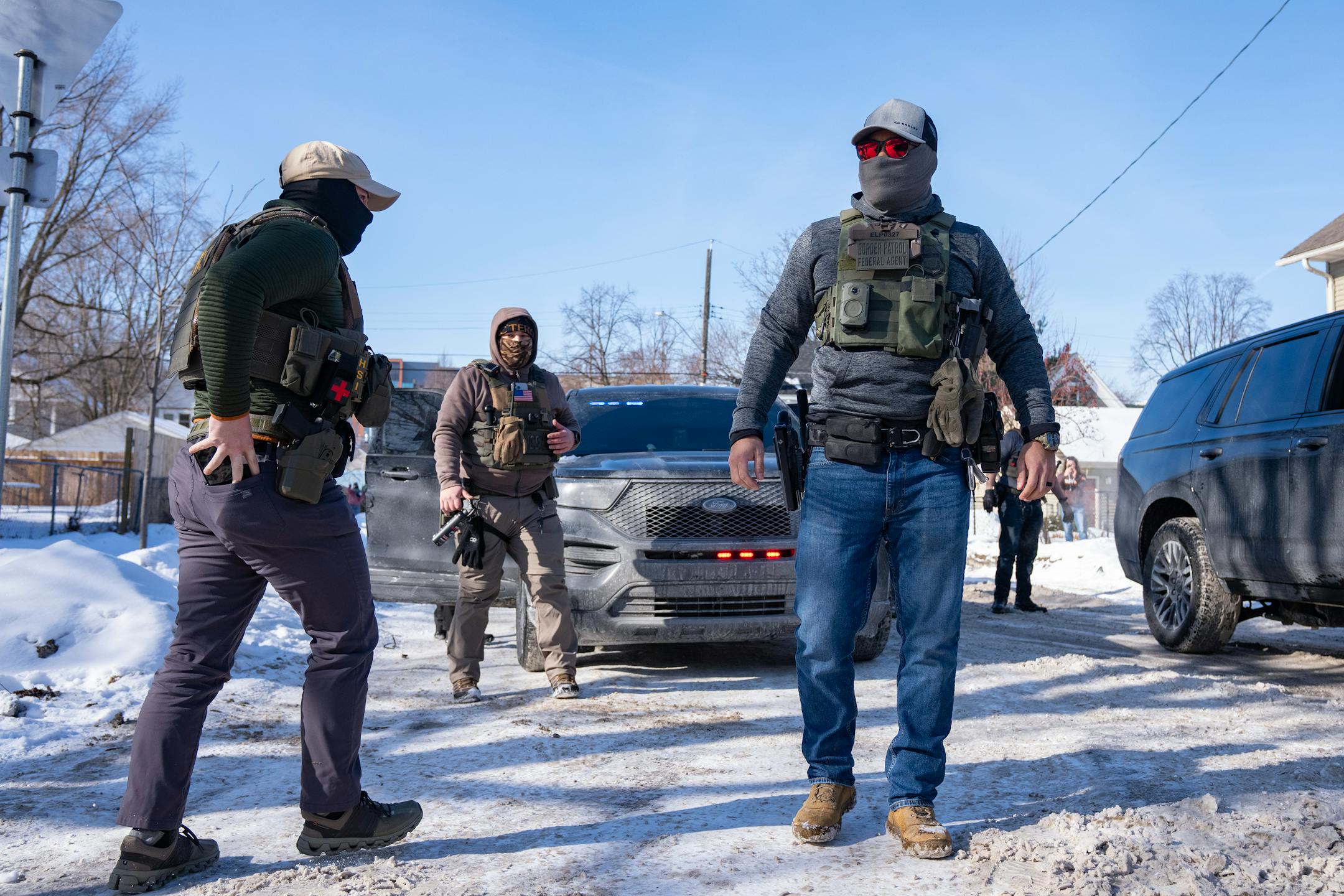
Federal immigration agents attempt to control the scene after protesters broke windows on two of the agents' vehicles near the intersection of E. 27th Street and 14th Avenue S. in Minneapolis on Feb. 3. (Alex Kormann/The Minnesota Star Tribune)

Despite the change in tone, intense fights still break out daily between agents and protesters following them.

Just before 8:30 a.m. Tuesday, videos posted on X showed agents pointing handguns at the driver and passengers of an SUV near the intersection of E. 27th Street and Cedar Avenue while ordering them to get out. The agents detained several of the observers who had been tailing the agents through an alleyway.

DHS Assistant Secretary Tricia McLaughlin said in an email that agents were attempting to arrest an undocumented man from Ecuador who they say had previously been charged with assault. McLaughlin alleged that people in two vehicles attempted to block an agent’s vehicle by closing a gate ahead of it.

Tyler Deans, a volunteer with the group Haven Watch, which provides transportation to detainees after they are released at the Whipple Federal Building, said he suspects agents will be less obvious with how they will operate now. But he doubts that Homan’s arrival will lead to significant changes.

“Switching out the figurehead doesn’t really change the amount of training that those guys have gotten,” Deans said.

Some interactions between protesters and agents have been more civil.

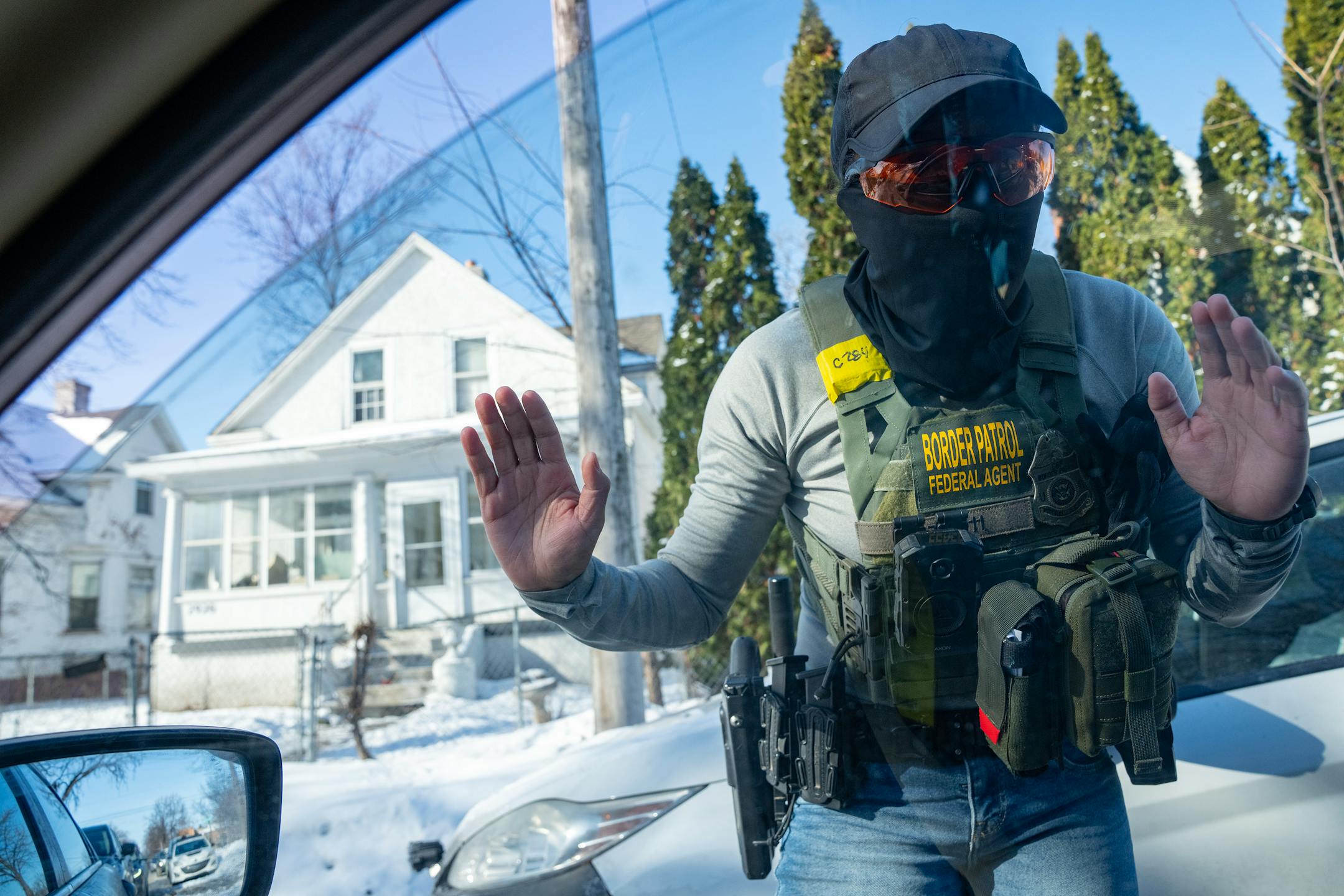
Around 10:45 a.m., an SUV stopped in front of Recher, who had been following them and honking his horn to warn residents of the federal presence. A masked Customs and Border Patrol agent got out and approached Recher’s window and asked that he not follow too closely.

A Border Patrol agent asks a community observer to stop following their vehicle so closely as they drive around Minneapolis on Tuesday, Feb. 3. (Alex Kormann/The Minnesota Star Tribune)

“I’m just saying, we’re doing our job, we’re Border Patrol, please can you give us space?” the agent said.

Before the agent walked away, Recher said, “Please leave our city. We don’t want you here.”

Ally Peters, a spokeswoman for Frey, said that there has been “no confirmation or guidance from the federal government” regarding whether there has been a reduction in agents or what changes have been made.

But Peters said the city has noticed a “shift in how some operations are being carried out.”

That includes “fewer visible vehicles and less of the highly visible street-level enforcement tactics that previously raised concerns,” Peters said.

“We do not have verified information on the number of federal agents operating in the area,” Peters said.

Drawdown at Whipple?

At the Whipple Building, which houses immigration court and has been the headquarters for the Trump administration’s immigration crackdown, there were no clear signs of a drawdown of federal agents five days after Homan took the leadership role.

ICE and other DHS staff were regularly coming and going. Workers in the facility and regular observers of immigration court said they have not noticed a change in the number of federal agents. Immigration attorneys say their phone lines continue to ring off the hook with detainees needing representation.

At the visitor entrance, a small drone hovered about 25 feet above a guard house where security screened vehicles entering the parking lot.

Protesters and agents still get into tense situations daily.

Just before 11 a.m. Feb. 3, protesters gathered at the intersection of 14th Avenue South and East 27th Street, where two SUVs with federal agents were parked on either side of the road. For about 30 minutes, the agents sat in the vehicles.

A couple of protesters moved orange caution cones and a garbage can in front of the agents’ vehicles to block them, before Recher moved the obstacles out of the street.

The agents briefly got out and threatened to use pepper spray when a protester took a wooden “no parking” sign from the sidewalk and tapped it on the window.

The crowd of protesters and observers quickly grew from a handful to about 30, many of whom were yelling at the agents, taunting them or blowing whistles.

Just after 11:30 a.m., as the agents began driving away, two men shattered two of the windows of the agents’ vehicles.

A protester breaks the back window of a federal agent’s vehicle with a hammer as they tried to leave the intersection of E. 27th Street and 14th Avenue S. in Minneapolis on Tuesday, Feb. 3. (Alex Kormann/The Minnesota Star Tribune)

The agents leaped out of their vehicles and chased after some of the protesters. Within minutes, several more federal vehicles and over a dozen agents showed up at the intersection.

At least two people were tackled and detained, though it appeared the people who smashed the windows were not caught. The agents warned onlookers by holding up pepper spray and tasers but did not appear to use them before driving away.

Susan Du and Christopher Magan of the Minnesota Star Tribune contributed to this report.

about the writer

about the writer

Louis Krauss

Reporter

Louis Krauss is a general assignment reporter for the Star Tribune.

See Moreicon

More from Minneapolis

See More
card image
Alex Kormann/The Minnesota Star Tribune

The caravans of agents rolling around town seem smaller, but intense clashes between agents and protesters are still occurring.