

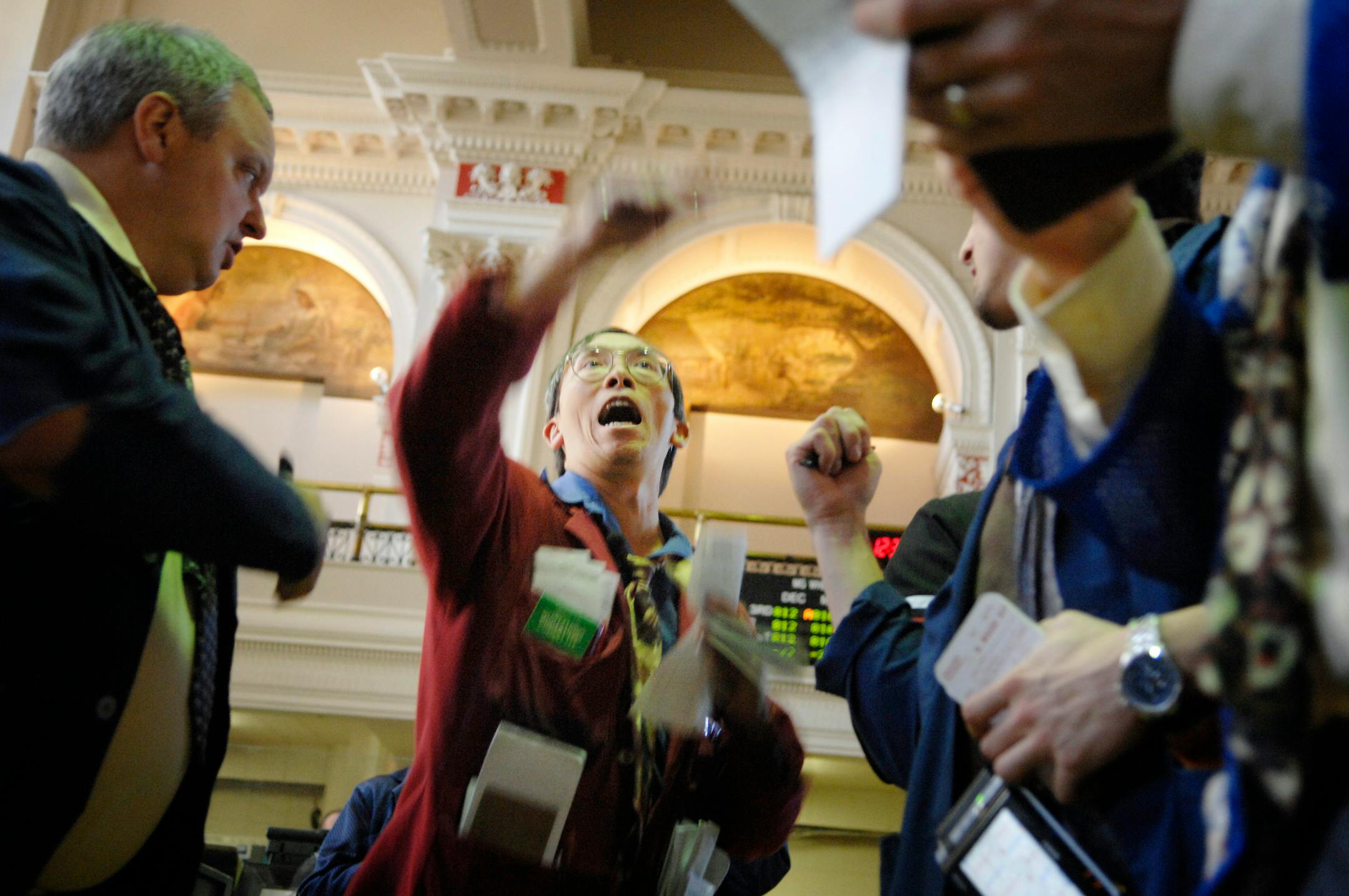
On Dec. 19, more than a century of yelling, gesticulating and loudmouth moneymaking is expected to end at the Minneapolis Grain Exchange's downtown building.
The exchange's storied and raucous trading pit will likely shut its doors, and the 40-plus traders who make a living shouting buy and sell orders for futures contracts will have to find a new place to wheel and deal.
The Minneapolis Grain Exchange announced Friday it plans to switch to a fully electronic trading system -- the first grain exchange in the United States to do so -- in an effort to meet client needs and increase efficiency. The exchange's 400 members still must vote on the move, though approval is considered nearly certain.
To the throng of traders who gathered for beers at the Little Wagon pub after the closing bell, Friday was the day they'd been dreading. The death of face-to-face trading, known as "open outcry," has been predicted for years, as a growing percentage of traders migrate to electronic trading platforms, but no one knew when the end was coming.
At the Minneapolis Grain Exchange, which opened in 1881, electronic trades now account for more than 70 percent of all trading volume. Even as prices of wheat rose to record highs this spring, the trading pit often seemed like a high-priced meeting room for traders who were conducting most of their transactions online.
"Everyone knew the [trading pit] had been a sick dog for a long time," said Charles Soule, a longtime exchange trader who was on his second pint of beer at the Little Wagon. "It's just no one had the guts to shoot Old Yeller until now."
But as old and antiquated as it is, the trading pit still holds a special place in trader culture and Minneapolis history. The exchange, at 4th Street and 4th Avenue S., helped bring together the farmers, millers and traders in a centralized marketplace in the 1880s. Two years after it opened, it introduced its first futures contract -- hard red spring wheat -- to help stabilize prices so they didn't drop from the oversupply at harvest.
The end of the pit could actually drive down volumes to a point where trading on the exchange becomes less efficient, because fewer speculators are there to buy or sell grain, some local traders argued. Some traders may migrate to competing futures exchanges, like the Chicago Board of Trade, which have greater volume and electronic platforms of their own.



