

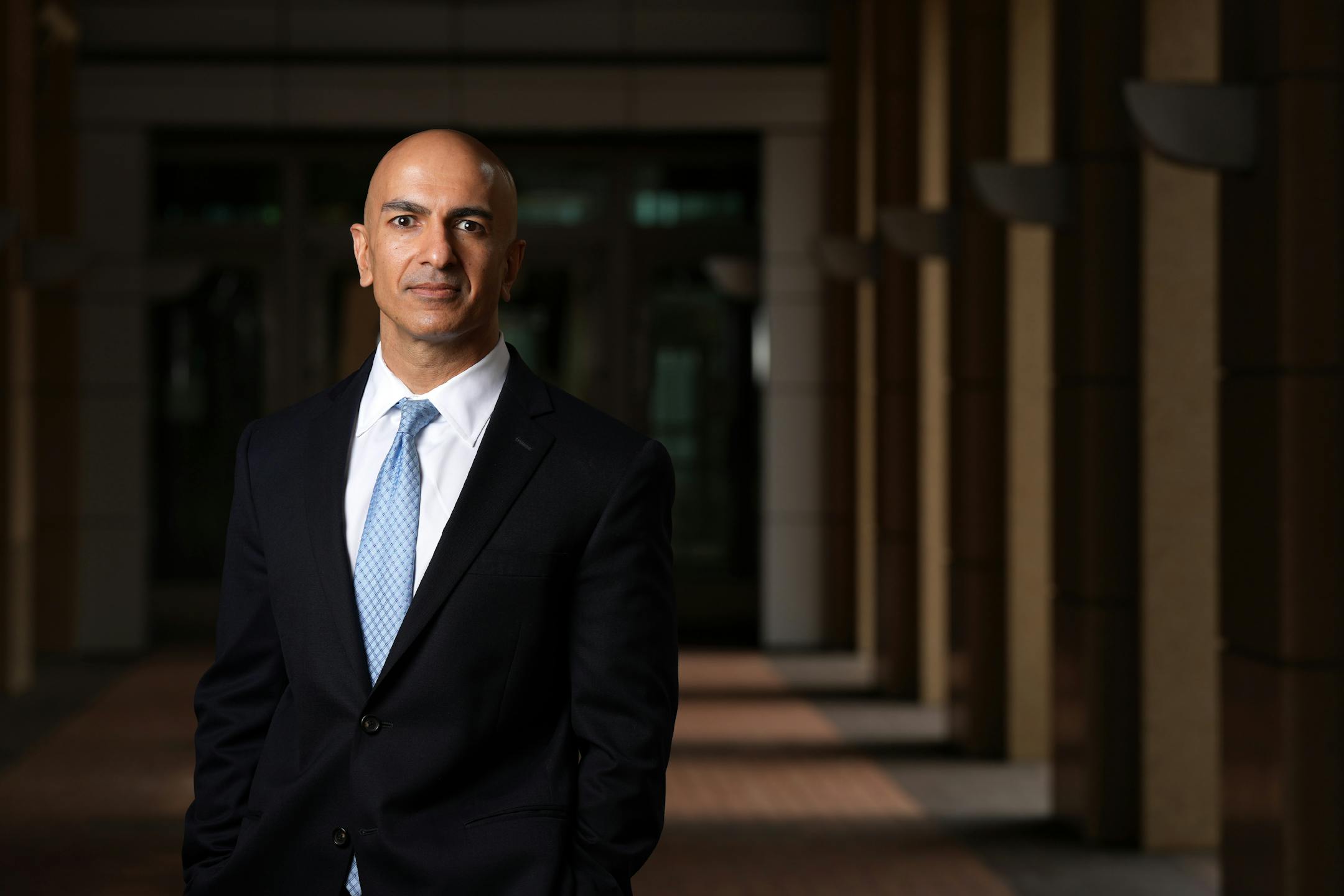
Banks need to be ready to manage interest rate hikes if inflation remains stubborn, Federal Reserve Bank of Minneapolis President Neel Kashkari warned Wednesday, throwing his support behind a new recommendation for big lenders to set aside more capital.
"That would be a step in the right direction, and that would position us better in the future," Kashkari said of the proposal this week from the Fed's top bank watchdog, Michael Barr, who suggested boosting requirements for how much banks need to hold as a buffer against losses.
Some banking officials quickly pushed back against Barr's idea, saying it could hurt the economy and limit lending.
The Minneapolis Fed president weighed in on the situation during a National Bureau of Economic Research panel, where experts discussed potential conflicts between the priorities of ensuring bank solvency and taming inflation.
"If inflation proves more entrenched than expected, policy rates might need to go higher, which could further reduce asset prices, increasing pressure on banks," said Kashkari, who is a voting member of the Fed's interest-rate-setting committee this year. "In such a scenario, policymakers could be forced to choose between aggressively fighting inflation or supporting banking stability."
The Minneapolis Fed published an essay from Kashkari ahead of the event, in which he said banks are unlikely to take steps to prevent potential losses. Following the collapses of Silicon Valley Bank, Signature Bank and First Republic Bank, he instead called on bank supervisors to run high-inflation stress tests to ensure institutions have the capital to absorb a potential hit.
Stress tests, which evaluate potential losses and revenue under different conditions, can identify at-risk banks and those facing potential capital shortfalls. If issues arise, he suggested banks could come up with plans to quickly tackle them.
The Fed also conducts annual supervisory stress tests, checking how big banks handle hypothetical economic circumstances like rising unemployment and falling real estate prices. Barr is pushing to expand that testing process. This year's results, released in June, found the 23 largest banks had enough capital to manage losses in a downturn and keep lending.


