

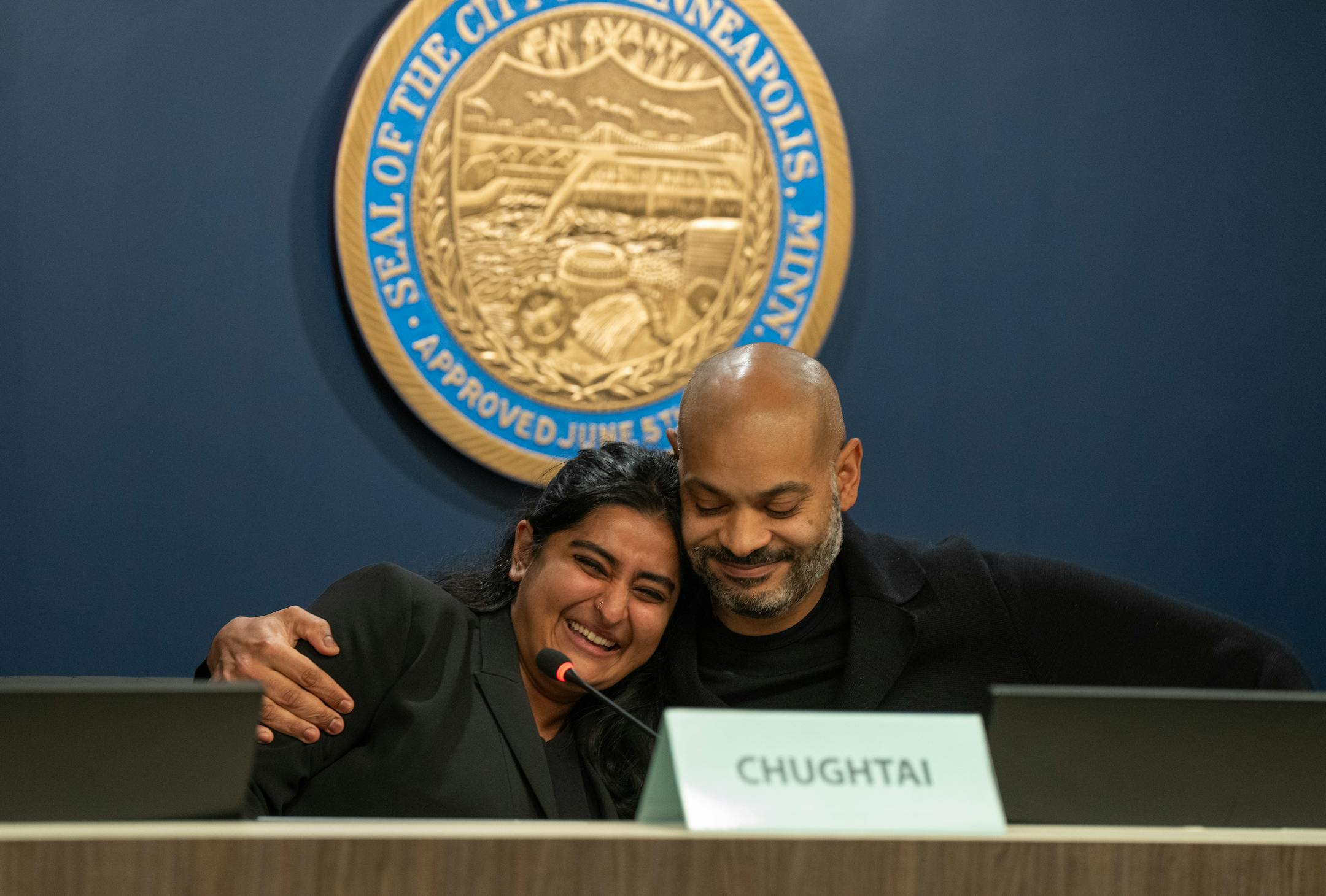
One week ago, the Minneapolis City Council approved a $2 billion 2026 budget. But behind the scenes, council leaders and Mayor Jacob Frey’s administration have been negotiating over several sticking points that nearly ended with a budget veto.
On Tuesday, some council leaders and Frey came to an agreement to avoid what would have been the second time in the city’s history that a mayor vetoed the budget. But not before some fireworks.
Frey signed the budget Tuesday afternoon with the understanding that the council would amend portions of it hours later. But at the council meeting, Council Member Robin Wonsley blasted her frequent ally, Council Vice President Aisha Chughtai, who also serves as budget chair, and Council Member Jeremiah Ellison, saying she’s disappointed in them for negotiating behind closed doors for the past two days on a deal that she knew nothing about.
Some of her amendments were at the heart of the dispute with the Frey administration:
- The council-approved budget earmarked $1.7 million in the Minneapolis Police Department budget to set up a nonfatal shooting task force with up to nine investigators, patterned after St. Paul’s unit, which has been credited with improving clearance rates. MPD consolidated its homicide unit and shooting response team in 2023 amid staffing shortages. The council plan would have resulted in four out of 29 civilian police investigators being laid off. The Frey administration promised to set up a task force early next year without straining staffing or laying off people.
- The council funded 100 emergency housing vouchers by reallocating $1.4 million from MPD and $300,000 from the mayor’s office. The council plan would have cut a press secretary position from the mayor’s office and another from the city attorney’s office, which some more moderate council members described as “vindictive.” To avoid layoffs and cutting MPD, the city will instead appropriate $1.4 million annually for the next three years for a voucher pilot program.
Wonsley wanted that funding to be ongoing, rather than a three-year commitment with a “fiscal cliff” that could leave people on the street. She accused her colleagues of betraying working-class people and taking “bait” from Frey about layoffs.
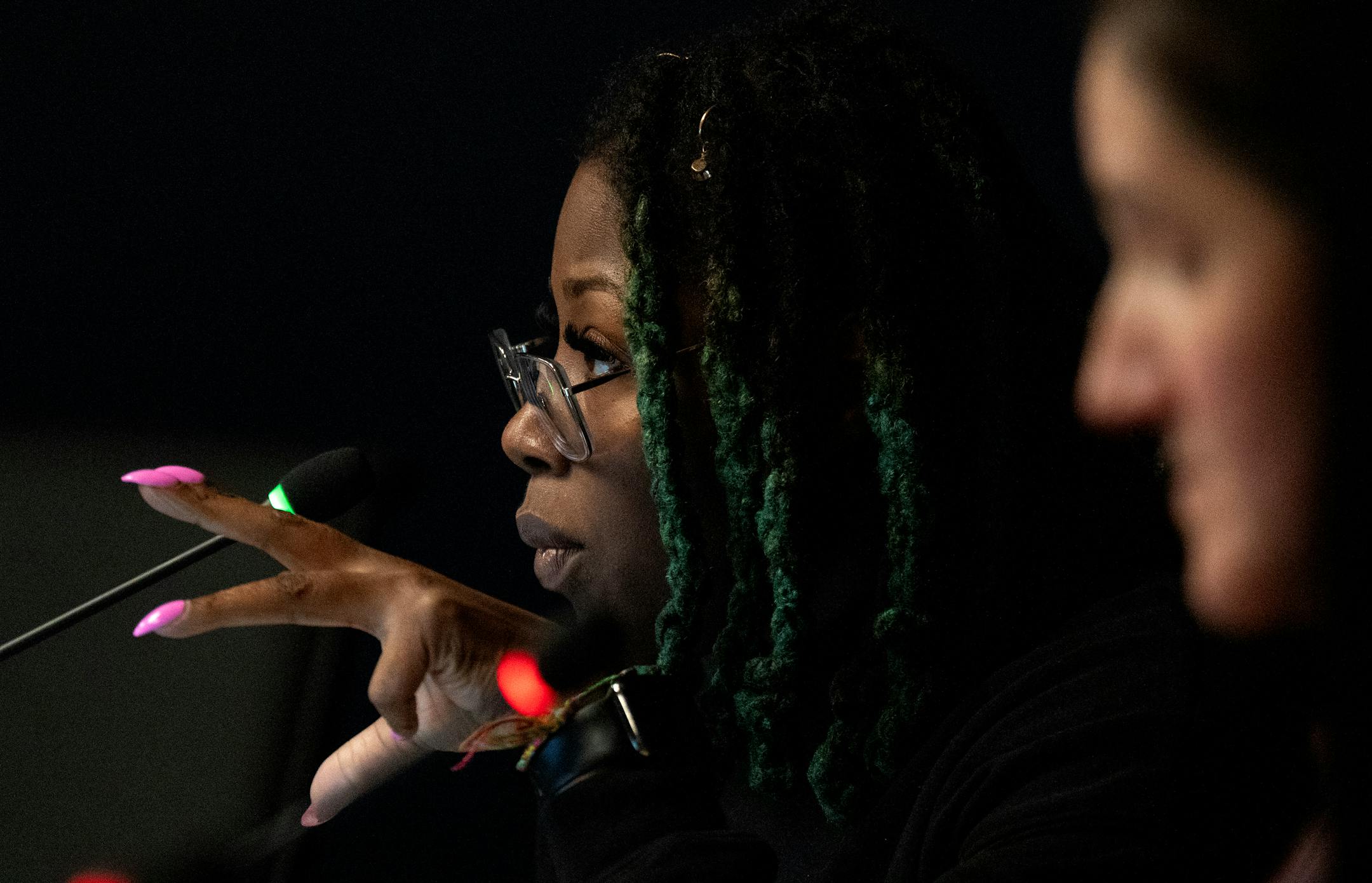
“This isn’t the first time that he’s used sensationalism to sway votes,” Wonsley said of Frey. “Dangling jobs in front of this body to upend weeks of work is incredibly cynical and misleading, and I will not normalize negotiations based in bad faith and [that] take place behind closed doors.”
Council Member Michael Rainville praised Chughtai and Ellison for reaching a compromise, saying, “The mayor has veto power over the budget, and he’s merely exercising what he sees fit for the city. We need to trust that he won the election. This almost seems to me to be a referendum on the mayor’s election, that some people don’t accept the fact that he won.”
Council Member Jason Chavez said it was difficult to move the housing vouchers from ongoing funding to one-time funding “on a pinkie promise” but the council wouldn’t have been able to override a veto. He said it was disappointing that Wonsley’s amendments were “targeted.” Wonsley is a frequent critic of Frey.


