
Minneapolis inks deal for 8,000-seat First Avenue concert venue along Mississippi River

Mayor Jacob Frey and other leaders Thursday lauded the future of Upper Harbor Terminal.

The Minnesota Star Tribune
July 25, 2025 at 12:50AM
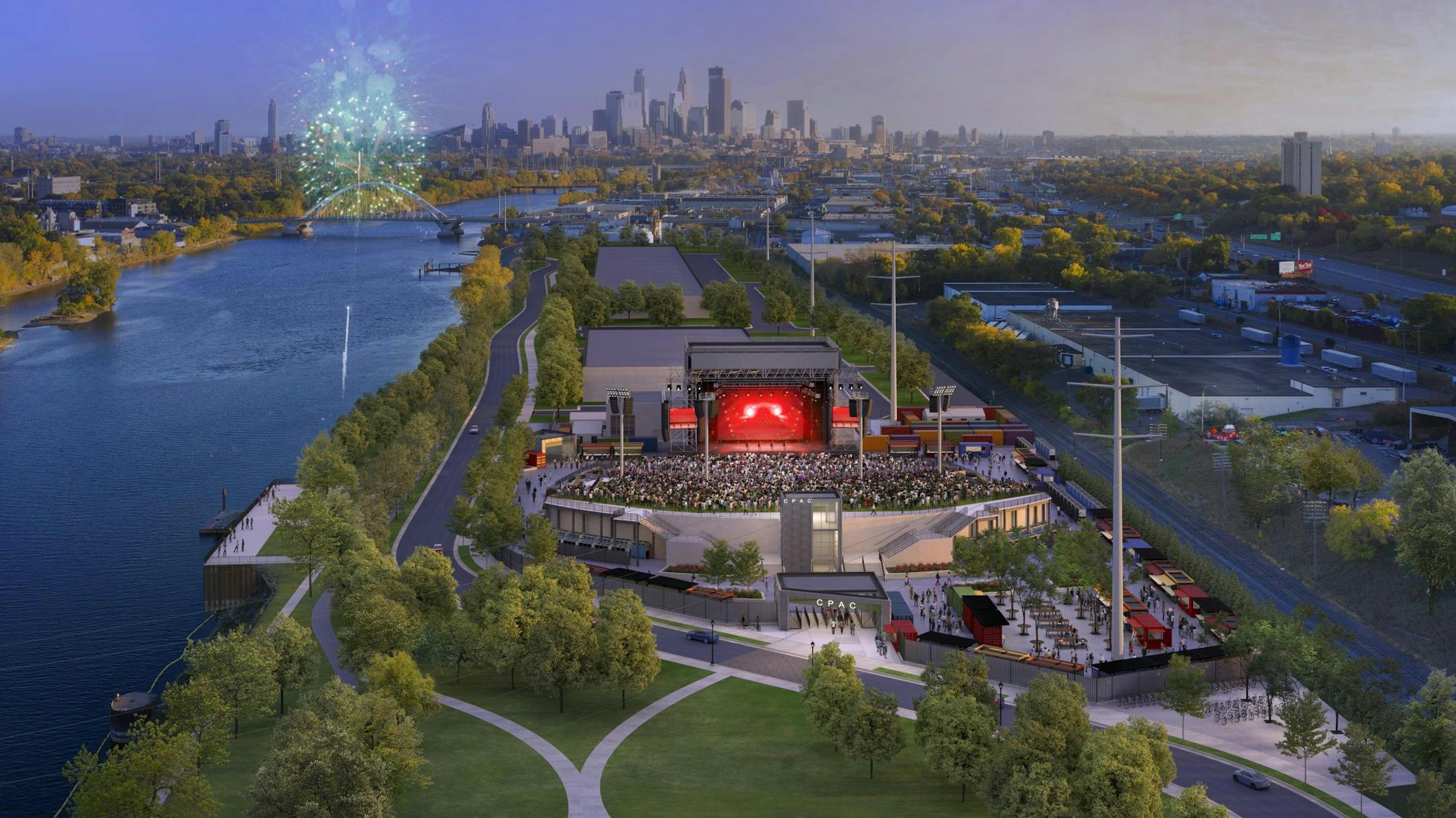
This rendering shows the Community Performing Arts Center, an 8,000-seat concert venue which would be part of Upper Harbor Terminal redevelopment along the Mississippi River on Minneapolis' North Side. (Provided by the City of Minneapolis)

A long-planned concert venue on the bank of the Mississippi River in Minneapolis is officially moving forward.

City and state leaders gathered Thursday afternoon on the city’s North Side to celebrate the City Council’s approval of an action that advances an 8,000-seat outdoor performing arts center on the Upper Harbor Terminal site — part of a $350 million redevelopment of the former industrial site.

“This isn’t something that happened to the North Side,” Mayor Jacob Frey said at the signing ceremony. “The North Side was a co-creator in this vision.”

The Community Performing Arts Center, expected to open for the 2027 concert season, will be run jointly by First Avenue, the Minnesota Orchestra, and the African American Community Development Corporation. The venue is projected to host up to 54 commercial events each year, with additional programming led by the AACDC, First Avenue CEO Dayna Frank said. A portion of every ticket sold will go into a community-controlled fund to support local initiatives — including youth apprenticeships, neighborhood events and anti-displacement efforts.

Labor issues raised at City Council

Earlier Thursday, the Minneapolis City Council briefly considered delaying approval of long-term leases of city property for the project, which some council members contended could effectively kill the project.

At issue was labor tensions at First Avenue, where workers unionized in 2024 and approved a contract earlier this year.

Council Member Katie Cashman moved to delay approval until the next council meeting to give First Avenue time to sign a “labor peace agreement” with a union that represents hospitality workers.

Council Member Jeremiah Ellison opposed the move, saying further delays could push construction past frost season and stall the project altogether.

“I do have a commitment to the workers in this city,” Council Member Aurin Chowdhury said. “That’s one that I can’t back down from.”

Responding on behalf of First Avenue, Frank told the council she would negotiate with the labor union, and said any delays could mean footings can’t get in the ground “to beat frost.”

“I hope you would not question the developers’ commitment to union and to labor on this project,” Frank said.

With that assurance, the council voted unanimously to approve the leases.

Upper Harbor Terminal vision

The new venue is the centerpiece of a broader redevelopment effort at the former industrial site, located off Dowling Avenue and I-94.

The 48-acre project, led by the city of Minneapolis in partnership with the Minneapolis Park and Recreation Board, will include affordable and mixed-income housing, a health and wellness hub, riverside parkland and new commercial space. Infrastructure work was completed last summer, and construction is expected to begin this fall.

City officials say the goal is to avoid concentrated poverty by offering a variety of housing types, while also connecting residents to public green space, walkable infrastructure and services. Erik Hansen, the city’s director of community planning and economic development, said the housing will roll out in phases over the next three to four years, pending additional state funding.

The state has invested more than $25 million into the project, in addition to $20 million coming from the city. Housing components are in early stages; city officials said the first phase is already funded locally and under review for additional state support.

Benefits for North Side

“This is an investment not just in North Minneapolis, but in the entire region,” Rep. Fue Lee, DFL-Minneapolis, said Thursday. “Folks will be able to come not just across the state, but the entire country, to enjoy music here.”

City leaders emphasized the years of community input that shaped the project and pointed to protections aimed at preventing displacing residents. Frey said the development was designed not to gentrify the North Side, but to ensure that “the communities that have made the North Side wonderful to begin with get to stay when great things happen.”

Council Member LaTrisha Vetaw, who represents the area, called the project a turning point.

“For far too long, this community has been underserved,” she said. “This project is a step towards changing that narrative, and it shows that North Side residents matter and deserve the same level of investment and opportunities as any other part of the city.”

Frank, of First Avenue, said the venue’s philosophy includes neighborhood hiring priorities, opportunities for vendors of color and flexible space for community events.

“This project is more than a venue. It’s a long-term investment in local economic vitality, workforce development and inclusive access to the arts,” she said. “It’s a new model for what cultural institutions look like when it’s built through partnership and public purpose.”

Kenya McKnight-Ahad, treasurer of the African American Community Development Corporation, said the amphitheater is the result of more than a decade of community work.

“It was our intent to make sure this part of the river was accessible to the North Side and foundational Black American people,” she said, referring to descendants of enslaved people. “This is about cultural visibility, opportunity, and ownership.”

about the writer

about the writer

Sofia Barnett

Intern

Sofia Barnett is an intern for the Minnesota Star Tribune.

See Moreicon