

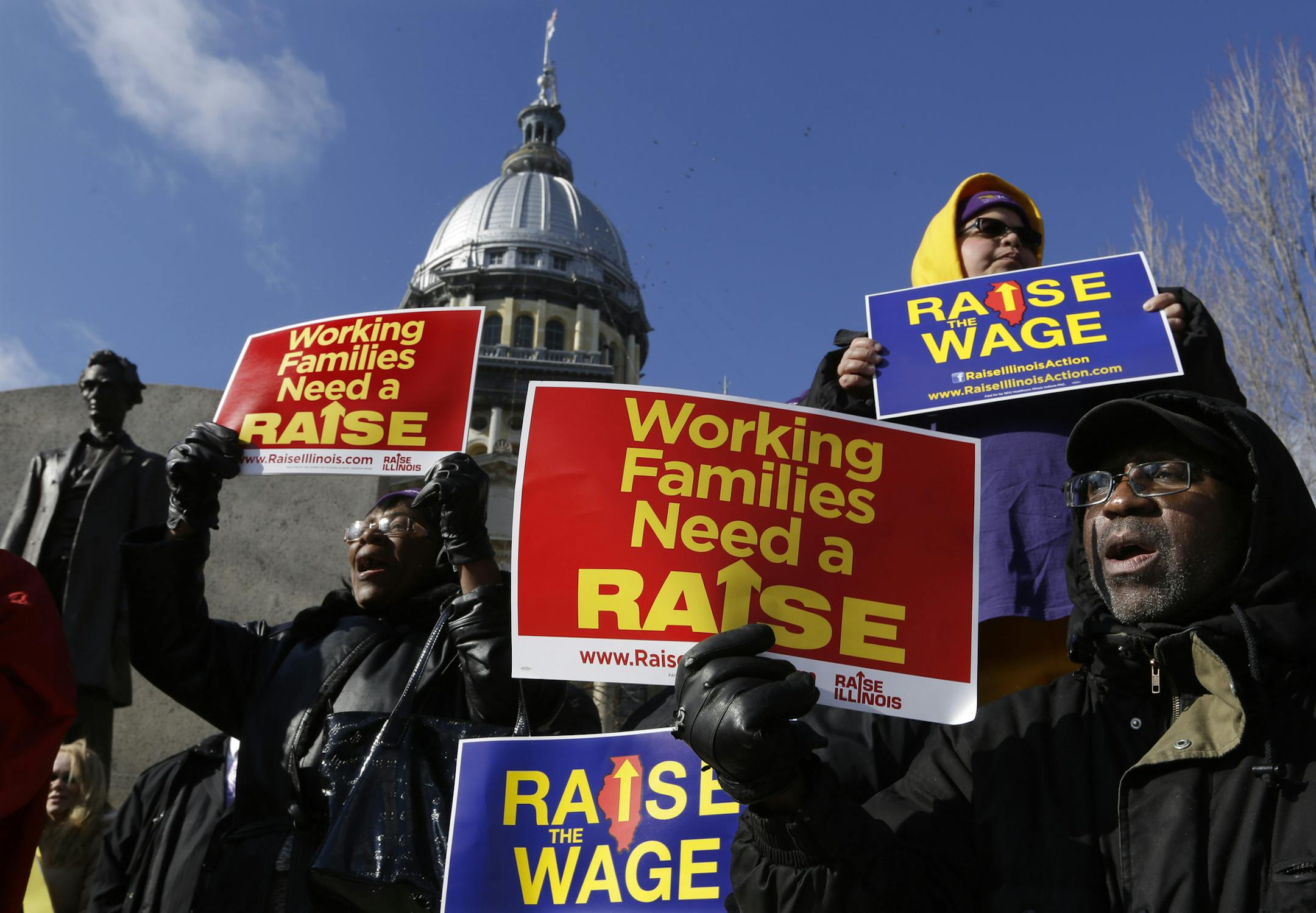
The minimum wage is rising in almost half of U.S. states in 2015, after local governments helped the lowest earners while efforts to approve a nationwide boost languish in Congress.
Twenty states from Hawaii to Connecticut will see higher minimum hourly pay after voters approved ballot measures and legislatures enacted laws, according to the National Conference of State Legislatures (NCSL). In nine of the states, the lowest pay will rise because of indexing to inflation.
"We'll continue to see more action at the state level and at the local level," said Ken Jacobs, chairman of the Center for Labor Research and Education at the University of California at Berkeley. "It is a very politically popular measure."
President Obama has urged Congress to raise the federal minimum to $10.10 from $7.25 as the gap between rich and poor widens. Republicans in Congress, who have blocked attempts to advance such legislation, will likely stymie the issue when they take control this month.
While states have pressed onward, "it would sure help if Congress went ahead and did it, as well," Obama said in an October speech in Princeton, Ind. "The states that have raised the minimum wage have had faster job growth than the states that haven't."
As of now, 29 states and the District of Columbia have minimum wages above the federal level, which hasn't risen since 2009, according to the NCSL. Washington is the state with the highest minimum, which just rose to $9.47.
Minnesota increased its minimum wage last year for most workers — those employed at companies with more than $500,000 in annual revenue — from $7.25 per hour to $8 per hour, starting in August. The wage steps up $1 per hour next year and another 50 cents in August 2016, to $9.50 per hour.
Similar increases have been popular with voters. Since 1998, every statewide ballot measure to raise the minimum wage has passed, according to the NCSL. In November, voters in Alaska, Arkansas, Nebraska and South Dakota approved measures.



