

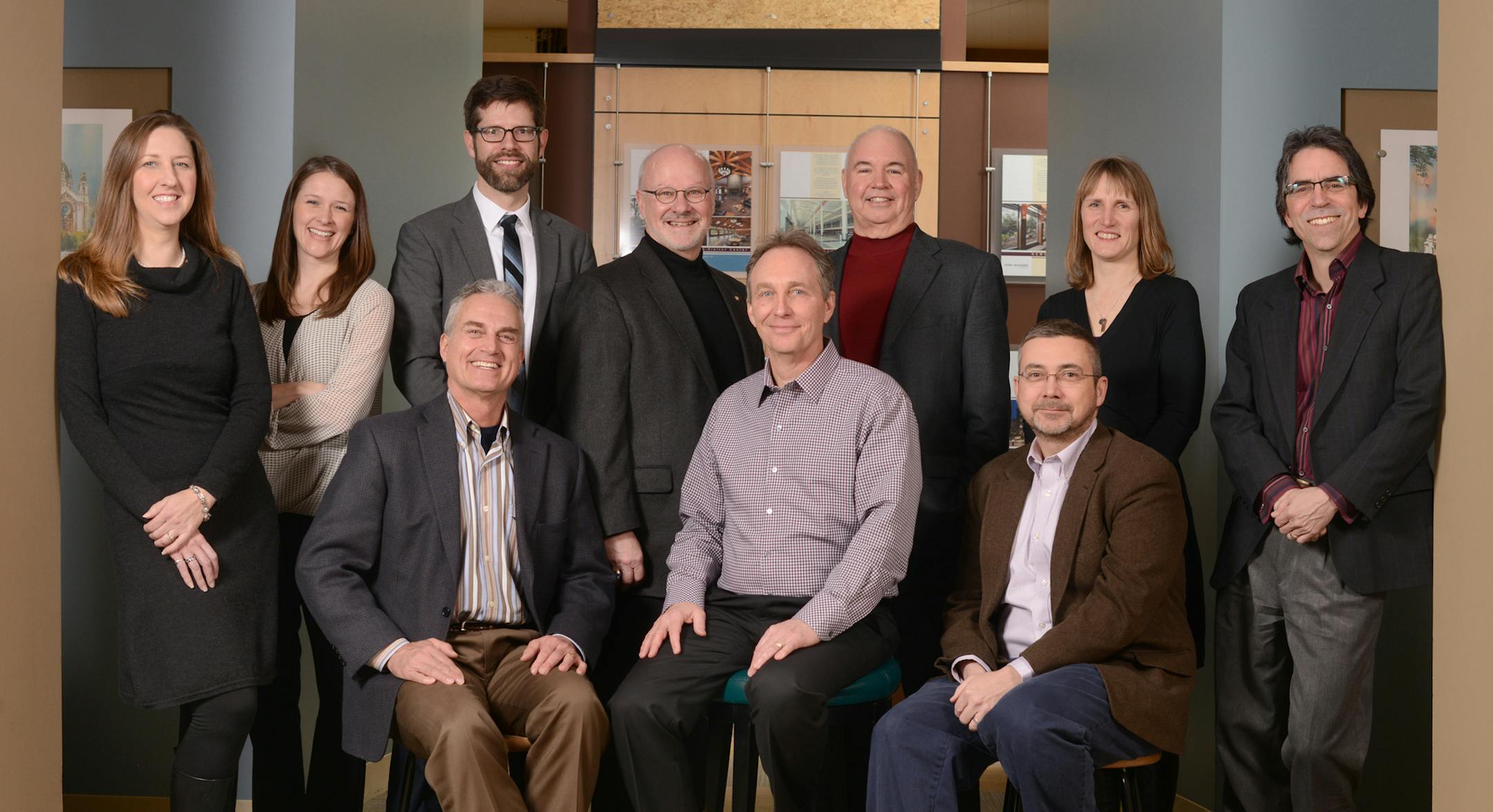
Minneapolis architecture firm Miller Dunwiddie, designer of some of the Twin Cities most prominent buildings during its 50 years in business, has drawn up a blueprint for its future.
The plan names six longtime employees as associate principals who eventually will succeed today's leadership team. The firm also has initiated an employee stock ownership plan (ESOP), laying the foundation for employee ownership in later years.
Acquisition offers from big national firms, primarily ones specializing in engineering, spurred discussions of a succession plan back in the early 2000s, Miller Dunwiddie President Craig Lau said.
Lau and other leaders decided then that staying small and independent was the best way protect Miller Dunwiddie's culture, based on the core concept that "people always come first," both clients and employees.
That philosophy, Lau said, also has shaped the firm's work — on such well-known projects as the design of Terminal 2, formerly the Humphrey terminal, at the Minneapolis-St. Paul International Airport and extensive work on the State Capitol, the Cathedral of St. Paul and the Basilica of St. Mary in Minneapolis.
Succession talks, put on hold during the recession, resumed in earnest over the past year as the firm marked its 50th anniversary, Lau said. The ESOP also came together over the same period as a way to "reward the entire firm."
The firm, with 2013 revenue of $9 million, has 40 employees, including 23 architects. The staff, which has grown by several hires over the past 18 months, is about 20 percent smaller since the recession but through greater efficiencies produces roughly the same gross revenue as before.
Miller Dunwiddie offers architectural design, interior design, historic preservation, construction services and "building envelope" services, or roofing and other exterior projects focused on protecting buildings from weather and improving their energy efficiency. Roughly 80 percent of its work is with longtime clients representing education, transportation, commercial buildings, religious institutions and landmark structures.



