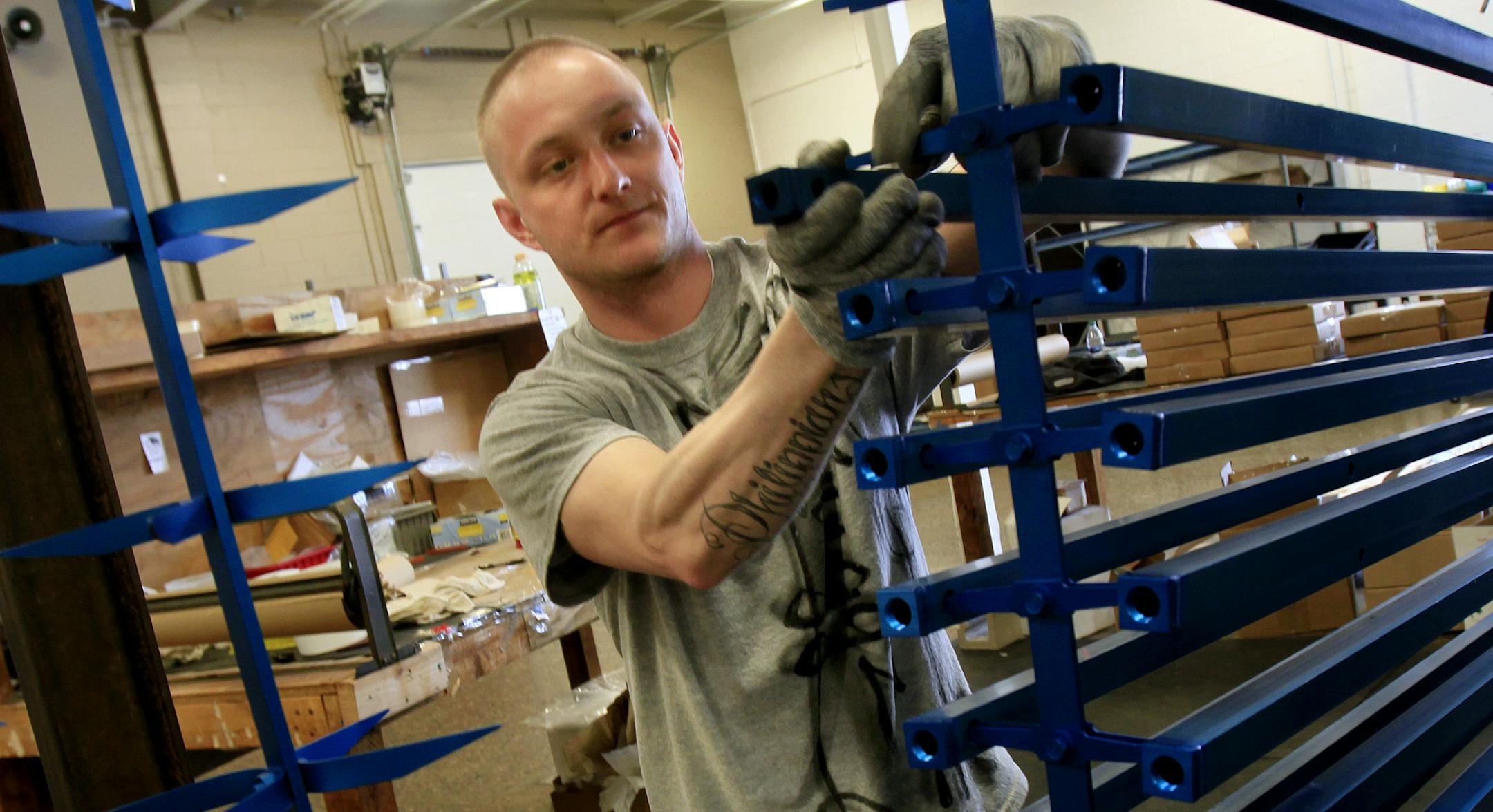
Midwestern businesses roared in March as new orders for manufactured goods delivered the biggest monthly increase in 15 months, according to a Creighton University manufacturing survey released Monday.
The report proved a boost for the Midwest and Minnesota, especially when compared to a national study Monday that showed slowing growth for manufacturers nationwide.
Minnesota logged its fourth consecutive month of growth. Results were driven by an uptick in new product orders, sales, delivery lead times, employment and inventory use. Demand was strongest for metal goods, machinery and agricultural equipment products, according to the report.
Results boosted Minnesota's "business conditions'' index to 55.2 in March from 52 in February and contributed to the rise for the entire nine-state region. Index figures above 50 indicate growth while those below 50 show contraction.
The full Mid-America Business Conditions Index leapt to 58.2 from 53.1 in February for the region including Minnesota, Iowa, South and North Dakota, Arkansas, Oklahoma, Nebraska, Missouri and Kansas.
"This is the largest one-month jump that we have recorded since January 2012," said Ernie Goss, author of the report and director of the Creighton University Economic Forecasting Group. "We will have to record several consecutive months of readings like this to be confident that the regional economy is picking up steam.'' But for now, he said, "our survey results point to an upturn in regional job growth in the months ahead." Most of the March increase was the result of a jump in new orders, he said.
In a surprise finding, about 76 percent of supply managers surveyed by Creighton University said they were not affected by the federal "sequestration" budget cuts that started to go into effect March 1 after Congress failed to produce a budget compromise. Another 23 percent of respondents reported "only modest impacts" from the government budget cuts.
In contrast, surveys taken in February indicated significant concern by a third of manufacturers who worried that the $85 billion in federal budget cuts could hack into government supply contracts.
![Graco assmebler Heidi Orr works on assembling one of the companies largest diaphragm pumps, used in the food industry, at the Minneapolis plant Thursday, Jan. 17, 2013, in Minneapolis, MN.] (DAVID JOLES/STARTRIBUNE) djoles@startribune.com Minnesota’s job market ended 2012 on an upswing in November and December, setting a pace for annual job growth in the state that surpassed the national average by a solid margin. One category that did well on the year was durable goods manufa](https://arc.stimg.co/startribunemedia/PQLROPKTZDF4MBCTS2CID5DSXM.jpg?&w=1080)