

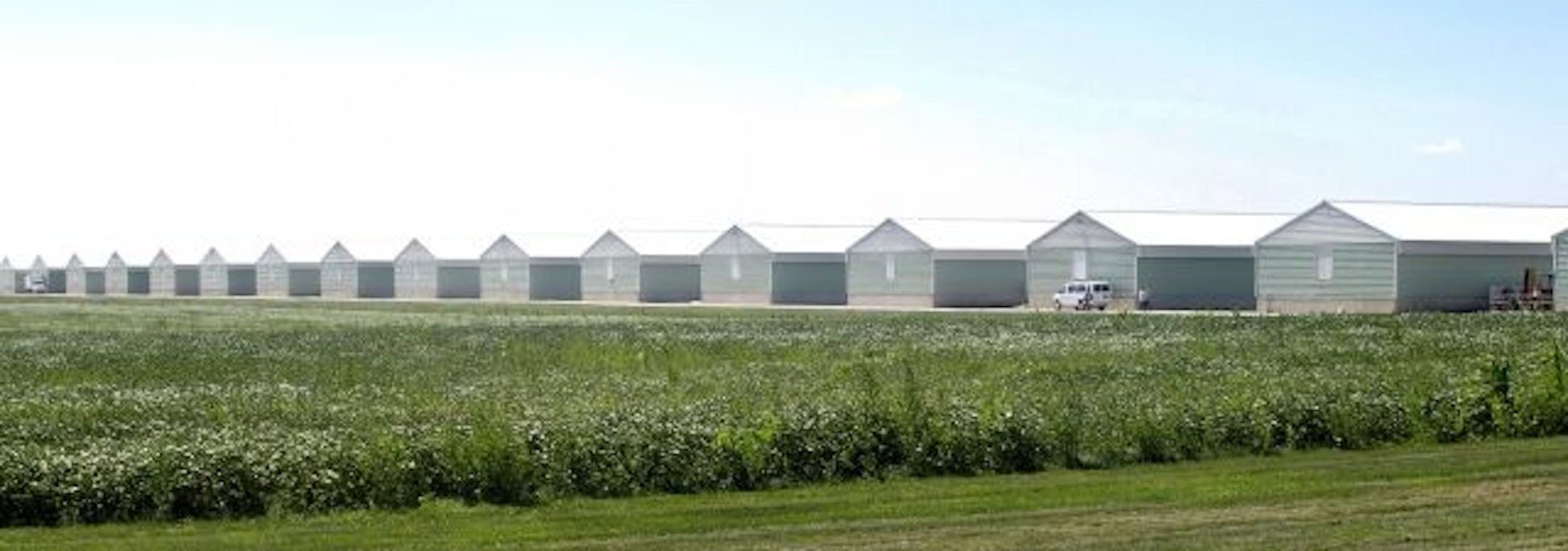
Federal inspectors who checked out two Iowa egg farms at the root of a major salmonella outbreak say they found scurrying mice, leaking or piled up chicken manure, unsealed holes in walls and uncaged hens tracking through waste.
At Wright County Egg in Galt, Iowa, inspection reports released Monday noted wild birds on the premises, maggots and flies "too numerous to count" and rusted holes in feed bins -- all sanitation problems that experts say can allow salmonella to reach egg-laying hens.
"The outside access doors to the manure pits ... had been pushed out by the weight of the manure, leaving open access to wildlife or domesticated animals," said the report by Food and Drug Administration inspectors, who counted 31 live mice while on the premises this month.
The picture painted in an inspection report on Hillandale Farms of New Hampton, Iowa, was only slightly less disturbing. Inspectors noted more than 70 holes, mostly small rodent burrows, and several larger gaps or holes in walls and doors, among other problems. Three mice were spotted by inspectors.
Wright County and Hillandale are the first U.S. egg producers to be inspected under new federal standards that took effect July 1. The two inspections stem from the investigation into the salmonella outbreak that has sickened an estimated 1,470 people, but FDA officials say they intend to inspect the 600 largest egg producers over the next 15 months.
"We have no reason to believe this is indicative of practices throughout the industry," Michael Taylor, the FDA's deputy commissioner for food, said of the two inspections. "This is a set of practices that appears to be associated with a very significant and unusually large outbreak of illness."
Neither facility followed their bio-security plans, which are designed to curb transmission of pathogens, the inspection reports said, and Wright County Egg employees didn't wear or change protective clothing when moving from one production house to another, a standard protective measure.
Wright County Egg, which recalled 380 million eggs this month, said it has made repairs or taken corrective measures on the vast majority of the problems identified by the FDA, working around the clock to "demonstrate our continued commitment to running our farms in the most responsible manner and to ensuring the safety of the eggs we produce."



