

Silas Sharp was working as a porter and shoeshiner in the lobby of the Minneapolis Athletic Club where one of his regular customers was a high-ranking executive with the old Twin City Lines, one of Metro Transit's precursors. The soft-spoken Sharp boldly asked him for a job.
Impressed with the way Sharp kept the club's lobby tidy and polished his shoes, the executive hired him on the spot to work in the bus company's maintenance department and paid him $2. 57 an hour to sweep buses and fuel them up for the next run. That was in 1963 when he was 28.
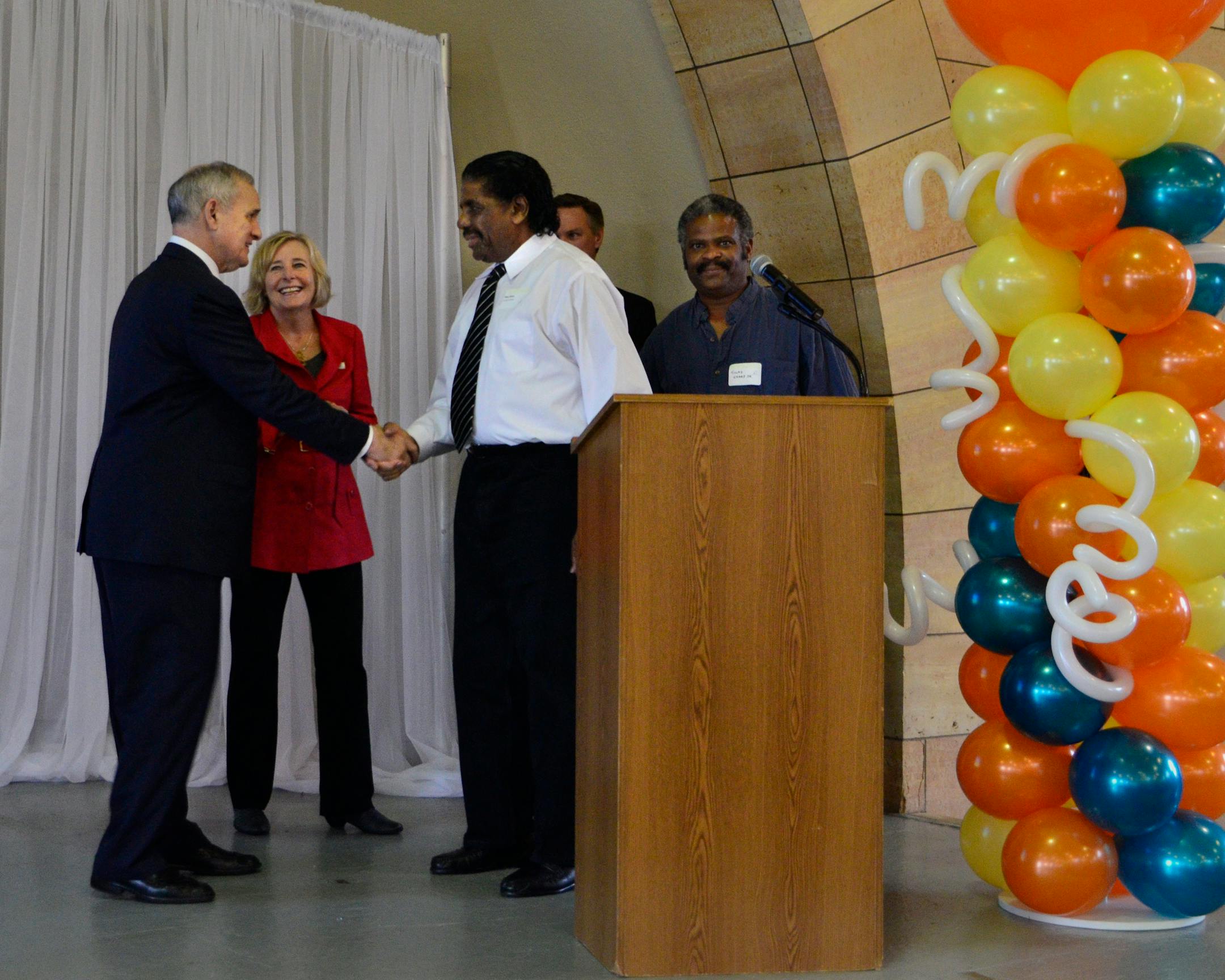
Sharp has kept buses rolling ever since. He's now the maintenance manager of the Nicollet Garage and the Metro Transit's longest-tenured employee. Last month, Sharp was honored during a ceremony that included a visit from Gov. Mark Dayton for becoming the first Metro Transit employee to log 50 years of service.
Amazed by a half-century
"I never thought I'd be here a half-century," Sharp said. "It's rewarding to me because I am contributing something to society. It's been a very good experience. I would not change it for the world."
Sharp was among 370 employees honored when the Metropolitan Council celebrated Employee Recognition Week, recognizing dozens of longtime bus operators, maintenance personnel, transit police officers and staff members.
Sharp has seen and adapted to plenty of changes since he started in a former North Side streetcar barn where the buses used to be parked. In those days, the garage was a dirty and dusty place. Fuel spills were common, and ventilation was so poor that haze from the exhaust fumes got so thick "you could not see the headlights," Sharp said. Now they are more environmentally friendly, he said.
He's seen the agency change its name three times — from Twin City Lines to the Metropolitan Transit Commission and finally to Metro Transit. He watched as the agency served its 1 billionth customer. Then the 2 billionth and more recently its 3 billionth. He also bid goodbye to the rickety red buses that broke down frequently and often had duct tape keeping doors shut and panels from flopping in the wind. He saw the arrival of a modern fuel-efficient fleet equipped with lots of intricate technology. That meant tackling a whole new set of challenges and skills to keep buses in running order.


