
Metro Transit proposes new flat fare for express bus rides

The agency wants to set daily and monthy maximum fares, and establish a new fare schedule for on-demand rides.

The Minnesota Star Tribune
January 25, 2026 at 10:00PM
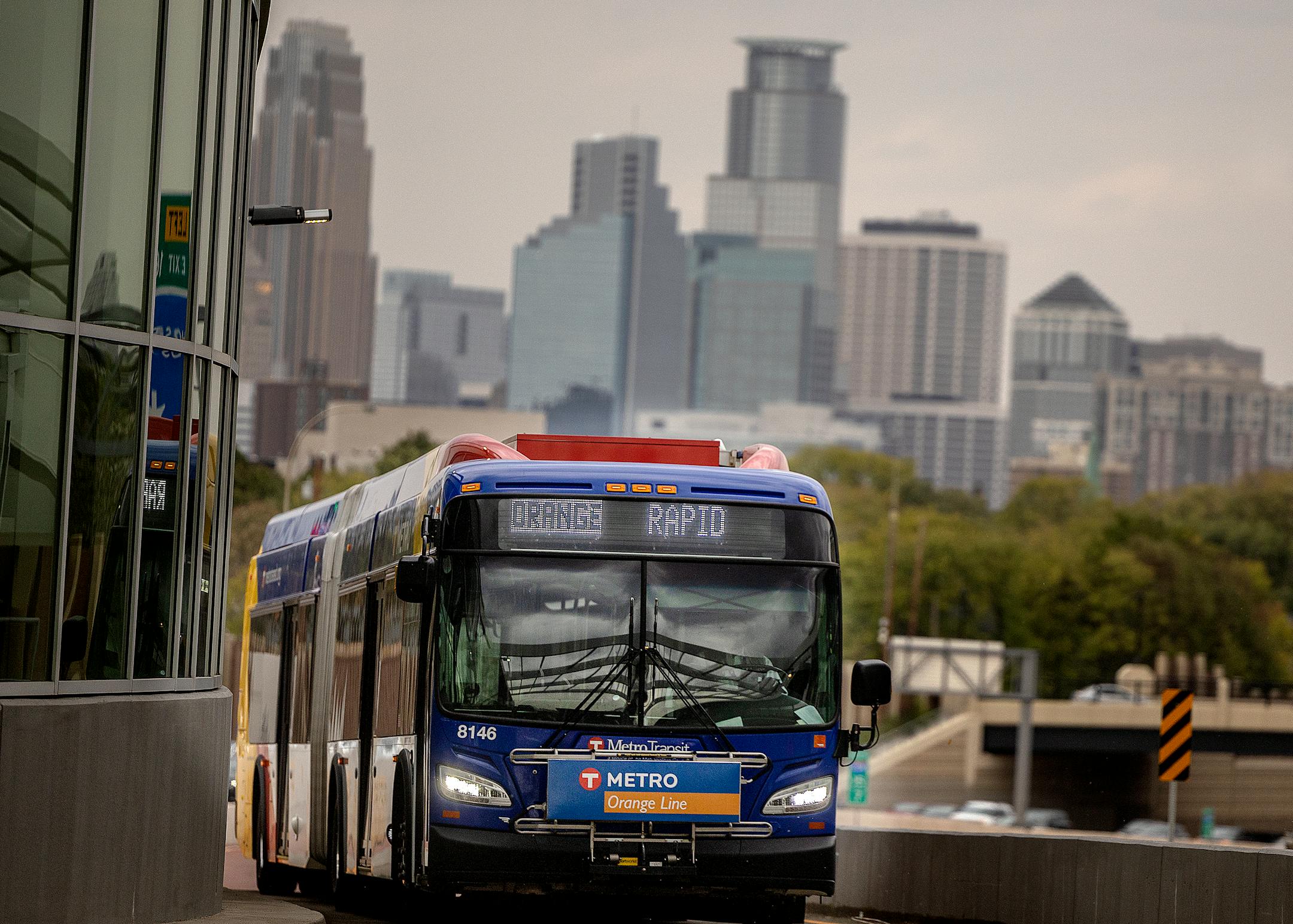
An Orange Line rapid transit bus makes its way to the Lake Street station going southbound on Oct. 3, 2023, in Minneapolis. (Elizabeth Flores/The Minnesota Star Tribune)

Riders of Metro Transit express buses would pay less during rush hours but more during off-peak hours as the agency works to simplify fares. A planned technology upgrade would allow customers to pay with credit and debit cards or other mobile payment services.

Metro Transit would make all express bus trips a flat $3, which is 25 cents less than the current rush hour fare but 50 cents more than trips taken at other times of the day, according to a proposal presented to the Metropolitan Council on Wednesday, Jan. 21.

Reduced fares for low-income riders would remain at $1. And the agency would increase ages eligible for youth fares from 12 to 18, allowing teens to ride for $1.

By simplifying fares, “we are looking at improving the experience for customers, effortless fare payment by using what is in their wallet,” said Tom Randall, Metro Transit’s senior project manager of fare modernization. It would “make things easier to understand the pay structure,” he said.

Nobody would have to switch to a phone or a card. Cash would remain an option, Randall said.

Express bus rides account for about 4% of all Metro Transit bus rides, but the service has grown as the agency adds more all-day service in key corridors, spokesman Drew Kerr said.

In another change, Metro Transit would establish a separate fare schedule for users of its on-demand micro transit service. The fare would be $4, up from $3.25 during peak periods and $2.50 during non-rush hours times.

Metro Transit is responding to changing community needs and new technology coming to the agency’s fare collection system, Randall said.

The new rates would be implemented this year if the Met Council signs off. Metro Transit must first post a 60-day comment period and hold three public hearings, most likely in April.

Metro Transit last reduced fares in 2025 to boost ridership. Full-priced fares on non-express buses and light rail trains dropped to $2 all day, every day, instead of adding a rush hour surcharge. Fares for youths, seniors and Medicare recipients changed to $1.

In 2027, the agency wants to introduce fare caps, or a pay-as-you-go system. Under the proposal, people would ride for free once they reached their daily maximum of $4 for local rides in a day or $64 for the month. For express bus riders, the maximum would be $6 in a day or $96 for the month. The caps would be prorated for riders qualifying for reduced fares.

That could help reduce disputes between drivers and customers over fares, and eliminate up-front costs for monthly cards riders buy, Randall said.

Metro Transit is also looking to update its fare collection system in 2027. Card readers and other equipment dating to the 2000s needto be replaced. In their place, new validators would add the ability for customers to simply tap a credit card or debit card on a validator or use services such as Apple Pay, Google Pay and Cash App.

Current Go-To cards would be phased out over the next two to three years and replaced with new smart cards, allowing families or businesses to tie multiple cards to a single account. The new cards also would allow customers to see in real time when cash is added, as well as their balance.

The proposed changes would also apply to fixed-route SouthWest Transit, Maple Grove Transit, Minnesota Valley Transit Authority and Plymouth Metrolink buses.

The proposals are in line with what other transit agencies across the country have implemented, Randall said.

“Visitors and tourists could just walk onto the transit system,” said Dustin Crescini, Metro Transit’s revenue operations project manager.

about the writer

about the writer

Tim Harlow

Reporter

Tim Harlow covers traffic and transportation issues in the Minneapolis-St. Paul area, and likes to get out of the office, even during rush hour. He also covers the suburbs in northern Hennepin and all of Anoka counties, plus breaking news and weather.

See Moreicon

More from News & Politics

See More
card image
card image