

Opinion editor’s note: Strib Voices publishes a mix of guest commentaries online and in print each day. To contribute, click here.
•••
Minnesota’s iron ore built America. For more than a century and a half, the Mesabi Range supplied the raw materials that won two world wars, constructed skylines from Chicago to New York and forged the rails that bound a continent together. That ore was shipped to Pittsburgh, Cleveland and Gary, Ind., where American workers transformed it into steel that projected and ensured our national strength.
While steel may have built the 20th century, it’s magnets that are powering the 21st. Electric vehicle motors, speakers, renewable energy platforms, consumer home appliances, medical devices and weapons systems all depend on permanent magnets to function.
China controls 90% of global magnet production, and twice this year demonstrated its willingness to weaponize that monopoly. Exports to the U.S. plummeted by 81%, idling U.S. assembly lines while executives scrambled for alternatives that do not exist. Meanwhile, Minnesota’s iron mines — the same ones that once fed America’s rise — operate at reduced capacity, even as their ore contains exactly the material needed to produce breakthrough innovation that outperforms Chinese rare earths. The U.S. has the resources, the technology and the industrial capacity, yet remains hostage to Beijing’s export licenses while the potential of Minnesota’s Iron Range remains underutilized.
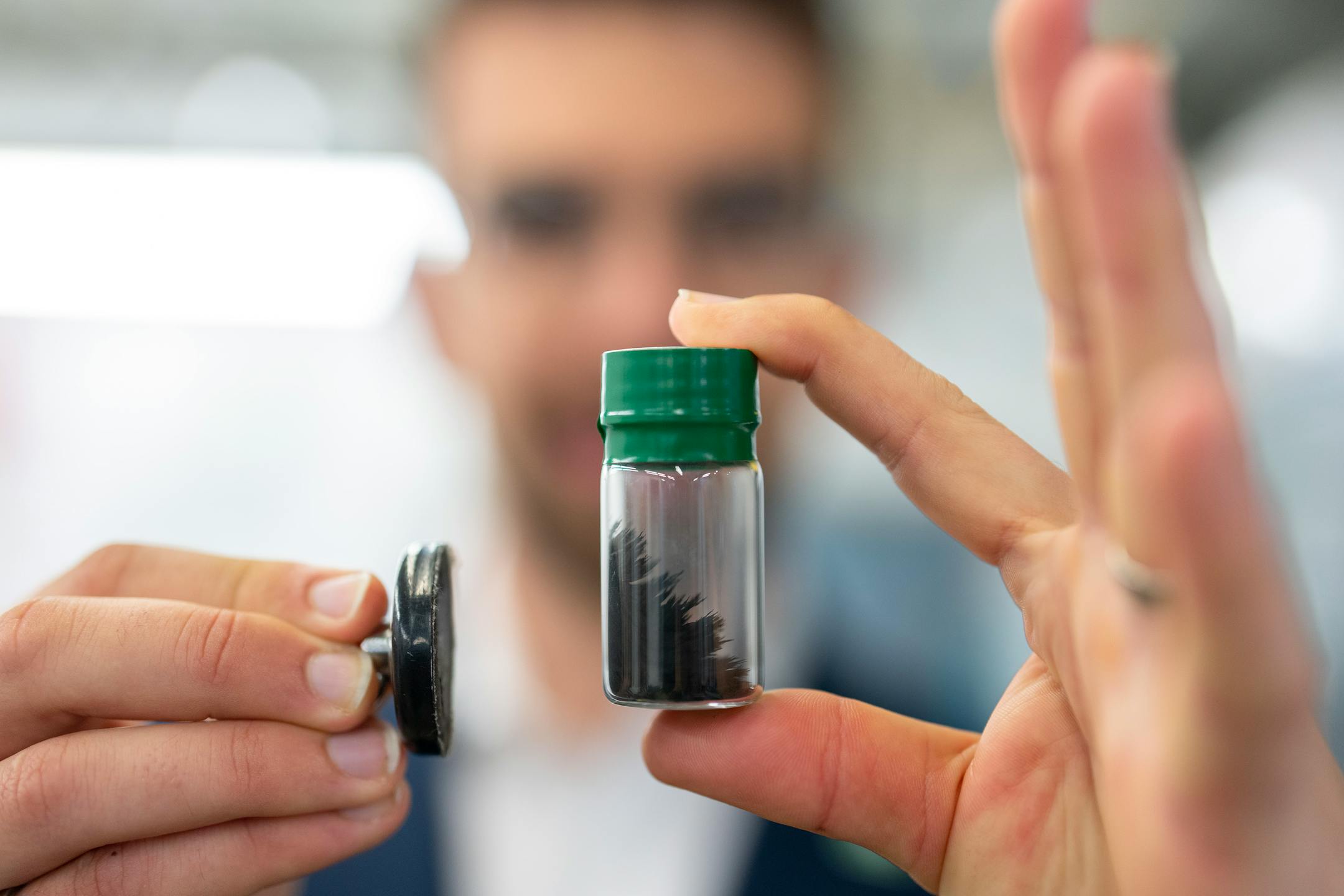
Last month, Niron Magnetics broke ground in Sartell, Minn., on a new manufacturing facility that could reverse this humiliation. The 190,000-square-foot plant from Niron Magnetics will produce permanent magnets using iron from the Mesabi Range and nitrogen from the air, materials that cannot be weaponized or embargoed by Beijing. The technology emerged from a University of Minnesota laboratory where American researchers solved a puzzle that had frustrated scientists since the 1950s.
The new manufacturing jobs promised in Sartell demonstrate that Minnesota’s mineral wealth can anchor advanced manufacturing. Each ton of permanent magnets produced reduces American dependence on a nation that views economic dominance as destiny. The iron comes from mines that employ tens of thousands of Americans. The nitrogen comes from the air. No supply chain stretching through hostile territory. No export licenses that are subject to diplomatic moods.
China spent three decades and hundreds of billions of dollars building its monopoly, bankrupting competitors with below-cost pricing until it controlled 90% of global permanent-magnet production. But the workforce that once made the Range synonymous with American industrial might still exists, even if diminished by decades of disappearing opportunities.


