

Opinion editor’s note: Strib Voices publishes a mix of guest commentaries online and in print each day. To contribute, click here.
•••
The first time I remember seeing my mother cry was when she was weeping tears of joy that I had pneumonia. The year was 1953 and I was 6 years old. Just days before, our neighbor boy had contracted polio and was in an iron lung. I had all the symptoms of that dread disease: fever, difficulty breathing, fatigue, sore throat and muscle pain. Hence my mother’s reaction when she learned that I had not contracted polio but instead had pneumonia.
I remember a great deal about that siege with pneumonia. One memory is that it was very difficult to breathe without pain. I also remember that that a kindly old doctor made house calls to check in on me, bringing with him a giant and painful silver needle to fight my disease with penicillin, and that I was given the great privilege of having the bulky family TV brought into my room so that I could watch my idol, Mickey Mantle, win the World Series.
But here is the thing: That disease, memorable and significant as it was in my life, left me. If I had contracted polio, it is more than likely that I would have lived with leg braces and withered limbs, that I might always have difficulty in the simplest movements, that breathing would be difficult. There is yet another cruelty to this horrible disease. If you are of a certain age, you know people who had polio when they were young, went through a terrible struggle and seemingly came out OK — only to have the disease return later in life.
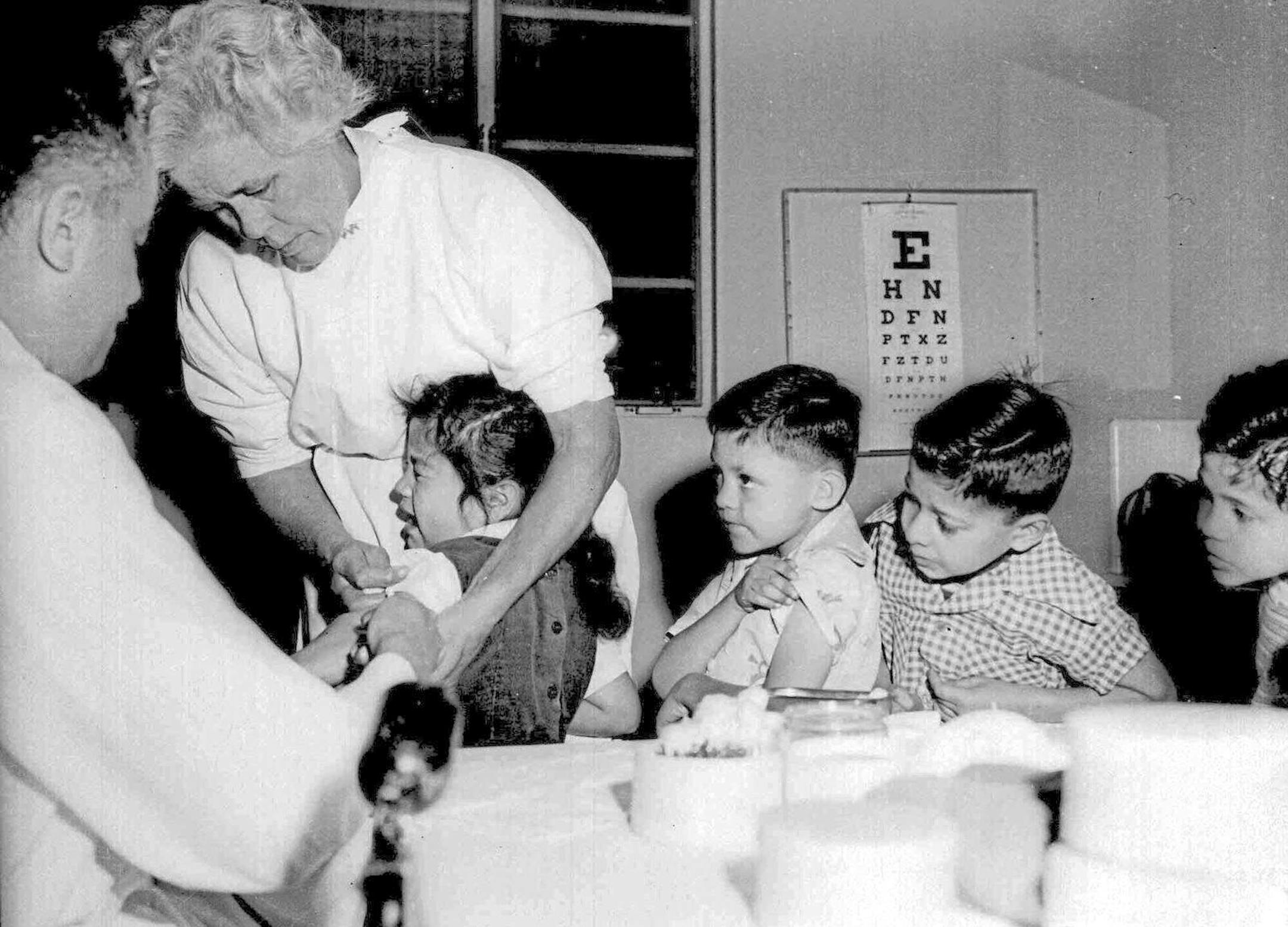
When the Salk vaccine became available in the following year, my family was first in line to have access to this wonder drug. With good reason: The World Health Organization reports that more than half a million people died every year in the mid-20th century and that millions more (mostly children) were “left with deformed limbs, leg braces, crutches, wheelchairs ... [and] breathing devices.” Before the Salk vaccine, there was absolutely no cure or possibility of fighting this horrible disease. After the Salk and then Sabin vaccines became widespread, the number of cases dropped to 161 by 1961. That worldwide statistic is a miracle.
Vaccines work. Polio is obviously a success story. Smallpox has been eradicated, with the work begun by Edward Jenner in the late 18th century. We had almost defeated measles in the U.S. until vaccine deniers started persuading people not to have their children vaccinated. The U.S. now has more than 1,600 cases of a disease that was considered nearly eradicated in 2020 by vaccines. According to the Johns Hopkins website, at least 94% of those cases are among the unvaccinated. Recent articles indicate that the U.S. will lose its “elimination status” as one of the countries in the world that had defeated measles.
In July, the editors of the Sciencenewstoday website described it this way: “Despite overwhelming scientific evidence, vaccines have faced skepticism since Jenner’s time.” They go on to say that “The story of vaccines is a story of triumph over some of humanity’s greatest threats.” You don’t have to go far to see what those threats have been: Besides polio and measles, we have had epidemics that killed millions of people, including the flu epidemic of 1918-19 and the COVID epidemic of 2020. It is the greatest achievement of the first Trump administration that he fast-tracked the so-called “warp speed” of the vaccination. Unfortunately, the second Trump administration has abandoned all efforts to continue with that or any other vaccine initiative.


