

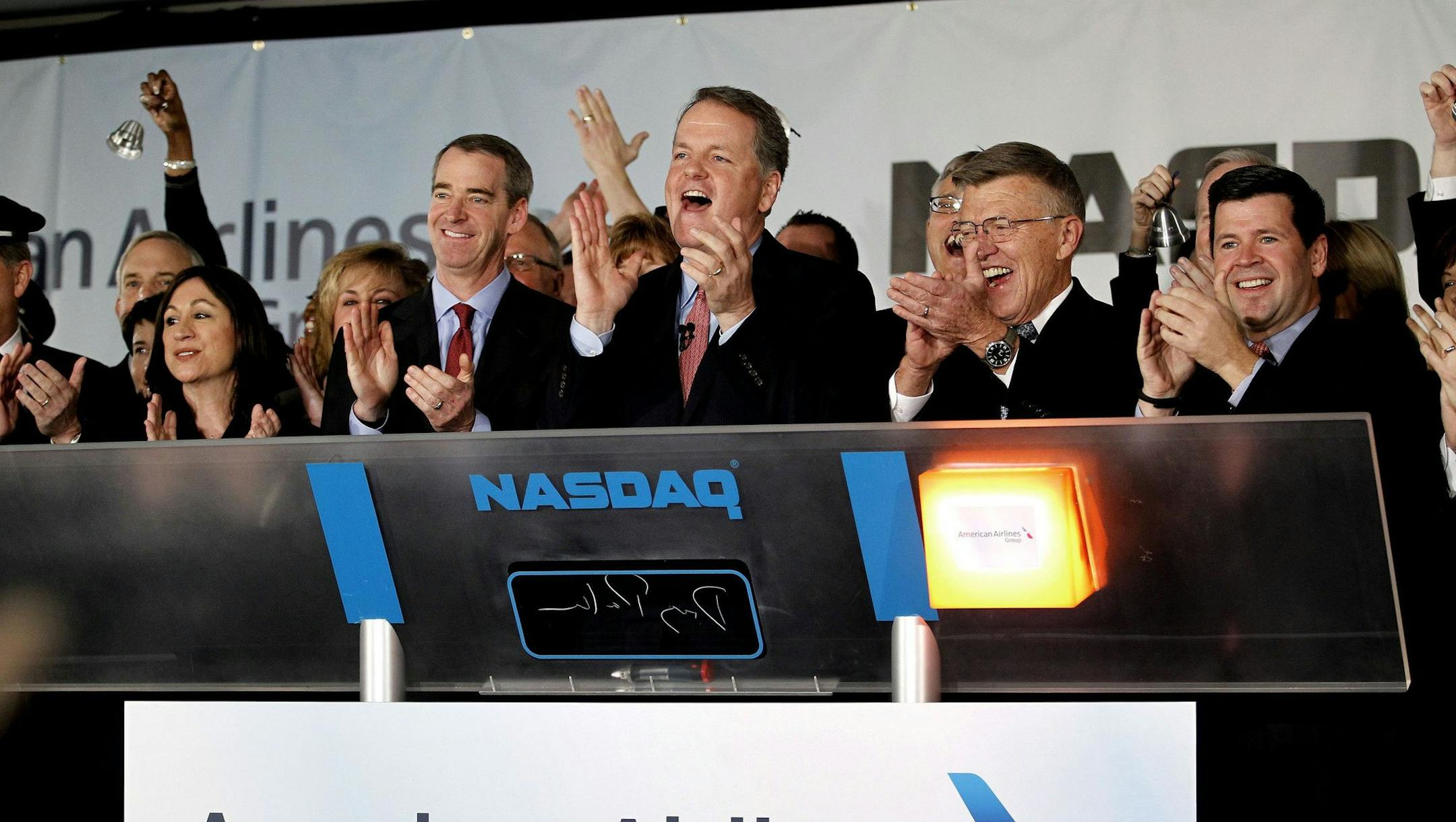
American Airlines Group Inc., formed on Monday when AMR Corp. and US Airways Group Inc. combined, is poised to rise on confidence that the world's largest carrier can avoid the pitfalls that dragged down other mergers.
The stock may reach $39 by 2015, estimated Hunter Keay, a Wolfe Research Inc. analyst, while Jamie Baker of JPMorgan Chase & Co. sees Fort Worth, Texas-based American rising to $37. Trading under the ticker AAL, the shares rose 2.7 percent to $24.60 at the close in New York from an opening price of $23.95.
Doug Parker took the helm as CEO with lessons learned in creating the current US Airways in a tie-up with America West Holdings Corp. in 2005. As he seeks $1 billion in new revenue and savings, he plans to smooth technology bumps by using the reservation system at AMR's American, the bigger airline, and has union accords in place to ensure labor peace and predictable costs.
"They are in a good position," Savanthi Syth, a Raymond James Financial Inc. analyst, said in an interview. "That's not to say they won't have any hiccups, but they have their own merger experience, and they've watched what's worked and hasn't worked for others. They will be a formidable competitor."
The new company's market value at day's end was $18.6 billion, trailing only Delta Air Lines Inc.'s $24.7 billion in the U.S. industry, according to data compiled by Bloomberg. More than 42 million shares changed hands on Monday.
Bankruptcy exit
Closing the merger capped AMR's emergence from two years in bankruptcy protection, and CEO Tom Horton stepped aside to become chairman until the first annual meeting. The new American will operate 6,700 daily flights to 336 locations in 56 countries, with a fleet of 1,511 mainline and regional jets.
"Today is a big day of celebration," Parker said after a rally with employees at American's Fort Worth headquarters. "It's great for employees. All we're going to do today is celebrate. We'll go to work tomorrow."
He was joined at the event by Horton and former American CEO Robert Crandall, along with other executives of the combined company and union leaders who backed the merger. Workers packed a large room to cheer and ring bells as Parker rang the Nasdaq opening bell.


