
Counterpoint | Mass shootings demand layered solutions, and that includes sensible gun laws

The gun control debate often cherry-picks evidence for one side while discarding the rest, but prevention requires multiple lines of defense.

September 3, 2025 at 8:29PM
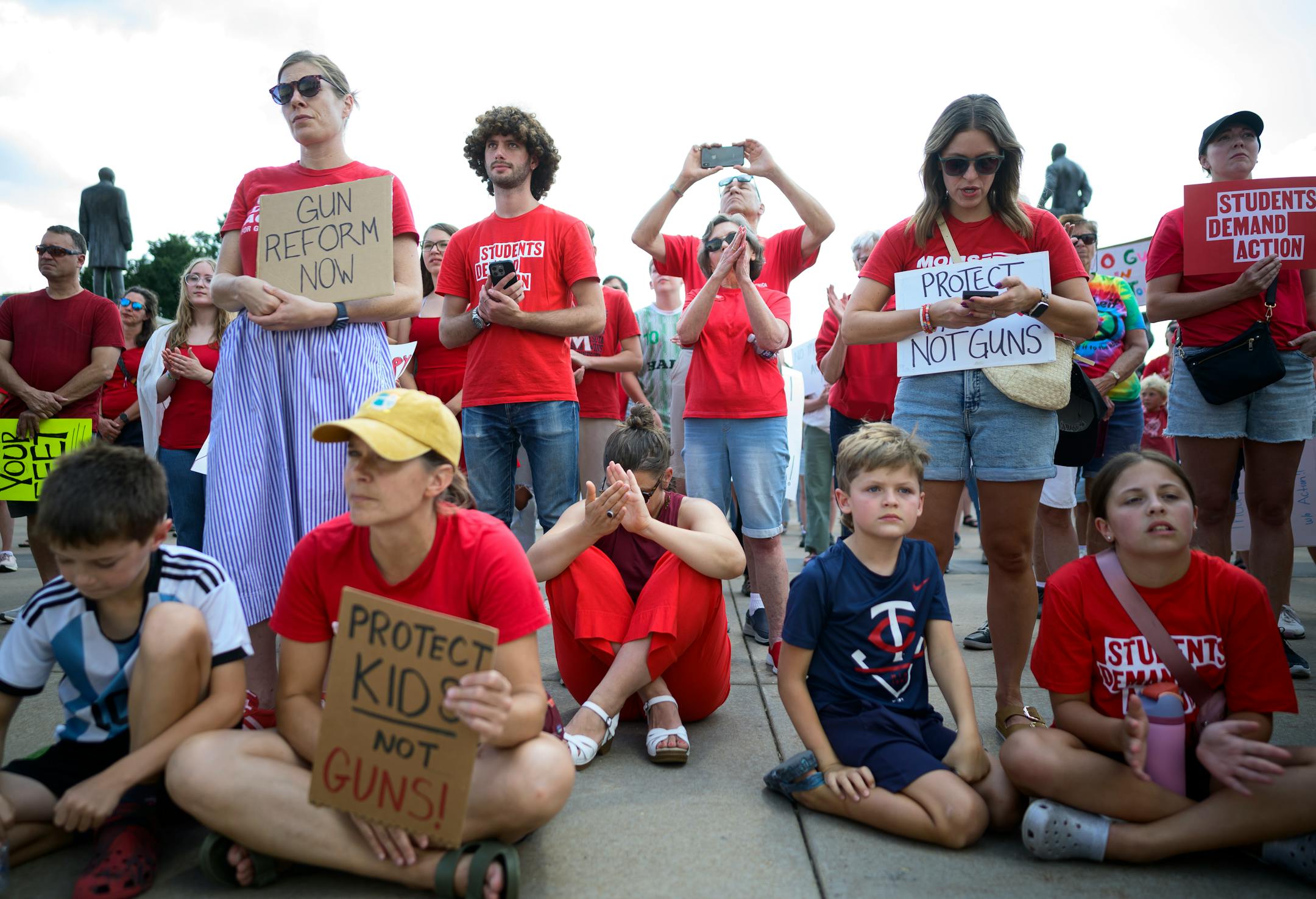
Rally-goers applaud a speaker during a protest to demand action on gun violence prevention on Sept. 1 at the State Capitol to honor the victims of the mass shooting at Annunciation Catholic Church. (Aaron Lavinsky/The Minnesota Star Tribune)

Opinion editor’s note: Strib Voices publishes a mix of guest commentaries online and in print each day. To contribute, click here.

•••

In the wake of the Annunciation Church shooting, Minnesotans are grieving again. Rob Doar’s recent commentary rightly notes that most perpetrators are in crisis, leak their plans in advance, and are motivated by the promise of infamy. We agree. Our research at the Violence Prevention Project Research Center has consistently documented these patterns, and we have long called for better mental health care, more community training to recognize and respond to warning signs, and a media environment that starves shooters of notoriety.

We’ve worked together in the past and sincerely hope to do so again in the future. That’s why we want to be clear: Doar’s piece leaves out half the story. In citing our work to dismiss gun restrictions, he selectively highlights some findings while overlooking others.

Chapter 8 of our book, "The Violence Project: How to Stop a Mass Shooting Epidemic" — winner of a Minnesota Book Award — is titled “Opportunity” and is dedicated to the role of firearms in shaping these tragedies. Chapter 9 then outlines a “Swiss cheese” model: Multiple, imperfect layers of prevention that, together, reduce risk. Mental health, crisis intervention, school design and media responsibility are all slices of that cheese. So is gun policy. Ignoring it leaves a gaping hole.

Why firearms matter

Critics often point to the 1994 federal Assault Weapons Ban and claim it “didn’t work.” That misreads the evidence. The ban was short-lived and riddled with loopholes, but it reduced the use of assault weapons in crime. And when it expired, the deadliest attacks in U.S. history — from Sandy Hook to Uvalde to Las Vegas — followed, all carried out with these weapons.

In our database of more than 200 mass shootings, those involving assault-style rifles killed and injured far more people than those using other guns. Our study in JAMA Network Open found that shootings with semi-automatic rifles nearly doubled fatalities compared with handguns. Other analyses suggest that had the federal ban remained in place, the toll of the past two decades might have been smaller.

Even short of a full ban, policies that address weapon lethality save lives. Limiting magazine capacity to 10 rounds forces shooters to reload more often, creating critical moments for escape or intervention. In Minneapolis, the shooter fired 116 rounds from a 5.56 mm rifle in under four minutes. At Tucson in 2011, bystanders tackled the gunman only because he stopped to reload a 33-round magazine. High-capacity magazines are a common thread in the nation’s deadliest attacks — and they are not necessary for self-defense or hunting.

What effective policy looks like

We are not naïve. Neither an assault weapons ban nor magazine restrictions, on their own, will end mass shootings — just as better mental health care, on its own, will not. But layered solutions build resilience and reduce the opportunity for mass killing. For example, secure storage laws to prevent dangerous individuals — including youth — from easy access to firearms. These are not radical measures. They coexist with the Second Amendment, are already in place in multiple states, and have survived constitutional scrutiny. They align with a public health approach: Reduce access to the most lethal means, and you reduce the lethality of inevitable attacks.

Layers, not slogans

We share Doar’s call for evidence-based action. We also agree that mental health investment, crisis recognition and community supports are essential. But using our work to suggest “it’s not about the guns” oversimplifies it, just as framing the choice as “mental health care instead of gun control” is a false dichotomy. The United States does not have uniquely high rates of mental illness compared with peer nations. What sets us apart is uniquely high access to high-lethality firearms — and the uniquely high firearm death rates that follow. Focusing solely on counseling while leaving opportunity untouched is not neutrality; it is a policy choice.

Too often, this debate cherry-picks evidence for one side while discarding the rest. But mass shootings are complex events, and prevention requires multiple lines of defense. For the families who bury children, they are not partisan battles but a public health crisis. That crisis demands layered solutions: stronger mental health systems, trained communities, smarter media coverage, safer schools — and sensible gun policies that reduce the firepower available to those intent on harm.

The holes in our policy “Swiss cheese” are killing people. It is time to close them.

James Densley is a professor of criminology and criminal justice at Metro State University. Jillian Peterson is a professor of criminology and criminal justice at Hamline University. Together, they are the co-founders of The Violence Prevention Project Research Center and co-authors of The Violence Project: How to Stop a Mass Shooting Epidemic.

about the writer

about the writer

James Densley and Jillian Peterson

More from Commentaries

See More
card image
Leila Navidi/The Minnesota Star Tribune

In government leadership, young people need to be ready to accept the torch, but previous generations can’t slow down their leg, or delay the pass.

card image
card image