

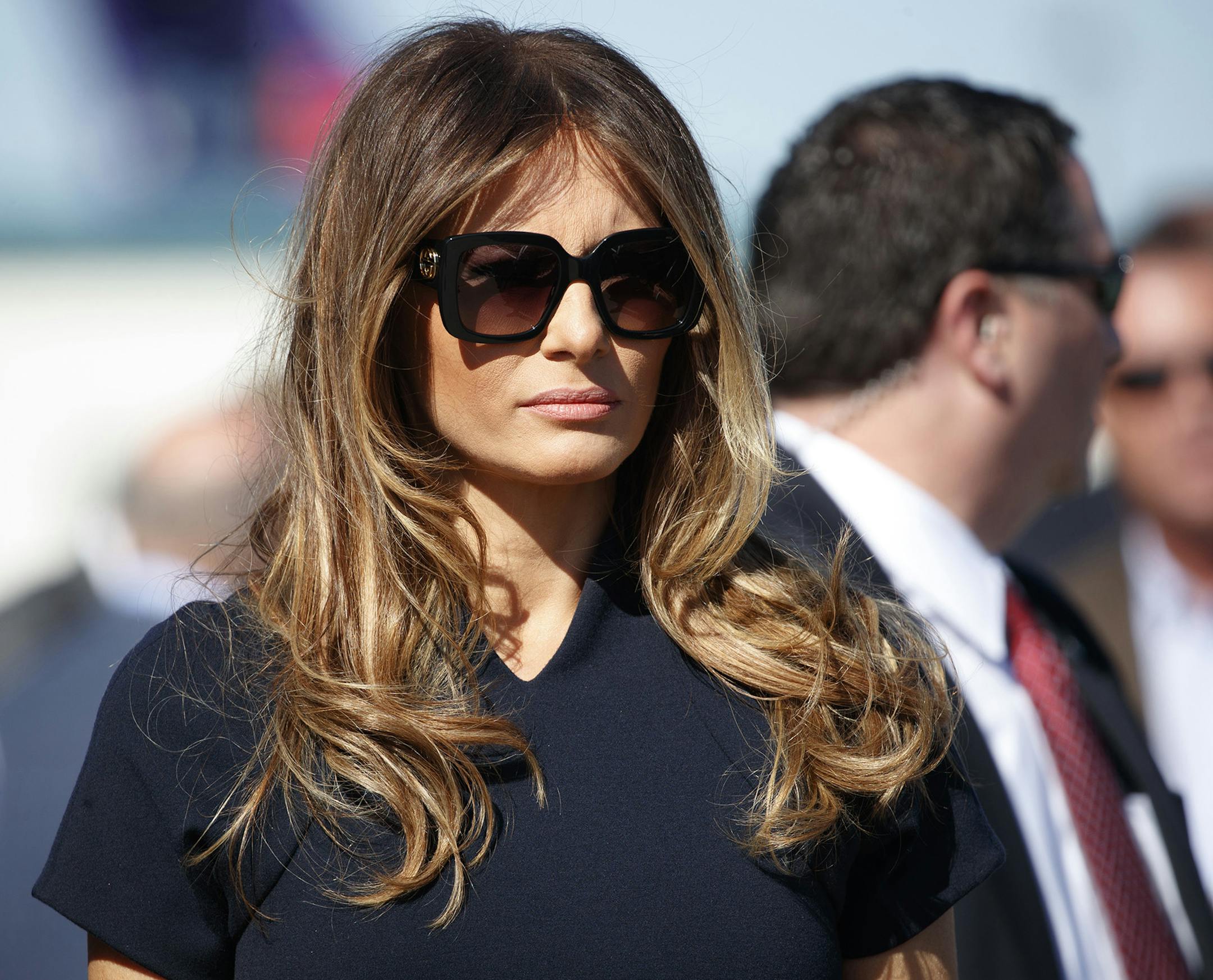
Melania Trump will be the first first lady in more than 200 years not to move into the White House on Inauguration Day. Her decision will cause headaches to her husband's budding administration that could be easily avoided by following tradition, including dealing with public outrage over the high cost of maintaining a full-time residence in Manhattan and increased security risks.
By continuing her life as usual, Mrs. Trump will also deny the administration certain advantages, such as the feel — good media coverage that results from having a new family in the White House - no small thing for a president — elect with historically low approval ratings.
But as far as we can tell, Melania Trump doesn't care. And that is actually a step forward for presidential wives.
There aren't many things about the Office of the First Lady that haven't irked feminists and gender scholars. After all, the first lady is an unpaid, unofficial government representative whose roles and influence are defined almost entirely in respect to her relationship with her husband.
It is precisely this construction of women's identity that Betty Friedan critiqued in "The Feminine Mystique." It is also one reason social scientists have shied away from studying first ladies, directing their attention instead to women in elected office, and consequently, exacerbating the irresponsible double stereotype of first ladies as powerless political bystanders and unworthy topics of serious academic consideration.
Despite receiving no compensation inside or outside the White House, my research shows that first ladies shoulder a disproportionate amount of the communications responsibility delegated to presidential surrogates due to their unique status and unmatched favorability. First ladies have made more public remarks than vice presidents across the past three administrations, and almost 30 percent of Laura Bush's and Michelle Obama's public speeches were delivered in a campaign setting, aimed to further the electoral prospects of their husbands or their husbands' political allies.
Melania Trump represented a sharp divergence from this level of activity throughout the Trump campaign, rarely appearing on the trail except for a few high-profile speeches and interviews. But the content of these were, admittedly, very gendered. She often talked about her private sphere roles as a wife and a mother, and spent much of her time on the news circuit defending her husband in light of his misogynistic remarks and against allegations of sexual assault. It is understandable, for these reasons, that she has not emerged from the 2016 campaign season narrative as a champion of women's equality.
Yet for those of us who came of age during the emergence of a boundless and empowering third-wave feminism that is supposed to acknowledge the diverse experiences and preferences of all women, it should not seem outrageous or be difficult to consider her a victim of sexism rather than a contributor to it, or to praise her dissident actions instead of condemning her conformist ones.


