

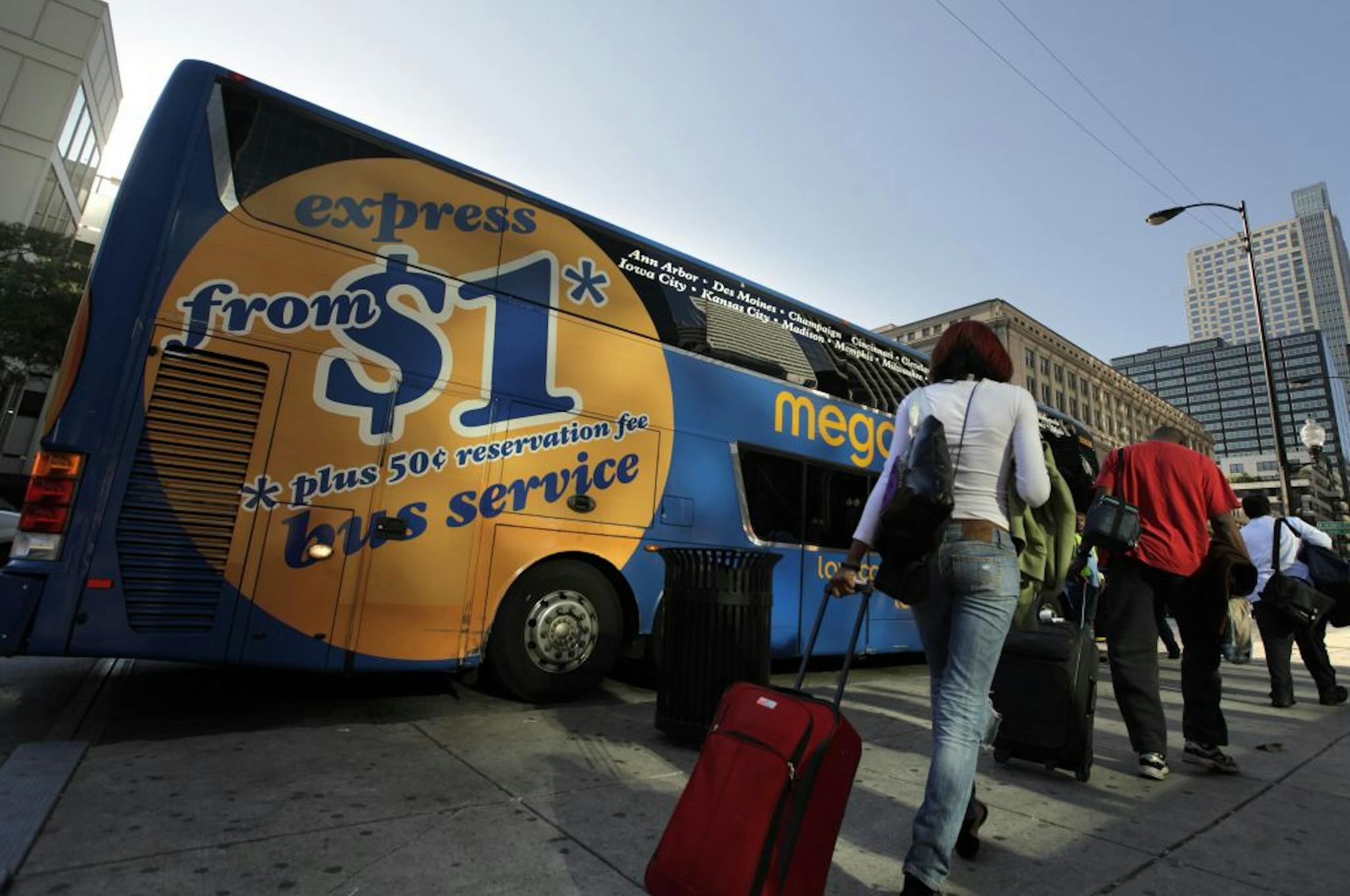
ELGIN, Ill. - We're running late this weekday afternoon and the road is a bit bumpy en route to Madison, Wis.
For Megabus, the still-growing discount intercity bus line, however, the ride has been faster and smoother than anyone guessed when it made its U.S. debut 6 1/2 years ago, linking eight Midwestern cities to a Chicago hub for as little as $1 a ticket.
Within two years, Megabus was carrying 2 million passengers annually. That number is approaching 6 million in about 100 cities in the U.S. and Canada. Its North American fleet of double-decker buses has grown to 260, and its network of hubs has expanded to eight cities.
Intercity bus service got a new identity from the curbside operators, so named because they spare the expense of maintaining traditional bus stations. There is free onboard Wi-Fi, power outlets and tables on which riders can eat, play or work.
These carriers have breathed life into a mode of transportation practically in hospice care for close to a half-century. Not even a spate of incidents this summer that raised safety concerns across the curbside bus business seems to have slowed the revival.
"The bus sector was flat on its back," said Joseph Schwieterman, a DePaul University transportation professor. "Megabus started its Chicago hub in spring of '06, and that began the whole curbside boom. It's spreading across the U.S. really rapidly, so we think this year the curbside bus [service overall] is up in scheduled departures by about 15 percent, and that's after huge growth the last few years.
"Greyhound (a traditional intercity company that's a partner in Megabus rival BoltBus) and others have tried to argue that the whole curbside sector is going to collapse of its own weight. I don't think that's true."
$125 million in revenue



