

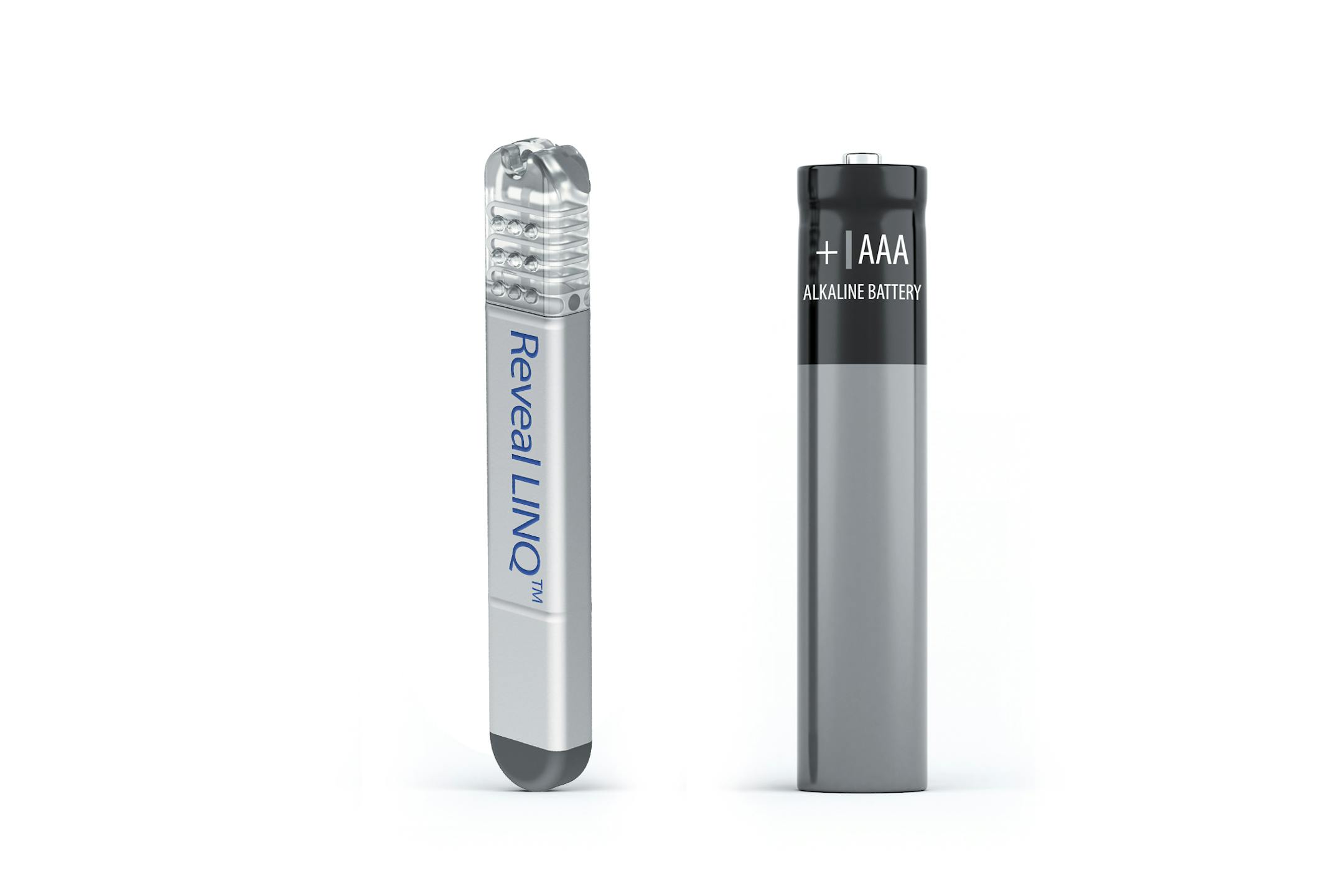
It's a device that even Medtronic Inc. officials admit is a little James Bond. But the tiny wireless cardiac monitor that doctors slip just beneath the skin with a syringe-like device is expected to make a very real impact for doctors and patients.
Called the Reveal Linq ICM, the tinier-than-a-battery device can tell doctors if fainting or dizziness is because of an abnormal heart rhythm. "It takes 30 seconds and you're done," Pat Mackin, president of Medtronic's cardiac rhythm disease management business, said of the time it takes to implant.
Fridley-based Medtronic on Wednesday announced the global launch of the device, about one-third the size of a AAA battery in volume and about 80 percent smaller than similar devices on the market. The company has received regulatory approval in the United States and Europe. The device is inserted through a 1-centimeter incision. There is no need for general anesthetic, and it continuously and wirelessly monitors the heart for up to three years.
"There is a huge void for this type of technology," said Dr. Rod Passman, professor and associate director of cardiac electrophysiology at the Northwestern University Feinberg School of Medicine in Chicago. "This device is good at picking up all abnormal rhythms of the heart."
Indicated for use as a diagnostic tool for people suffering from unexplained fainting, dizziness, palpitations or chest pain, Reveal also will help doctors determine if a patient has atrial fibrillation, Passman said. The abnormal heart rhythm, connected to stroke, "can be very intermittent and asymptomatic. We usually only check for a few days and rely on patients to tell us what's wrong," he said. "We miss it most of the time. We have been practicing this area of medicine in darkness."
Reveal Linq will automatically download its data via satellite every evening through Medtronic's Carelink network, Passman said. Doctors will be able to program it to alert them to any specific abnormalities.
"This is as close to the truth as we can hope to get," he said of the diagnostic power of the device.
Dr. Rob Schwartz, an interventional cardiologist with the Minneapolis Heart Institute and Abbott Northwestern Hospital, said he has no involvement with the Reveal Linq project. On Wednesday, he was happy to hear that the device had been approved for continuous monitoring of patients.


