Medical device firm Medtronic Inc. turned in a solid quarter of growth and saw its stock price quickly rise Tuesday in what could turn out to be its last earnings report as a U.S. company.
Fridley-based Medtronic is speeding toward its $42.9 billion acquisition of Dublin-based surgical supplier Covidien — a deal that will relocate the combined health care giant in low-tax Ireland. Despite opposition from U.S. tax officials, the deal is slated for a Jan. 6 shareholder vote.
Legal hurdles still remain for the tie-up, including getting antitrust approval from three major entities and prevailing in litigation seeking to upend the deal. But if Medtronic executives were concerned about those factors, they didn't show it in comments to investors and reporters on Tuesday. After all, the proposal has already survived a change in U.S. tax law designed to make corporate inversions like Medtronic's more expensive.
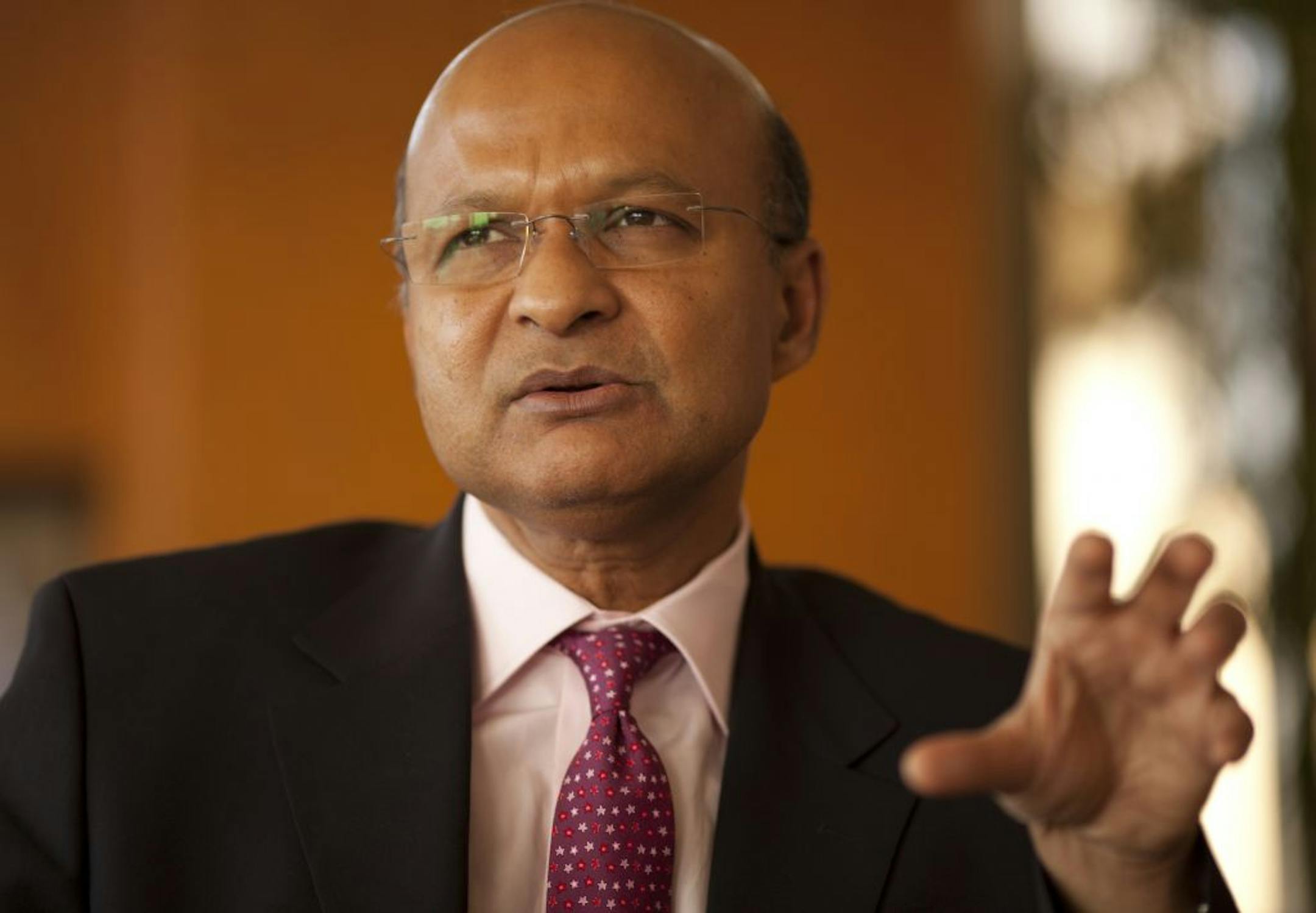
"We've stated quite consistently and clearly that we are completely committed to the deal," Medtronic Chief Executive Omar Ishrak said in an interview Tuesday. "We feel the economic benefits of the deal far outweigh the penalty. We have done that analysis, we have been clear about our strategy going forward and we have taken action to execute that strategy."
No antitrust problems seen
Medtronic and Covidien both draw from large product portfolios, but executives see little risk of antitrust problems because they say the firms' products offerings don't overlap. One exception is the category of drug-coated angioplasty balloons, but Covidien announced last month that it would sell its Stellarex line to Colorado-based Spectranetics to allay concern about reduced competition. It's not clear whether regulators could require other divestitures as a condition of approval.
The Federal Trade Commission and China's antitrust authorities have launched in-depth investigations of the merger, but executives say that was expected. The deal can't be closed without approval from those countries and the European Union.
"They are on track and they are right in line with our schedule," Gary Ellis, Medtronic's finance chief, said of the antitrust entities. "We're having obviously constant communication, and we are not aware of any outstanding issues. But until you get their approval, it is still outstanding."
A combination of the two companies will create a massive global health care player. Medtronic's high-tech medical devices generated $17 billion in revenue in its most recently completed fiscal year, and Covidien's general health care and surgical supplies drummed up $10 billion in that time. Medtronic employs about 49,000 people in 140 countries, and Covidien has 38,000 in 150 countries.