

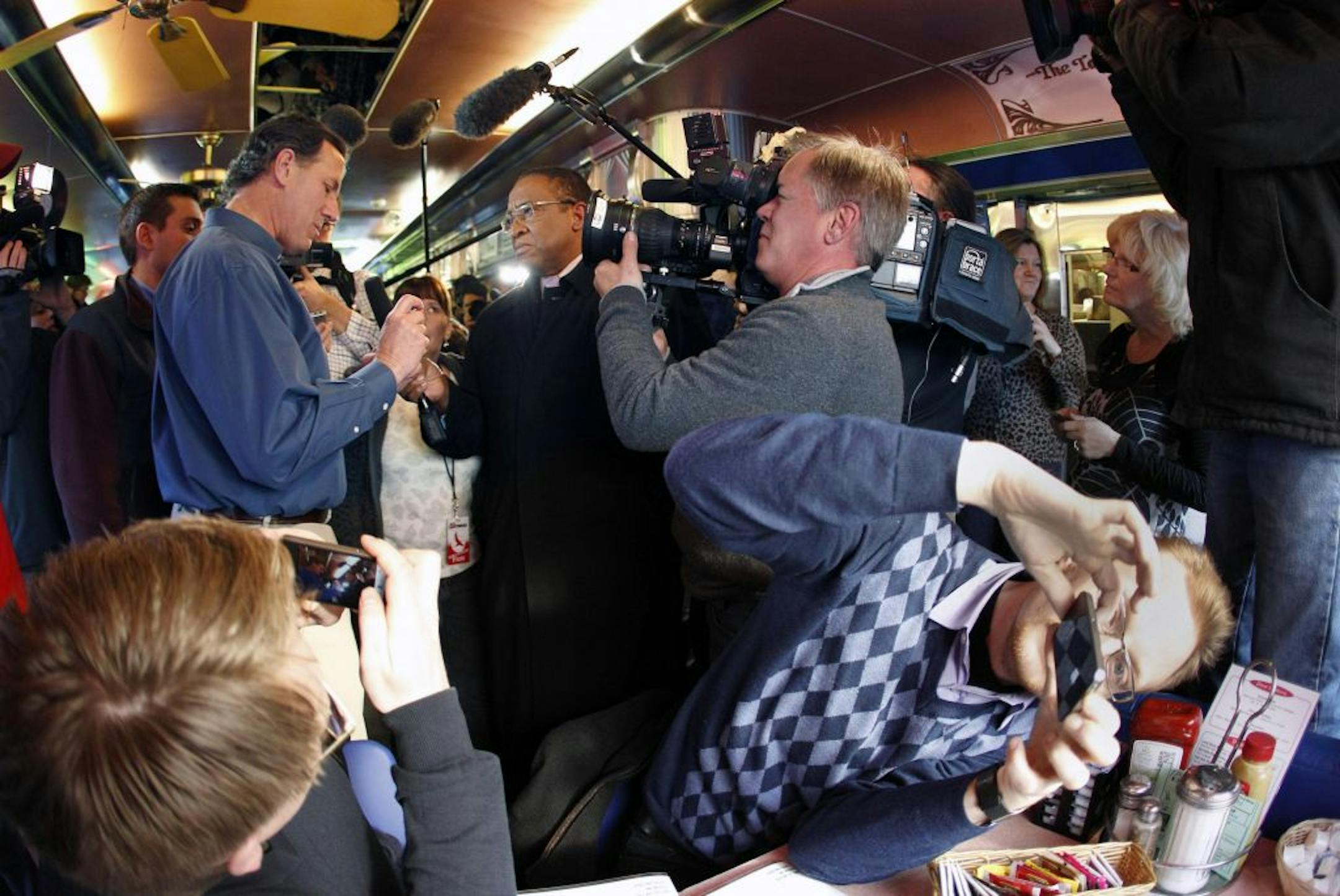
Iowa's over and New Hampshire looms. Both are crucial for the presidential prospects of GOP candidates, but the state of the news media may matter more than the vote totals. More than ever, the press has become part of the election story. With the emphasis on horse-race coverage, seven sequential alternatives to front-runner Mitt Romney have emerged, with each experiencing events reflecting the increasingly blurred lines between media, pop culture and politics.
First up was Donald Trump, whose dalliance foreshadowed the reality show this campaign has often appeared to be. But after parlaying his fame into continual coverage, the billionaire birther was, well, trumped by President Obama producing his birth certificate and announcing the death of Osama bin Laden.
Trump, the host of "Celebrity Apprentice," resurfaced later as a potential debate moderator. But in a rare respite from the degradation of our democratic process, the debate never happened. Those debates that did, however, became huge hits on cable, and have been the defining dynamic driving the 2012 race.
Michele Bachmann, for instance, had a strong performance and confirmed her candidacy in the first debate, which prompted applause even from rival candidates. But a postdebate controversy over vaccinations led commentators (and comics) to needle Bachmann, who initially became nationally known because of cable news. Bachmann wasn't alone on-air. At one point, Fox News employed four presidential prospects. Two, Newt Gingrich and Rick Santorum, declared, and two, Sarah Palin and Mike Huckabee, declined, choosing hot studio lights over cold campaign rallies in Des Moines. (Trump was later added as a Fox contributor.)
Bachmann won the Iowa Straw Poll, which proved meaningless after Rick Perry threw his 10-gallon hat in the ring on the same day and shot to the top.
Unfortunately for Perry, presidential politics goes beyond announcements. Enunciating a coherent message during debates matters, too.
Perry's performance plunged him from front-runner status. Newt Gingrich and Herman Cain, conversely, were elevated by the debates. But their turns as the anti-Romney were brief, too, as their pasts caught up with them.
Cain blamed the news media, saying as he suspended his campaign: "These false and unproved allegations continue to be spinned in the media, and in the court of public opinion, so as to create a cloud of doubt over me and this campaign and my family."


