
Med-tech manufacturer tackles own ideas

The trick, says Minnetronix CEO Rich Nazarian, is to create products that compliment customers' work.

August 12, 2012 at 4:16PM
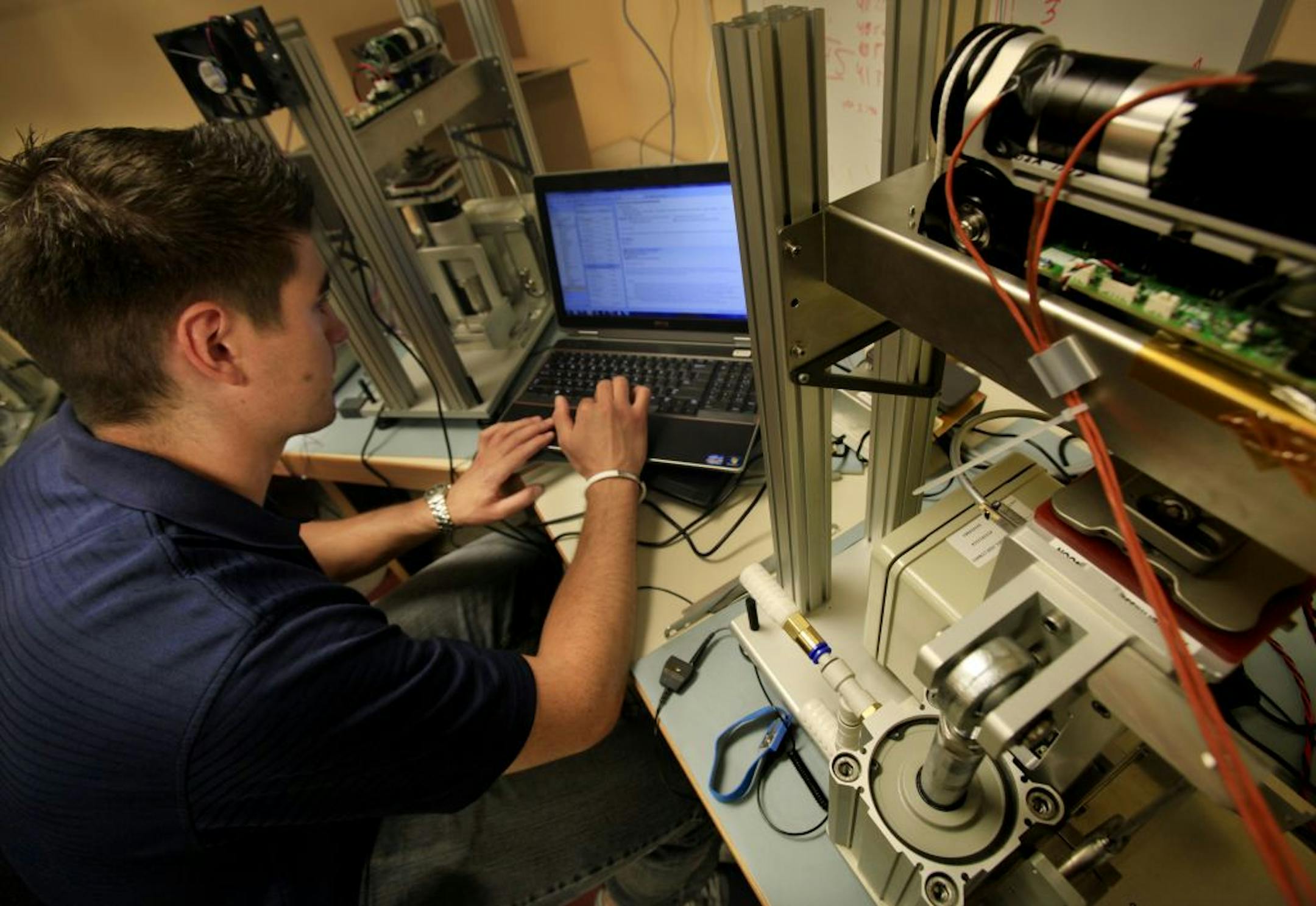
Andrew Serrian of Minnetronix works on a project in his office at 1635 Energy Park Drive, in St. Paul, MN. October 2, 2012.
Minnetronix’s staff of 200 includes 70 engineers, such as Andrew Serrian, above, working on a project in his St. Paul office. (Dml - Star Tribune/The Minnesota Star Tribune)

Rich Nazarian chooses his words carefully when explaining his company's foray into turning its own ideas into medical technology.

"We have no intention of being in competition with our customers," he said. "We really intend to be complimentary to what they do."

Nonetheless, the St. Paul-based medical technology design and manufacture firm is walking a bit of a tightrope. Minnetronix, begun in 1996, has made its name in working fast and well for others, leading 150 design and manufacturing projects for more than 100 companies, including corporate giants such as 3M, Medtronic and St. Jude Medical. But in June, it announced plans to start developing its own intellectual property.

The risk, Nazarian's assurances notwithstanding, is that one of its longtime customers will see the move as a threat. Officials for Medtronic and St. Jude declined to comment for this story. But Nazarian said he is convinced Minnetronix can continue its core business while venturing into new products and technologies of its own design. The trick, he said, will be to develop products that might not otherwise have been built.

"We want to build a portfolio of devices that are attractive to our customers," said Nazarian, company president and CEO.

Minnetronix didn't get into specifics about the products it would make.

Recognizing the gaps

One reason for developing its own intellectual property is simple enough: money. Minnetronix, a private company with nearly 200 employees that include 70 engineers, has developed dozens of patents over the years. Etched into metal plaques, the patents make for an impressive display on a corridor wall at Minnetronix headquarters in St. Paul's Energy Park.

But the ideas belong to their customers.

"What we do is really challenging, but we don't get as much of the reward," Nazarian said. "Could we realize more value for ourselves, and could we give more value to our customers [by filling a void]?"

Minnetronix's technology has been used to make cardiovascular and monitoring systems, therapeutic and implantable devices, and diagnostic instruments. But in June it announced its partnership, a licensing agreement with Penn State Research Foundation for wireless energy transmission technology for mobile and implantable devices. The products will treat end-stage heart disease and congestive heart failure.

It is a new world for Minnetronix, Nazarian said. But if it can walk the tightrope, "We can be a greater value and a greater asset to all our customers."

Nazarian said some areas are considered taboo. Minnetronix will not develop technologies or products that stem directly from work they have done or are doing for customers.

"There is some nuance here," he said.

"But," he added, "There is an importance in preserving relationships with customers. If we lose that, then we become just like any other start-up."

The idea is more about recognizing voids and gaps in what is out there, he said, developing products that solve problems but don't stomp on toes. Those gaps certainly exist, Nazarian said. At a time when private venture capital for medical technology start-ups is drying up or going overseas, he said that Minnetronix could serve as an incubator for all kinds of medical device ideas that just need a little help to get off the ground.

Strategy not uncommon

George John, an associate dean of the Marketing Department at the University of Minnesota who studies how companies deal with other companies, said Nazarian can pull it off. In fact, what Minnetronix is doing -- moving from contract manufacturing to developing its own intellectual property -- is not unusual, he said.

"The world today is much more fluid than it used to be," said John. "Almost every innovation that comes to market is dispersed across companies up and down the chain. The magic word is adjacency."

In short, where companies once were "islands unto themselves" in the development of new ideas and new technology, companies now regularly contract with other firms to not only build something, but to invent it, design it, troubleshoot it.

It stands to reason, then, that companies want and do take the next step: Own it.

"There are risks," John said. "Their relationships with these companies become much more multifaceted. You have to sit down and talk to them, develop trust."

Tapping creativity

Don Evans likes the idea. Since his hiring in 2005, Evans has worked on a variety of interesting electrical engineering projects. Now, the prospect of developing his own ideas is even more interesting because it's a more direct line to the patients who need the technology.

"This is where the hard problems are," Evans said.

Does he have ideas just waiting to be explored?

"Yeah," he smiled.

Rick Pike, a principal software engineer, said the ability for Minnetronix employees to pursue their own ideas will make the company an even more attractive place to work. "It's a different way of thinking about the job and what I'm doing," said the eight-year employee.

James Walsh • 612-673-7428

about the writer

about the writer

James Walsh

Reporter

James Walsh is a reporter covering social services, focusing on issues involving disability, accessibility and aging. He has had myriad assignments over nearly 35 years at the Star Tribune, including federal courts, St. Paul neighborhoods and St. Paul schools.

See Moreicon

More from Business

See More
card image
Hormel headquarters in Austin, MN. ] GLEN STUBBE * gstubbe@startribune.com Friday September 11, 2015 Despite woes throughout the food industry, partly due to consumers turning away some from processed foods, Hormel has managed to continue prospering -- even though a good part of its business -- Spam, chili -- is about as processed as you can get. But the company's turkey and pork offerings are riding a hot protein trend. And over the past two years, it's made some of the biggest acquisitions in
