

"Think about something else."
I got that a lot as a kid. My imagination ran to worst-case scenarios. I'd seen newsreel footage of Nazi death camps, so I knew what people were capable of. Convinced that nuclear holocaust was imminent, I didn't think I'd live long enough to marry and have a family, much less become a person obsessed late in life with the world's food system. I could not have guessed that instead of destroying ourselves we'd more than double our numbers, or that our penchant for hierarchy and coldblooded efficiency would allow us to believe that replacing traditional, small, biodiverse farming with a system predicated on cruelty to animals was a righteous cause.
"Think about what?" I'd ask, distraught over the latest H-bomb blast in the Pacific.
"How about the Nowaks' place?" my mom would suggest. The Nowaks owned the last farm standing in our mostly suburban neighborhood. "Think about that silly rooster strutting around like he owns it. Think about the baby pigs."
By 1960 the Nowaks had sold most of their farm to developers and were down to 40 acres of pasture and some row crops. You could smell the manure long before you got to the bend in the road where asphalt gave way to gravel and the farm popped improbably into view. It was clear even to us kids that the pastel-colored shoebox houses, as we called them, would soon devour the landscape whole.
My parents never talked about the way things were changing under our noses. They'd bought their 1930s-vintage colonial for its hilltop views of farm country, but the housing boom was a good thing, part of the postwar prosperity afforded by the new industrialization and economies of scale. Like most of the men in our neighborhood, my dad was a war vet. The war was a powerful bond. Plus, the war effort had produced much of the technology now being rejiggered for peacetime purposes.
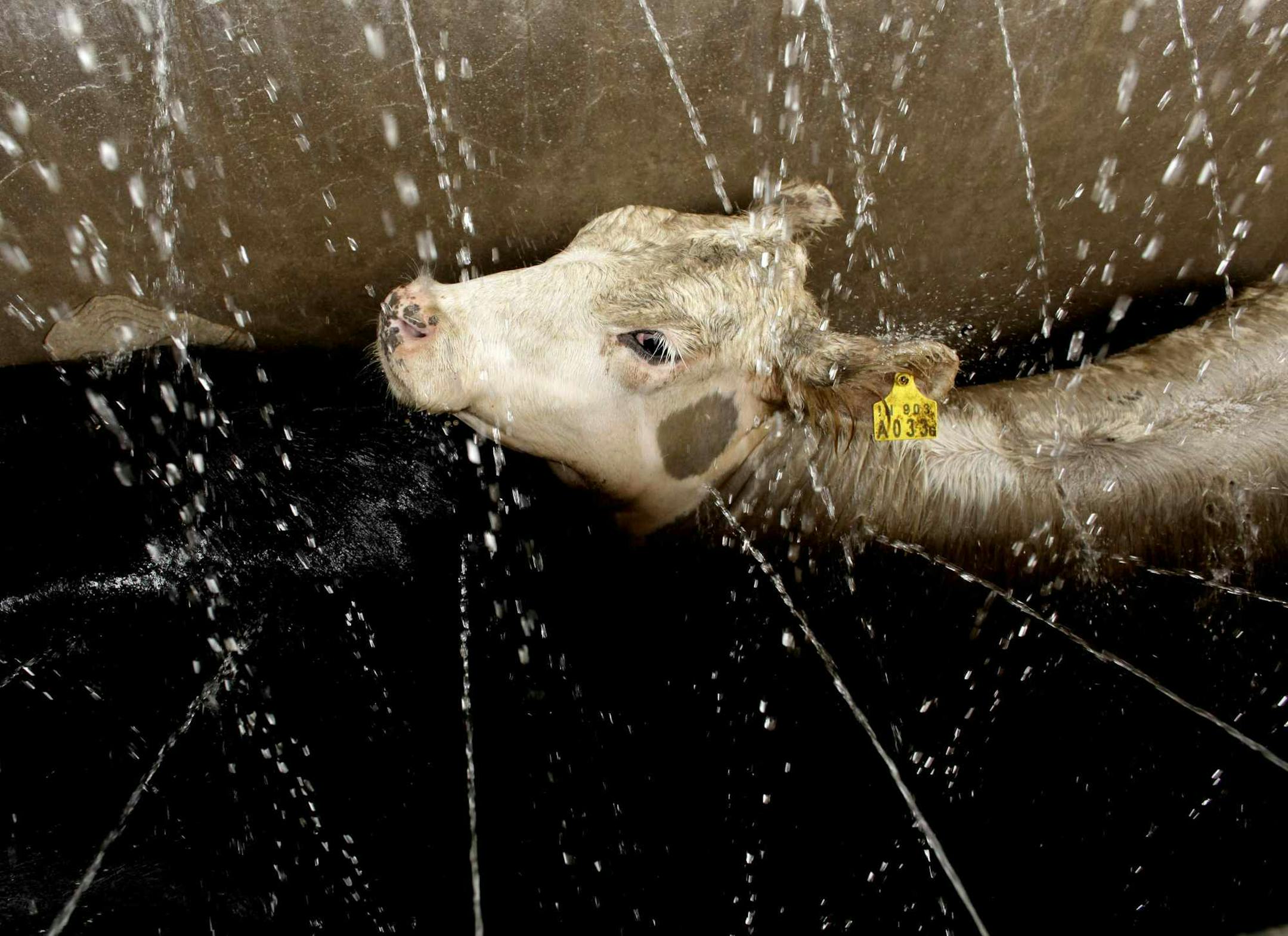
What we couldn't see from our lofty perch was how industry was reshaping rural America. We didn't know that farm animals and the people who raised them were all getting the same pink slip. Their way of life was over. The farmers were moving to cities to find new occupations, the animals to Concentrated Animal Feeding Operations (CAFOs) — known nowadays as animal concentration camps to their increasingly shrill critics.
Before the war changed everything, American agriculture was run on the time-honored assumption that farm animals and food crops were codependent. But with the new methods of fertilizing — chemicals instead of manure — the animals were no different from the monoculture crops that replaced the diverse assortment of plants that used to keep the soil healthy and the water pure. They were commodities. In fact, meat production was fast becoming the whole point of agriculture.


