

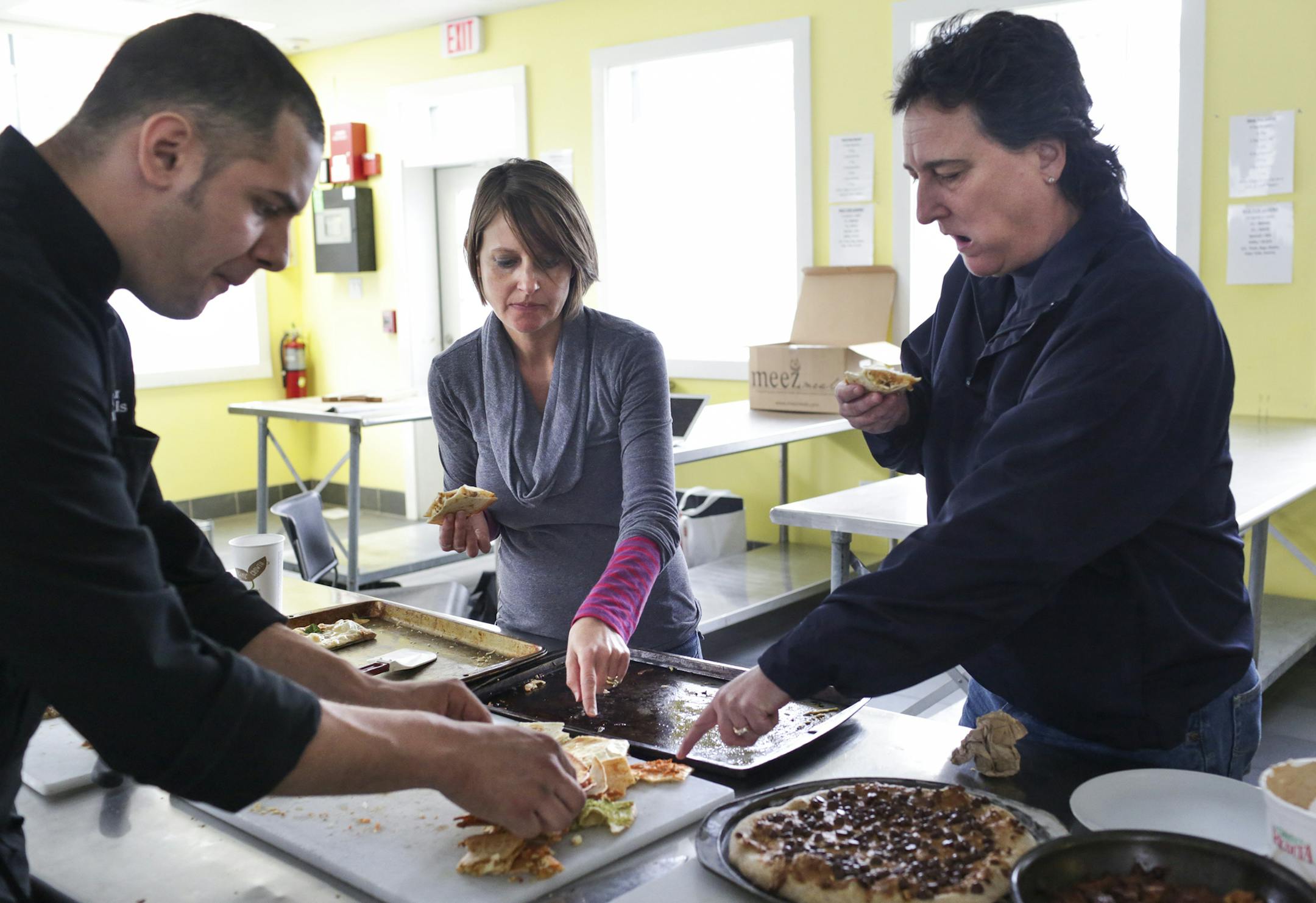
Start-ups have their eyes on kitchens around the country, aiming to add spice to the often bland routine of making dinner.
Some services offer fully cooked meals. In others, customers receive the ingredients along with a recipe card, chopping, sauteing and aiming to replicate meals like the ones prepared by the celebrity chefs they watch on TV. Some are subscription-based, delivering meals each week, while others allow consumers to buy meals a la carte. Prices vary, often hovering around $10 per serving.
Blue Apron, known as the largest player in the category, started in 2012 and now delivers more than 1 million meals a month, at $9.99 per serving.
Customers "write us love letters … saying things like, 'You've changed my life and you've saved my marriage,' " said founder Matt Salzberg.
With a $50 million round of investments earlier this year, Salzberg said, Blue Apron's unit economics are "really healthy," but it is "spending that money on expanding."
Salzberg envisions Blue Apron, named for the blue aprons chefs wear while learning, becoming the largest name in the country for cooking. In November, Blue Apron said it would launch an online store for cooking gear, on top of its existing delivery system and a line of cookbooks.
More than $545 million has been invested in the U.S. food delivery space since April 2013, according to Rosenheim Advisors, a strategic consulting firm focused on the food-related tech industry.
The target audience for such services includes everyone from individuals and couples looking for an alternative to takeout, to foodie couples with young kids and empty nesters yearning for more interesting meals after years of preparing family-friendly dishes. They compete with grocery stores that have beefed up their prepared food sections with everything from sushi to take-home meal kits that go far beyond a deli counter's traditional fare of fried chicken and macaroni salad.



