Slaves to the recipe, listen up.
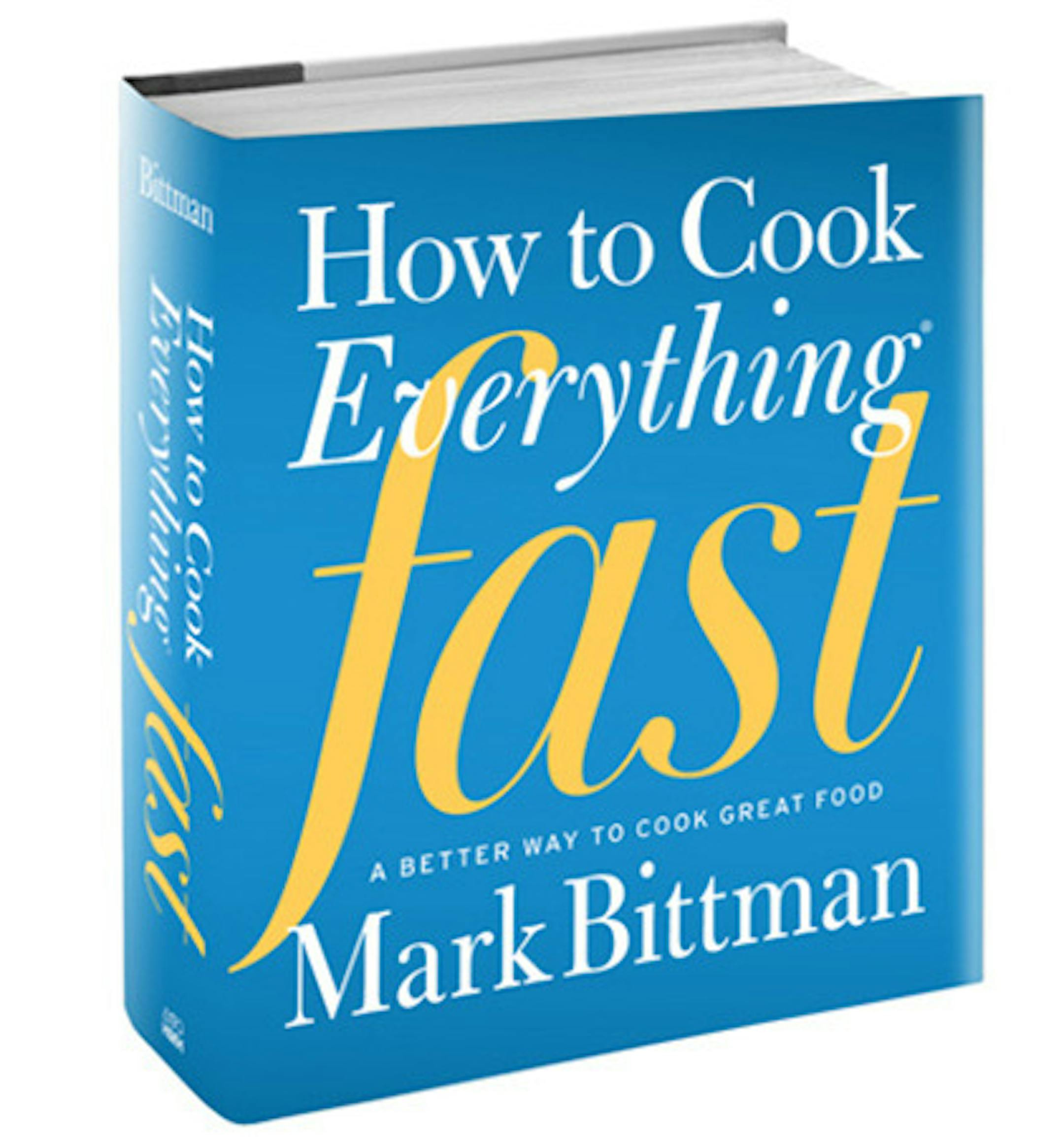
If you think everything has to be perfect, that instructions must be followed to a T, that any deviation might result in total tasteless disaster, a more easygoing approach could do you good. I found one in Mark Bittman's "How to Cook Everything Fast."
The New York Times food columnist and author of several doorstops full of recipes in the "How to Cook Everything" series has made ease one of his signature ingredients. In his new book, he's taken that approach a step further by rewriting the recipe for people who use recipes as a crutch.
Here, ingredients are listed whole. The recipes don't call for the garlic to already be minced, the kale to already be trimmed and chopped. Those steps, instead, are integrated into the directions. Bittman intersperses prep steps (in blue text) with cooking steps (in black text) for ultimate efficiency.
With this system, you avoid having to lay out all your ingredients on the counter and do all the chopping before you get started, only to end up at the frying pan waiting for one thing to finish before you can move on to the next. Mise en place, prepping everything ahead of time, says Bittman, is a myth.
Instead, Bittman gives you permission to do it all a little imperfectly. Heat the oil while you chop the onion. Cook the onion while you chop the celery. Dice the bell pepper while the previous vegetables cook, and add that. Gradually, you've got a holy trinity of vegetables, the makings of jambalaya, without it mattering that the onions were in the pan a little longer.
Bittman has written in his columns that he wants to help people "wean [themselves] from the recipe, or at least take better control of it." To accomplish that, he peppers the book with helpful master recipes for dishes like soup and stir fry, which could utilize whatever ingredients are on hand in your cabinets.
If recipe detail is something you live by, "How to Cook Everything Fast" might shake up your world. Bittman doesn't always say how long to cook things, or at what temperature. And he might tell you to slice leeks, for instance, but not how large or small, halved or whole rings. It can be confusing, but in a way, it gets you cooking more like a chef by asking you to consider how things smell and taste and feel.