

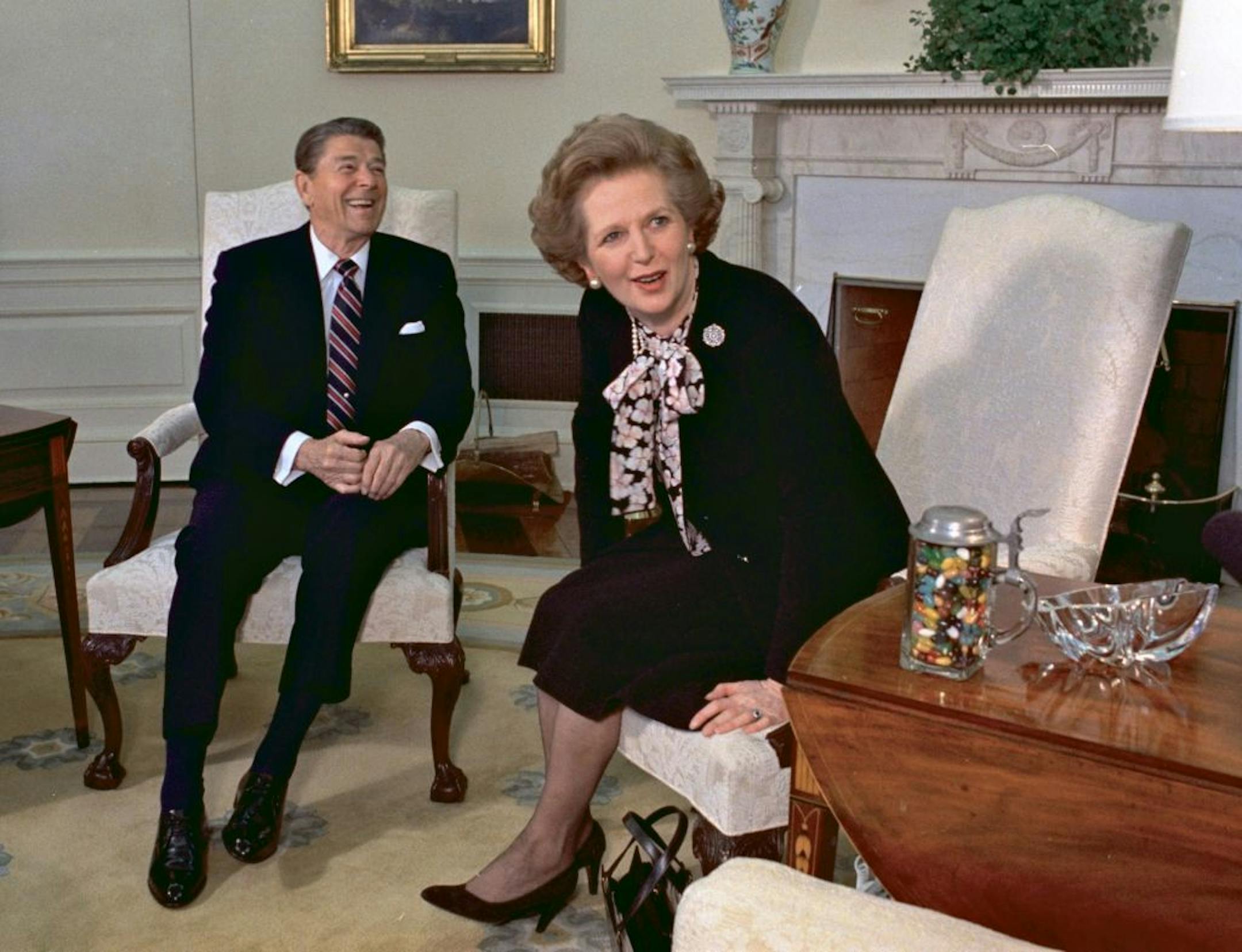
Only a handful of peacetime politicians can claim to have changed the world. Margaret Thatcher, who died Monday, was one. She transformed not just her own Conservative Party, but the whole of British politics. Her enthusiasm for privatization launched a global revolution. And her willingness to stand up to tyranny helped to bring an end to the Soviet Union.
Winston Churchill won a war, but he never created an "ism."
The essence of Thatcherism was to oppose the status quo and bet on freedom — odd, since as a prim control freak, she was in some ways the embodiment of conservatism. She thought nations could become great only if individuals were set free. Her struggles had a theme: the right of individuals to run their own lives, as free as possible from the micromanagement of the state.
In Britain, her battles with the left — especially the miners — gave her a reputation as a blue-rinse Boadicea. But she was just as willing to clobber her own side, sidelining old-fashioned Tory "wets" and unleashing her creed on conservative strongholds, notably the "big bang" in the City of London. Many of her pithiest putdowns were directed toward her own side: "U turn if you want to," she told the Conservatives as unemployment passed 2 million. "The lady's not for turning."
Paradoxes abound. Thatcher was a true Blue Tory who marginalized the Tory Party for a generation. The Tories ceased to be a national party, retreating to the south and the suburbs and all but dying off in Scotland, Wales and the northern cities. Tony Blair profited more from the Thatcher revolution than did John Major, her successor. With the trade unions emasculated and the left discredited, Blair was able to remodel his Labor party and sell it triumphantly to middle England. His huge majority in 1997 ushered in 13 years of New Labor rule.
Yet Thatcher's achievements cannot be gainsaid. She reversed what her mentor, Keith Joseph, liked to call "the ratchet effect," whereby the state was rewarded for its failures with yet more power. With the brief exception of the emergency measures taken in the wake of the financial crisis of 2007-08, there have been no moves to renationalize industries or to resume a policy of picking winners. Thanks to Thatcher, the center of gravity in British politics moved dramatically to the right.
The New Laborites of the 1990s concluded that they could rescue the Labor Party from ruin only by adopting the central tenets of Thatcherism. "The presumption should be that economic activity is best left to the private sector," declared Blair. Neither he nor his successors would dream of reverting to the days of nationalization and unfettered union power.
On the world stage, too, Thatcher continues to cast a long shadow. Her combination of ideological certainty and global prominence ensured that Britain played a role in the collapse of the Soviet Union that was disproportionate to its weight in the world.


