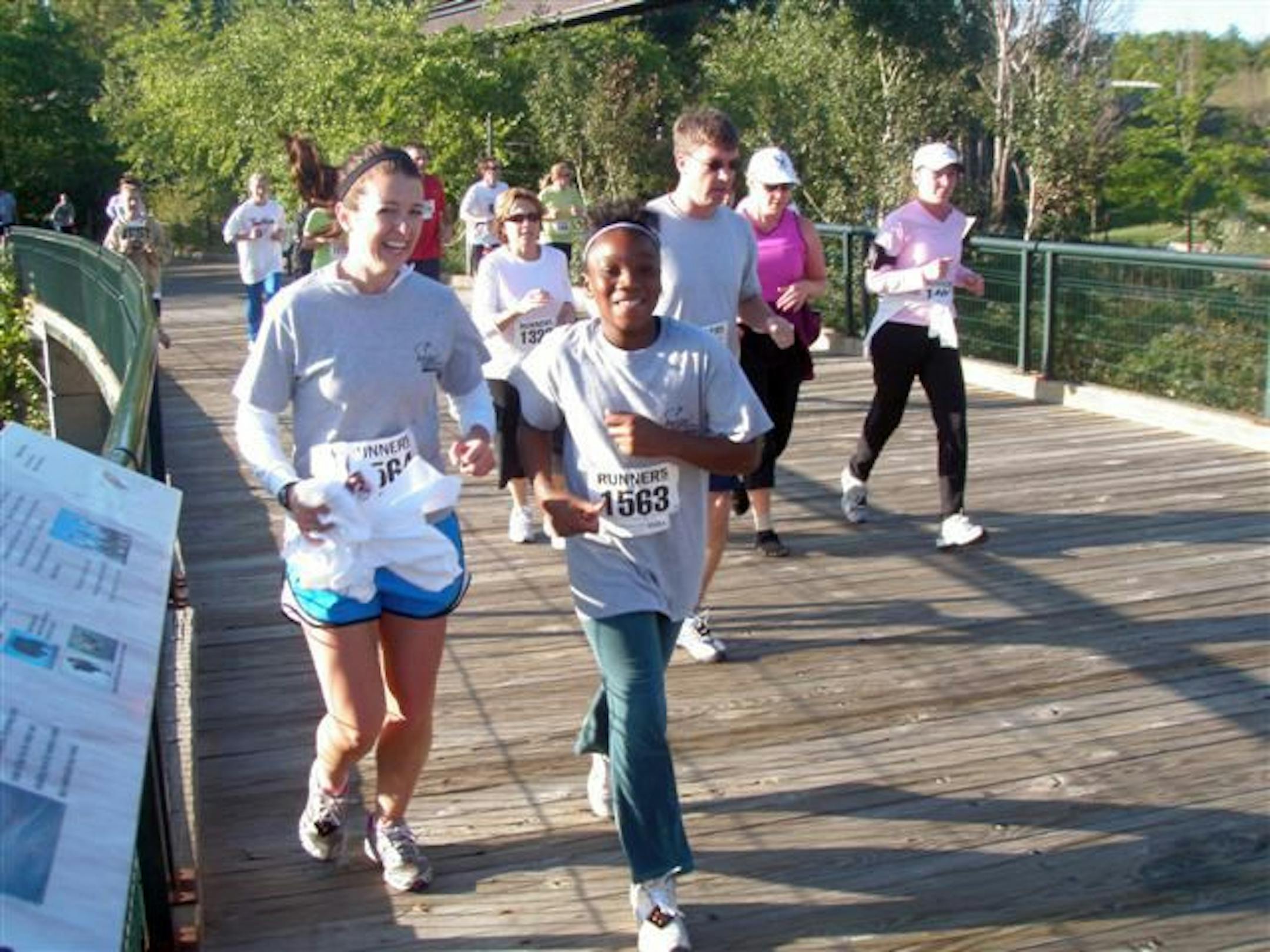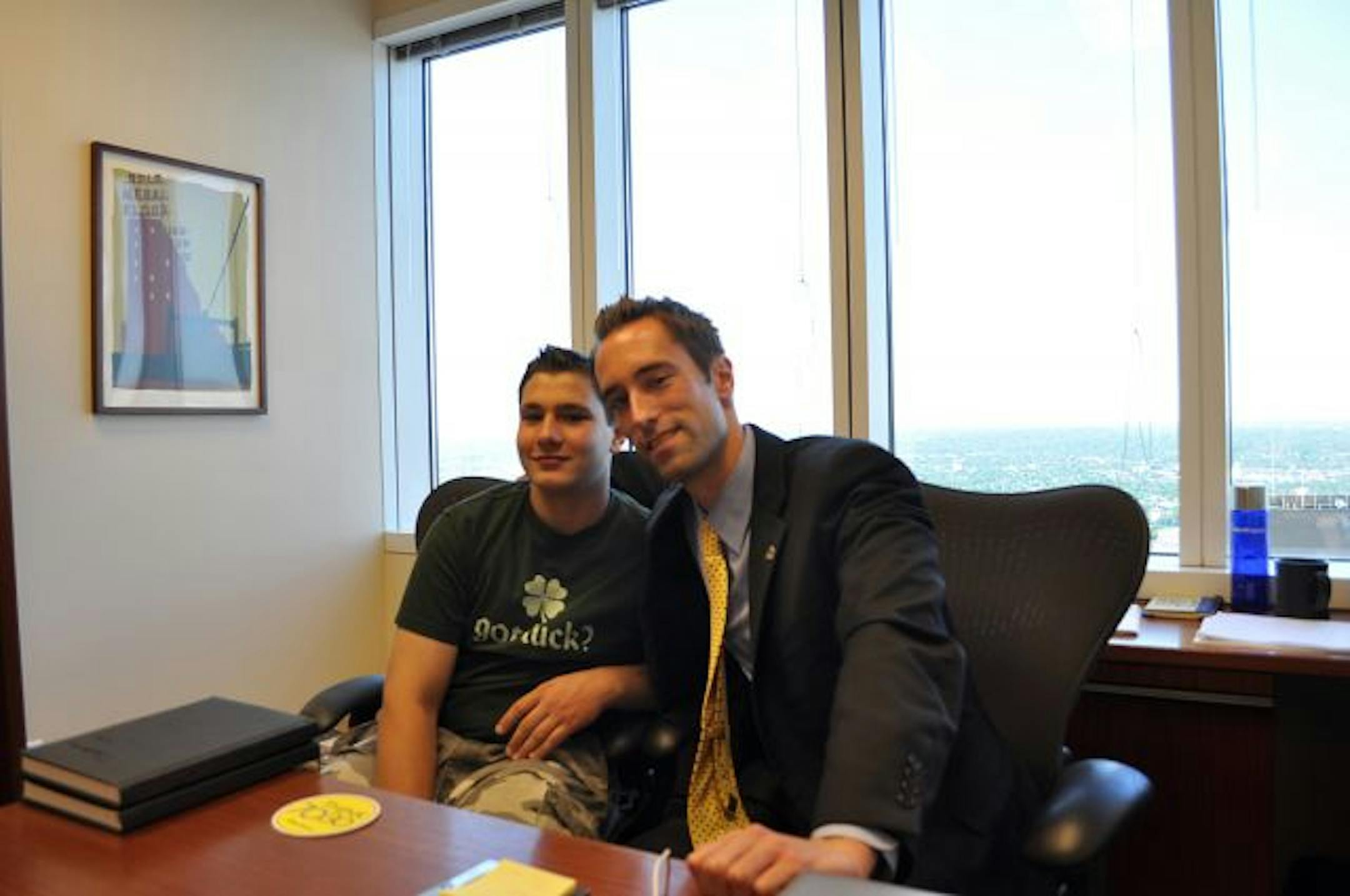
The kids and their mentors at Bolder Options can teach us much about return on investment, self-improvement and even how to control the spiraling cost of health care.
Bolder Options mentor Bill Richards, a banker at Merrill Lynch/Bank of America, and Chris Vargas, an eighth-grader from St. Louis Park, just thought they were friends who enjoyed working out together at the YMCA or jogging around the lakes.
"I've lost 10 pounds, and I don't eat as much junk food sitting on the couch playing video games," said Chris, 13. "And this is the best year of school I've ever had. I ran my first 5K race this year. I used to have too much energy and get in a little trouble at school."
Pretty good for a once-sedentary kid without much ambition who is now looking forward to high school and more.
We spend at least $150 billion annually of our bloated health care budget on adult-onset diabetes, high-blood pressure, heart disease and other illness linked to sedentary lifestyles and lousy diets. Fortunately, much of the low-cost solution lies within us. Sometimes, we just need a little positive influence.
Bolder Options, which was recently featured on the PBS program "National Medical Report," shows us the way. It's the story of the one-year relationship between Donovan Fitzgerald, 14, now a successful high school student, and his mentor, Michael McMillan. Over the course of a year, Donovan evolves from a drifting kid into a motivated high school student with increased expectations for himself.
"The evidence is clear," said Peter Benson, who has researched mentoring for years at the Search Institute in Minneapolis. "A good mentoring relationship for one year or more, just quality time together [for a few hours once a week], and things like violence, school dropouts and depression decline and hope, purpose and performance increase."
Helping at-risk kids