

Back in 2013, Gen. James Mattis warned Congress about the dangers of undercutting U.S. diplomacy.
"If you don't fund the State Department fully, then I need to buy more ammunition," said the general, who was then head of U.S. Central Command. Mattis recognized that skilled diplomacy is required to prevent wars or cement military victories.
Fast-forward to now, when President Donald Trump not only wants to slash the State Department's budget by a third but clearly considers the department unnecessary. His vision of foreign policy revolves around military strikes and arranging mythical "big deals" — while tweeting bizarre missives at world leaders.
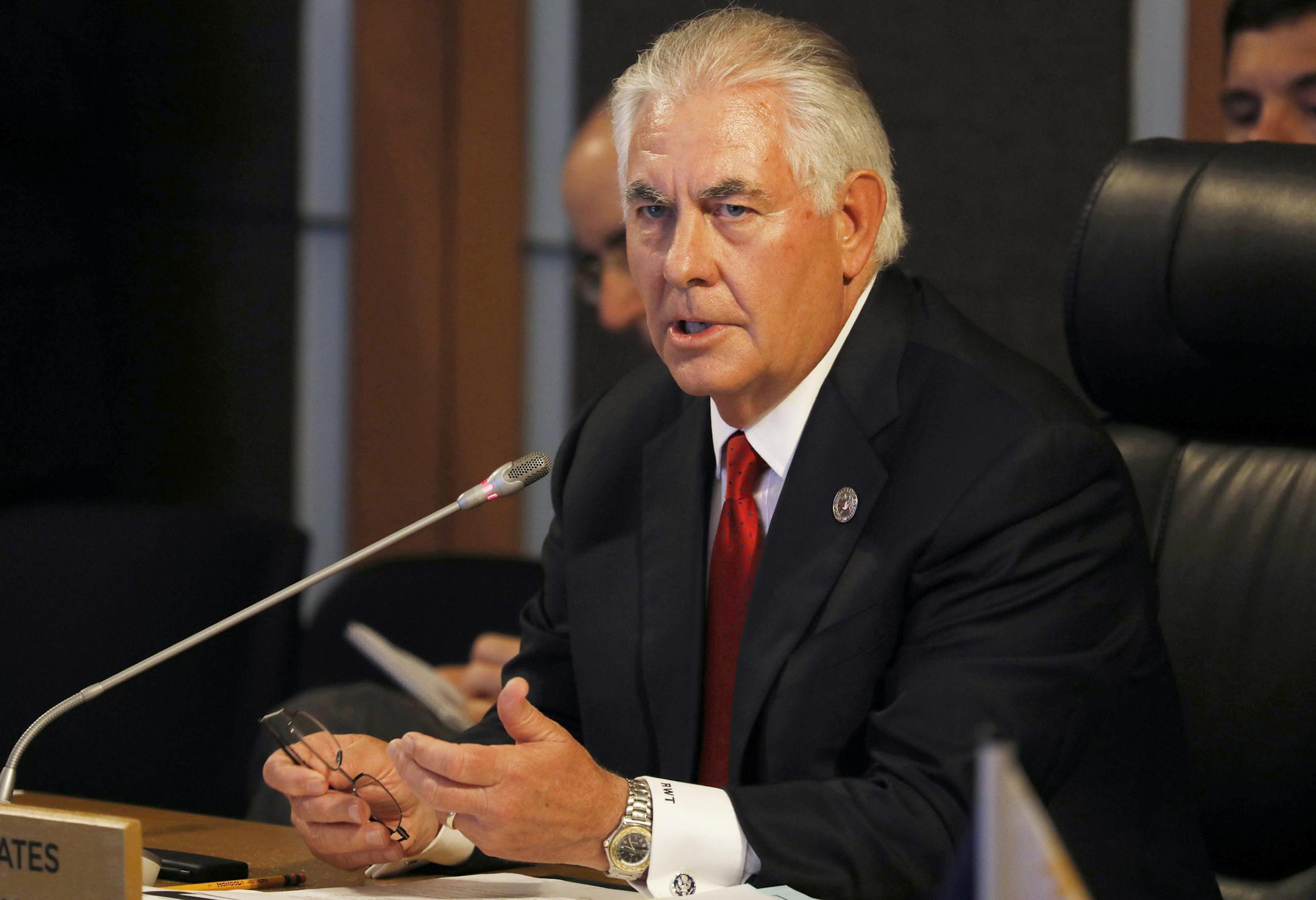
Meantime, Secretary of State Rex Tillerson conducts diplomacy as if he were still the god-head of Exxon Mobil, consulting only a few aides while facilitating the gutting of the department. Most key posts and many crucial ambassadorships remain vacant.
At a time when skilled U.S. diplomacy is desperately needed to deal with North Korea, Iran, Afghanistan and Syria, Trump and Tillerson seem bent on dismantling our ability to act.
The big disappointment is Tillerson, whom many (myself included) had hoped would bring his global experience as an oilman to his new job. The expectation was that he would join a talented troika (with Defense Secretary Mattis and National Security Adviser H.R. McMaster) to temper Trump's worst foreign-policy impulses.
Didn't happen.
"Tillerson is as big a problem as Trump is," says a former U.S. ambassador to Yemen, Gerald Feierstein, now director of gulf affairs at the Middle East Institute. "He has no respect for the mission of the State Department. He's distant, disinterested in having any interaction with employees."


