

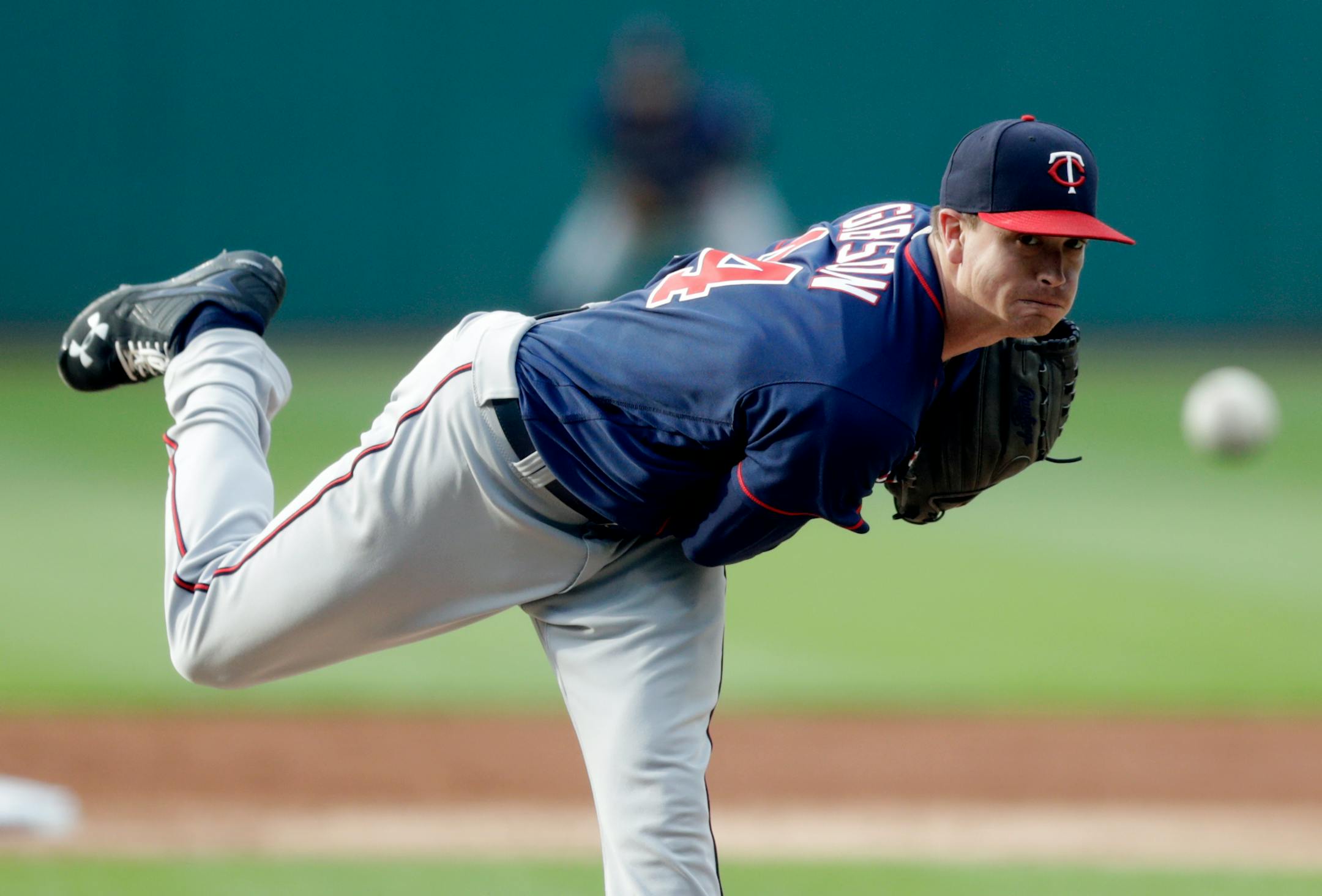
Garvin Alston was a star prep pitcher in the late 1980s, at a high school about 10 miles from the Mets' Shea Stadium, so his pitching mechanics weren't really his own.
"I tried to mimic Doc Gooden," the Twins pitching coach said, smiling. "We all did."
But there was only one Doc, and once Alston got to college, he ditched Gooden's signature move, the slight turn away from the plate with his hands above the bill of his cap and right knee to his chest. Alston adopted a simpler rock-back-and-throw windup, and in doing so, became an early adapter to a movement that is slowly making the full, dramatic, over-the-head windup extinct.
Decades ago, most major league starting pitchers routinely whirled their arms and pivoted their torsos and coiled their bodies in a theatrical ballet before striding toward the plate and unleashing the ball.
"You mean, the Whitey Ford?" said Twins righthander Lance Lynn, choosing a classic example. "That's a long time ago."
So it seems. Today, only a few bother to do more than shift their weight and cock their arm. Kyle Gibson's toe tap, a timing mechanism barely noticeable unless you look for it, passes for histrionics these days.
"I'm all for conserving energy and reducing motion," Gibson said. "If anything, pitching is going the other way. Now you see some relievers out there throwing out of the [windup-free] slidestep on every pitch."
There was an interim step in this evolution. And a few proponents of that look — the quick hands-behind-the-head checkpoint that Nolan Ryan and Greg Maddux, for instance, used to establish a rhythm and momentum — still survive today. Two-time Cy Young winner Max Scherzer still executes that move with nobody on base, as does Houston's Lance McCullers.


