

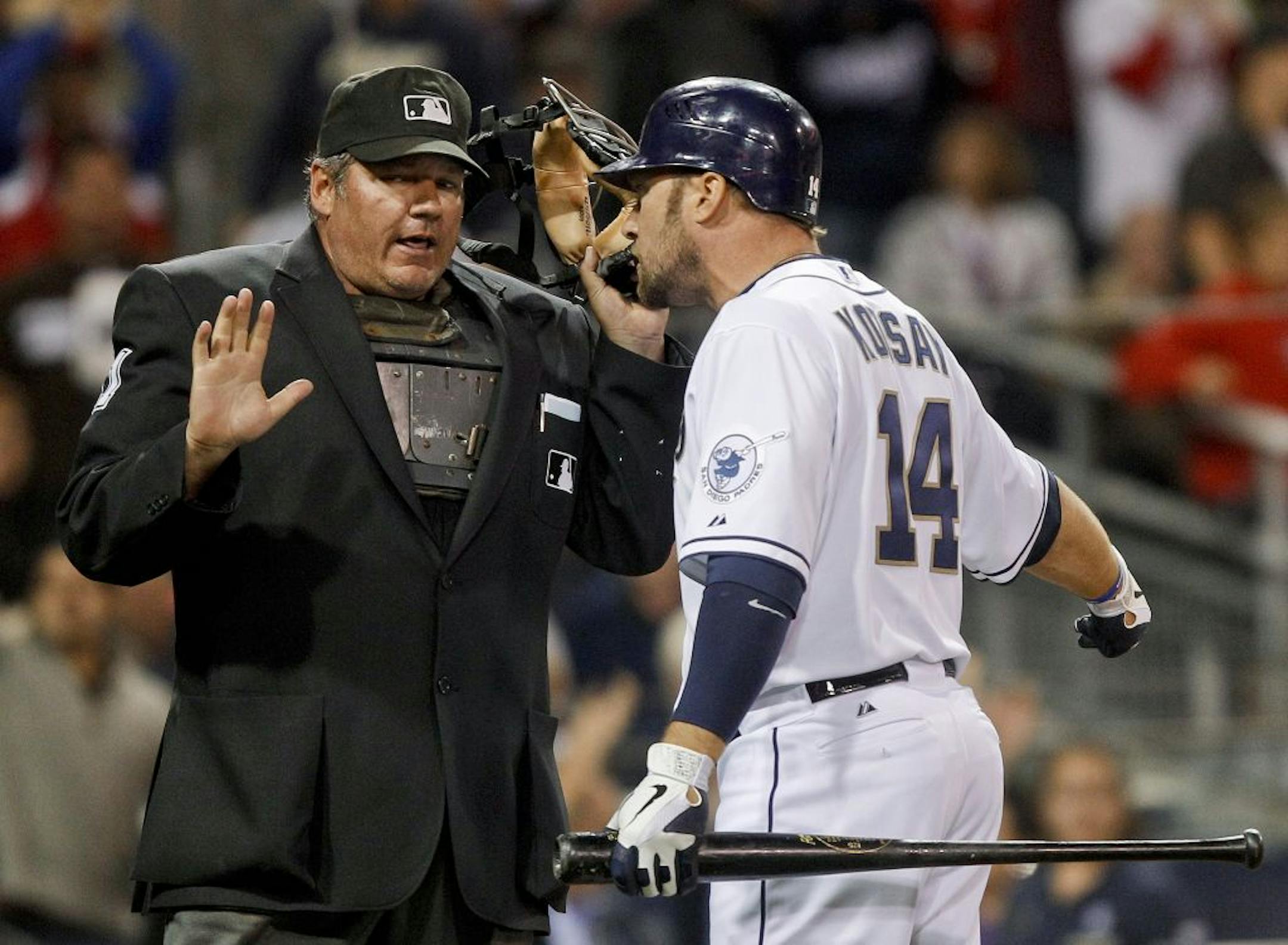
Some might say Hunter Wendelstedt has umpiring in his blood. He learned the craft from his father, spent eight years in the minor leagues and has called numerous playoff games in his 13-year Major League Baseball career. ¶ But when Wendelstedt strides onto a diamond now, he knows he doesn't have the best eye in the ballpark anymore.
That eye, rather, is incased in a metal shell, hidden behind a glass lens, perched high above the center field fence, capturing 2.1 megapixels per frame. The camera sees all. It can zoom, freeze and slow down the action. Unlike a human, it never blinks. It never gets sick or tired, and once installed, it doesn't ask for more money.
"There's never a possibility for the human eye to be as good as these high-definition cameras. That just can't happen," Wendelstedt said. "With every advance in technology, not only does the game of baseball [change], but umpiring changes."
And the electronic eye is only getting more precise and pervasive. At the end of July, MLB Commissioner Bud Selig announced plans to expand video replay for the 2013 season, to include trapped balls and fair-vs.-foul decisions. The ease and exactitude of technology has enabled baseball to deliver more information and entertainment to its fans, while also establishing playcalling consistency and providing a "fifth eye" to determine boundary calls.
For umpires, the changes can be beneficial and positive. In the meantime, though, the innovations have altered aspects of how the game was traditionally called and played, which creates new challenges -- and, some say, a new rift between players and managers against umpires, who are suddenly under new levels of stress.
"It creates a lot of discussion on whether umpires are competent or not," former umpire Jim Evans said. "[Players] get called out on a strike and the first thing they want to do is run up the tunnel into the dressing room and look at the replay. It's definitely changed the game, and the role of the umpire."
Plate variables
Ask any of baseball's longtime managers or veteran players what the strike zone looked like a decade ago and the response might be a knowing chuckle.


