

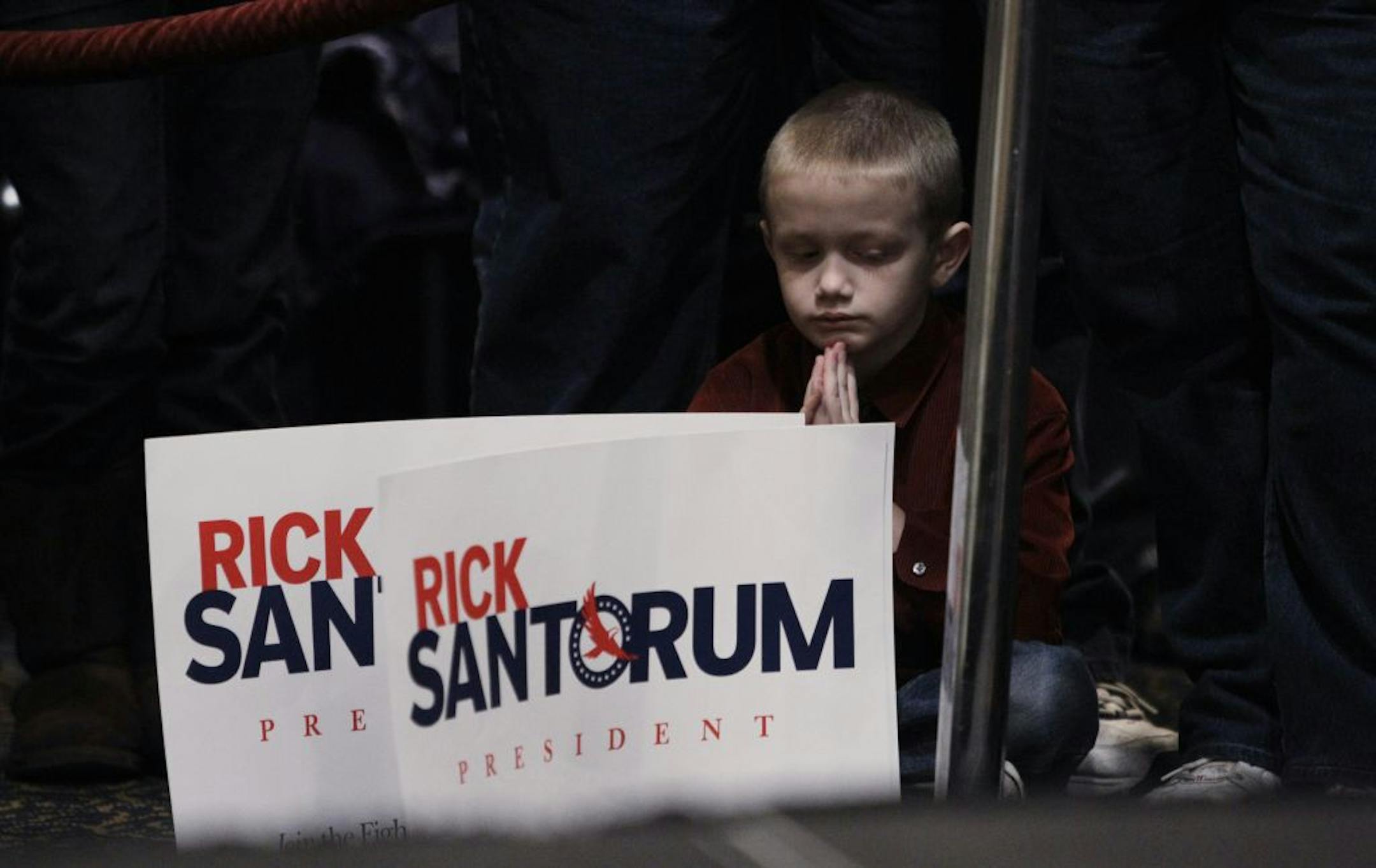
The unexpected rise of Rick Santorum in the Republican presidential field has provoked more than a few questions about how to respond to assertions that seem to test the limits of both democracy and truth.
For me, one of the most interesting questions bears directly upon my own responsibilities as president of a college. Under what circumstances and to what extent should a college or university president speak directly to political issues and even speak publicly on particular political candidacies?
The rule of thumb has for quite some time been that on such matters presidents had best remain silent. One of the chief jobs of a college leader is to raise money from alumni and other constituencies.
The political views of those groups are likely to be diverse, and silence is therefore preferable to the risk of alienating or aggravating any significant group of potential donors. Fiduciary responsibility requires political restraint.
More important (or at least more noble) is the argument about the preservation of academic freedom on a campus. College and universities should be places where all civil and reasonable views on important issues can be expressed and debated, and a president who takes a public stand on too many of these issues risks stifling debate.
As usual, Bill Bowen, former president of both Princeton University and the Andrew Mellon Foundation, put this best: "The university should be the home of the critic, welcoming and respectful of every point of view; it cannot serve this critically important function if it becomes the critic itself, coming down on one side or another of controversial issues."
To the extent that the president, appropriately or not, is often seen as the personal embodiment of the institution, a politicized presidency risks creating an unhealthily politicized college.
By and large I am a firm believer in the soundness of both of these arguments. But the Santorum candidacy, in my view, provokes the question of whether there are limits to their validity -- that is, is there a set of circumstances under which the responsibility to speak out trumps the responsibility to remain publicly neutral or silent?


