
Lost no more: Translation apps improve

Google's free app is a mobile translating tool fluent in more than three dozen languages.

January 20, 2015 at 11:40PM
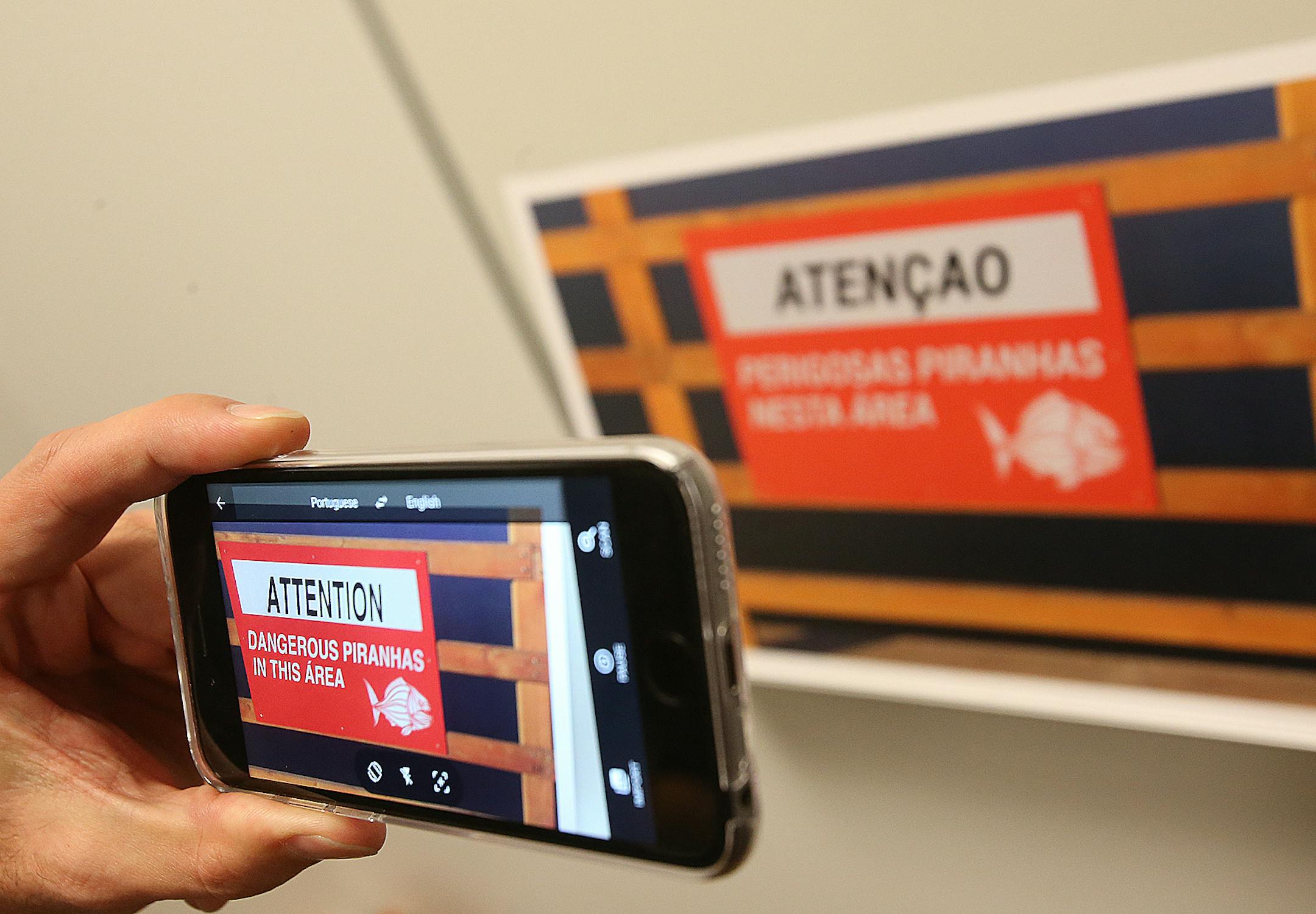
Word Lens founder Otavio Good uses the translate application on a moblie phone to tanslate the words on a sign during a press confernece on Monday, Jan. 12, 2015 in San Francisco, Calif. (Aric Crabb/Bay Area News Group)
At a news conference last week, software engineer Otavio Good used the Translate application on a mobile phone to translate the words on a sign. (The Minnesota Star Tribune)

SAN FRANCISCO – A beautiful French-speaking woman. A handsome English-speaking man. A quiet room in romantic San Francisco.

Let the magic begin, right?

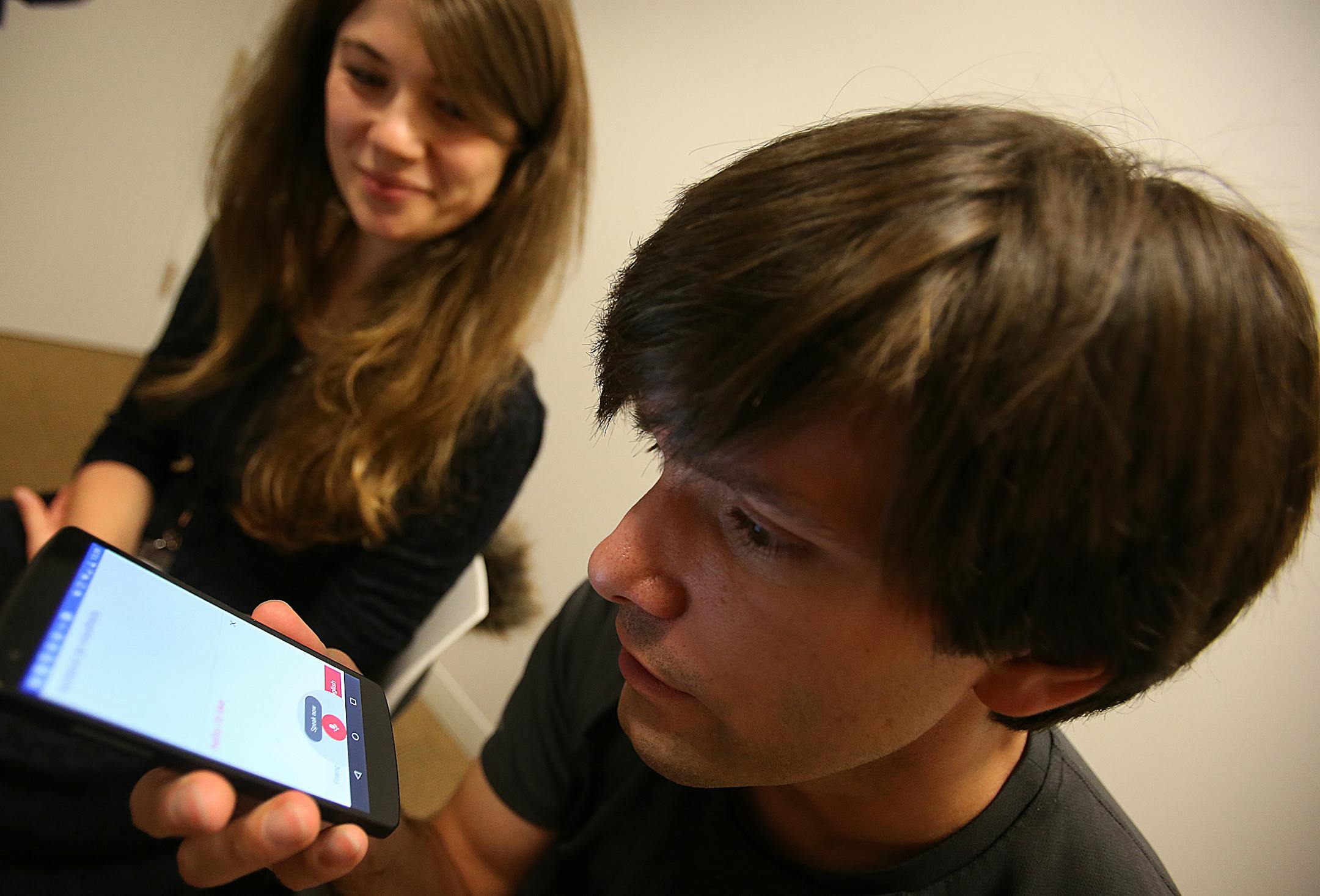
Actually, there's also an iPhone 6 between them on the table, which is where the magic really resides on this recent morning. The two Googlers — Parisian-born product manager Julie Cattiau and software engineer Otavio Good — are here to unveil the company's latest Translate app, supercharged with what Google calls the biggest update in years.

"I'd like a cup of coffee without milk or sugar," Good says in English into the phone, which almost immediately repeats his words in French.

"I'll bring you that right now," Cattiau replies in French, her response rendered aloud in English.

Get ready: Your own personal interpreter is coming soon. As it gains quickly in sophistication, machine-assisted translation promises to connect the world by bridging scores of languages while giving high-school Spanish teachers a run for their money. Google's free app, which was officially launched to the world last week, is an advanced mobile-translating tool, recognizing more than three dozen languages. But it's part of a much bigger trend, with services like Microsoft's Skype Translator instantly turning video chats into real-time multilingual conversations. Twitter has used the tech giant's Bing translation technology to instantly translate tweets, while Facebook pursues its own translation efforts.

"I'm passionate about translation," says the 26-year-old Cattiau, who has worked at Google the past 3½ years. "With our new app, we're able to detect the languages being spoken so you don't even have to press the translate button on the phone each time you talk. It's now so much more natural."

While reviewers and users have not had a chance to use the new app, the previous version was largely praised, with CNET calling it "feature-packed" and "extremely versatile."

Good, whose Word Lens technology was integrated into the updated app after Google bought his company last May, stands up with the phone to show off the app's other key feature: the ability to point the camera at foreign-language text, whether it's a street sign or a restaurant menu, and have an English translation appear like magic on the smartphone or tablet screen.

"Let's say you're in Moscow and you point the camera at a sign in the subway," says the soft-spoken engineer, adding that this feature works without an Internet or data connection. He aims his phone at one of the demo signs on the wall at Google's San Francisco headquarters. Instantly, an image of that same sign appears on the screen, but with "Access to City" replacing the Russian text.

Good does the same with a sign in Italian that warns beachgoers to stay out of the water. Unlike the communication app, the text feature works without needing a Wi-Fi connection, which makes it a handy tool when visiting unfamiliar cities overseas. And while it currently can translate seven languages, developers hope to add more soon, thus unlocking the world for tourists and business people alike. Cattiau points the camera at a recipe for Ricetta per fusille, and the ingredients show up in English.

"Often the hardest part of traveling is navigating the local language," Google developers say in a blog post about the new app. "If you've ever asked for 'pain' in Paris and gotten funny looks, confused 'embarazada' (pregnant) with 'embarrassed' in Mexico, or stumbled over pronunciation pretty much anywhere, you know the feeling."

Good says translation technology has come a long way in recent years. While there have been products introduced in the past at such events as the Consumer Electronics Show in Las Vegas "where the technology could recognize symbols," says Good, "achieving a robust recognition of text has required a lot of work."

He says Google's purchase of his company last May has put things on the fast track.

Translate, which first launched in 2001, saw a huge spike in its linguistic oomph in 2006 when developers began using "statistical machine translation," essentially mapping languages across the Internet. As Google's algorithms learn to pair up, say, "maison" in French with "house" in English, the computers gradually build a dynamic translator, word by word.

"We base translation on machine learning, by looking at billions of Web pages that have been translated into other languages," says Cattiau. "We find 'dog' has been translated millions of times into 'chien,' for example, so the computer now knows the two mean the same thing."

The app's conversation feature can handle 38 languages, and is now available for the first time on iOS. That number of languages, too, is expected to grow. Cattiau says a "translation community" of Google users lend a hand, helping to translate obscure languages to assist Google's robots. "Users can rate a translation, improve or submit a new one. Users in Kazakhstan, for example, helped us so much with translating their language so that Kazakh on our app is now almost 100 percent based on the community's assistance."

Google product manager Julie Cattiau, left, and software engineer and founder of Word Lens Otavio Good, right, use the Google translate application on a moblie phone during a press confernece on Monday, Jan. 12, 2015 in San Francisco, Calif. (Aric Crabb/Bay Area News Group)
Good, right, whose Word Lens technology is integrated into Google’s Translate app, unveiled the app on a mobile phone in San Francisco along with Google product manager Julie Cattiau. (The Minnesota Star Tribune)
about the writer

about the writer

Patrick May, San Jose Mercury News

More from Business

See More
card image
Spencer Platt

The U.S. stock market roared back on Friday, as technology stocks recovered much of their losses from earlier in the week and bitcoin halted its plunge, at least for now.

Attendees of Frostbike made their way through the convention Saturday at the Quality Bike Products campus in Minneapolis. ] (AARON LAVINSKY/STAR TRIBUNE) aaron.lavinsky@startribune.com Frostbike 2016 was held at the Quality Bike Products Campus on Saturday, Feb. 27, 2016 in Bloomington, Minn.
card image
