

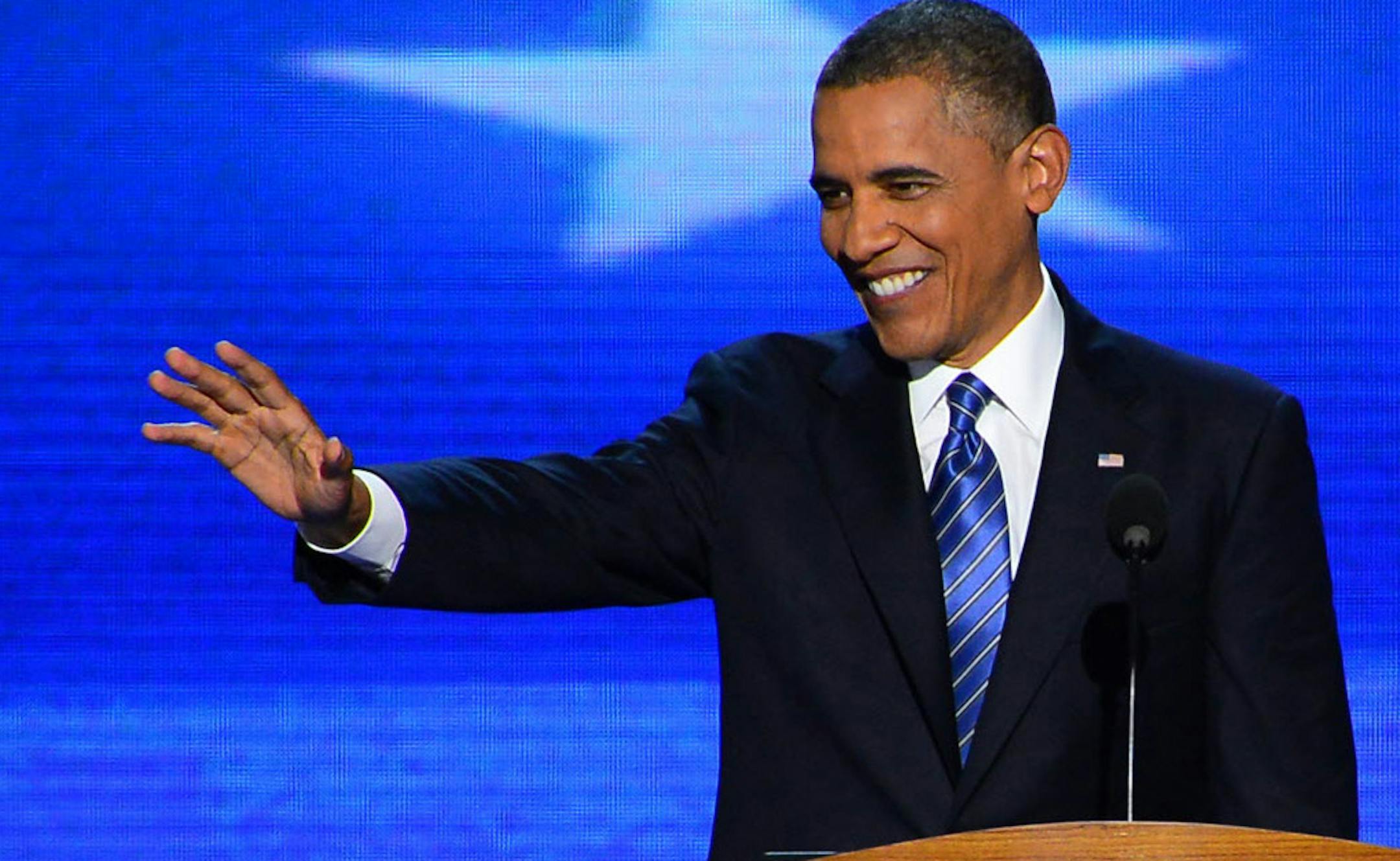
When he was elected president in 2008, Barack Obama was untried and untested. Just four years out of the Illinois state Senate, he had not yet proved himself as either a manager or a leader. He had emerged from relative obscurity as the result of a single convention speech and was voted into office only a few years later on a tidal wave of hope, breezing past several opponents with far more experience and far clearer claims on the job.
Today, Obama is a very different candidate. He has confronted two inherited wars and the deepest recession since the Great Depression. He brought America's misguided adventure in Iraq to an end and arrested the economic downturn (though he did not fully reverse it) with the 2009 fiscal stimulus and a high-risk strategy to save the U.S. automobile industry. He secured passage of a historic healthcare reform law - the most important social legislation since Medicare.
Just as important, Obama brought a certain levelheadedness to the White House that had been in short supply during the previous eight years. While his opponents assailed him as a socialist and a Muslim and repeatedly challenged the location of his birthplace in an effort to call into question his legitimacy as president, he showed himself to be an adult, less an ideologue than a pragmatist, more cautious than cocky.
Despite Republicans' persistent obstructionism, he pushed for - and enacted - stronger safeguards against another Wall Street meltdown and abusive financial industry practices. He cut the cost of student loans, persuaded auto manufacturers to take an almost unimaginable leap in fuel efficiency by 2025 and offered a temporary reprieve from deportation to young immigrants brought into the country illegally by their parents. He ended the morally bankrupt "don't ask, don't tell" policy that had institutionalized discrimination against gays in the military.
The nation has been well served by President Obama's steady leadership. He deserves a second term.
His record is by no means perfect. His expansive use of executive power is troubling, as is his continuation of some of the indefensible national security policies of the George W. Bush administration. This page has faulted him for not pushing harder for a comprehensive overhaul of immigration laws. Obama swept into office as a transformative figure, but the expectations built up by the long campaign thudded back to earth amid an unexpectedly steep recession and hyperbolic opposition from the right. That the GOP has sought to block his agenda wherever possible is undeniable, but truly great leaders find ways to bring opposing factions together when the times demand it; Obama has not yet been able to do so.
Republicans have sought to make the presidential election an up-or-down vote on Obama, hoping that voters will hold him accountable for the country's stubbornly high unemployment and sluggish economy. But this election isn't a referendum on one candidate, it's a choice between two. And unfortunately for the GOP, its candidate, former Massachusetts Gov. Mitt Romney, has demonstrated clearly that he's the wrong choice. He's wrong on the issues, from immigration to tax policy to the use of American power to gay rights and beyond. And his shifting positions and willingness to pander have raised questions about who he is and what he stands for.
On economic issues, the race between Obama and Romney presents a stark choice. Romney wants to cut taxes, spending and regulations in the hope that the mix of stimulus and austerity will spark growth and reduce the federal deficit. Obama wants to trim spending but raise taxes on high-income Americans, shrinking the deficit without sacrificing investments in the country's productive capacity or curtailing Washington's role in protecting the vulnerable.


