

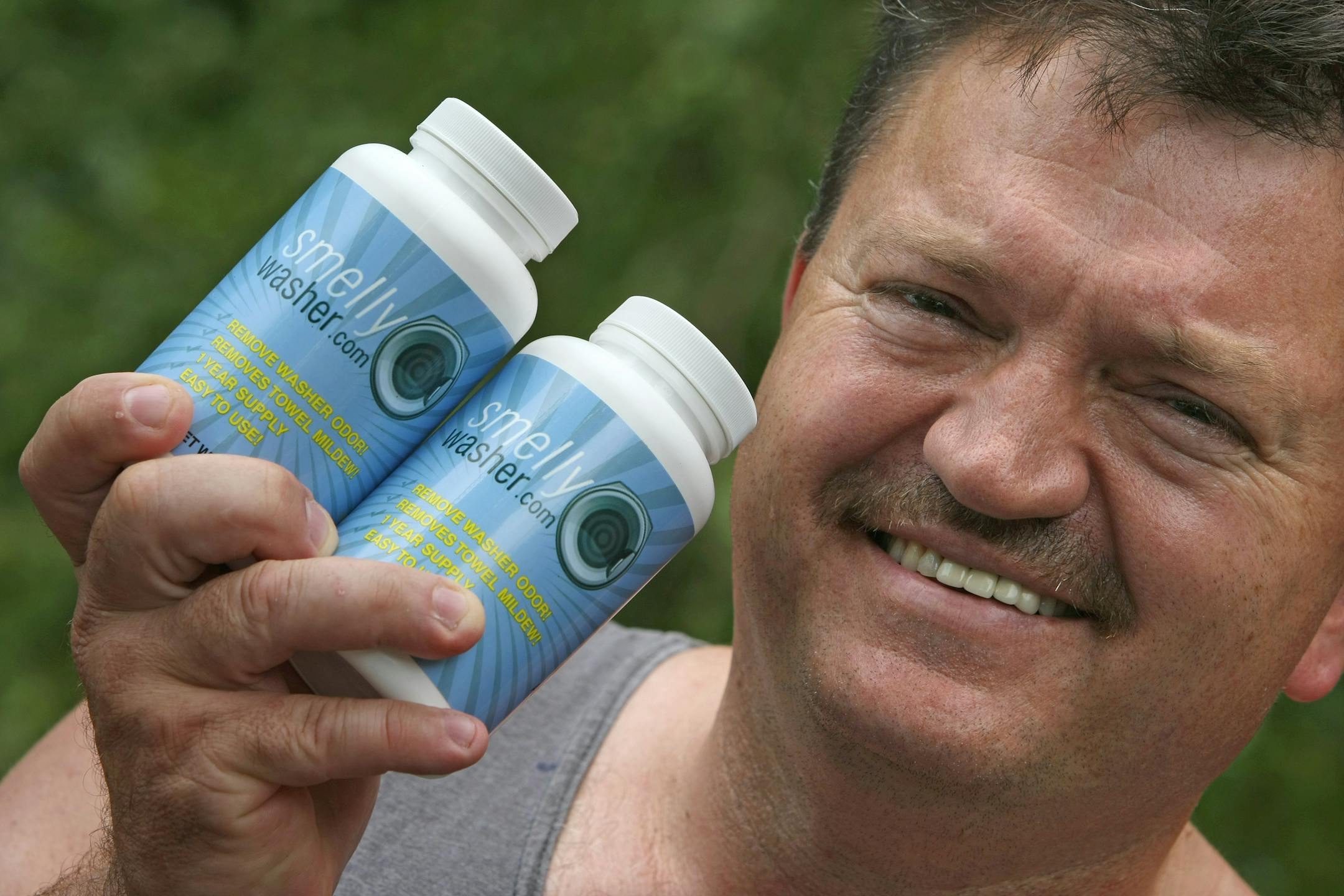
Appliance repairman Paul Flynn of Savage was getting calls from customers suffering allergic reactions to their foul-smelling front-loading washing machines. During nearly every $150 service call, Flynn found mold and mildew inside the inner tub.
Flynn got to thinking about his experience cleaning metal lathes and kitchen grills in the Navy, and in 2002 started working to perfect a granular, citrus-based product for washers. Since last year, Flynn has been selling SmellyWasher online, filling 75 to 100 orders a day for shipments worldwide. He's sold about 20,000 of the $16 bottles, enough to quit his job as a repairman.
But besides selling a product, Flynn also educates consumers about solving the problem before it occurs at his website, SmellyWasher.com.
"The whole reason this problem exists is the fault of the detergent manufacturers," Flynn said. "They tell us to use too much of their detergents."
Consumers who own front-loading washing machines should use only about one-quarter of the recommended amount of high-efficiency (HE), low-sudsing detergent. Standard, non-HE detergents in front-loaders are too sudsy.
Why don't top-loading machines have this problem? Less efficient top-loaders that use more water typically flush out excess suds, soil, detergent and fabric softener.
Class-action lawsuits against manufacturers such as LG, Whirlpool and Maytag have been filed, alleging mold and mildew problems in front-loading washers.
Some suits have been settled while others are pending, affecting hundreds of thousands of consumers, said Rob Shelquist, a partner at the Lockridge Grindal Nauen firm in Minneapolis.


