
Lieber: For Americans who have made a lot of money in the markets, it's a moment to share

Investing in the suffering people of Ukraine is one way to safeguard the future.

The New York Times
March 5, 2022 at 2:00PM
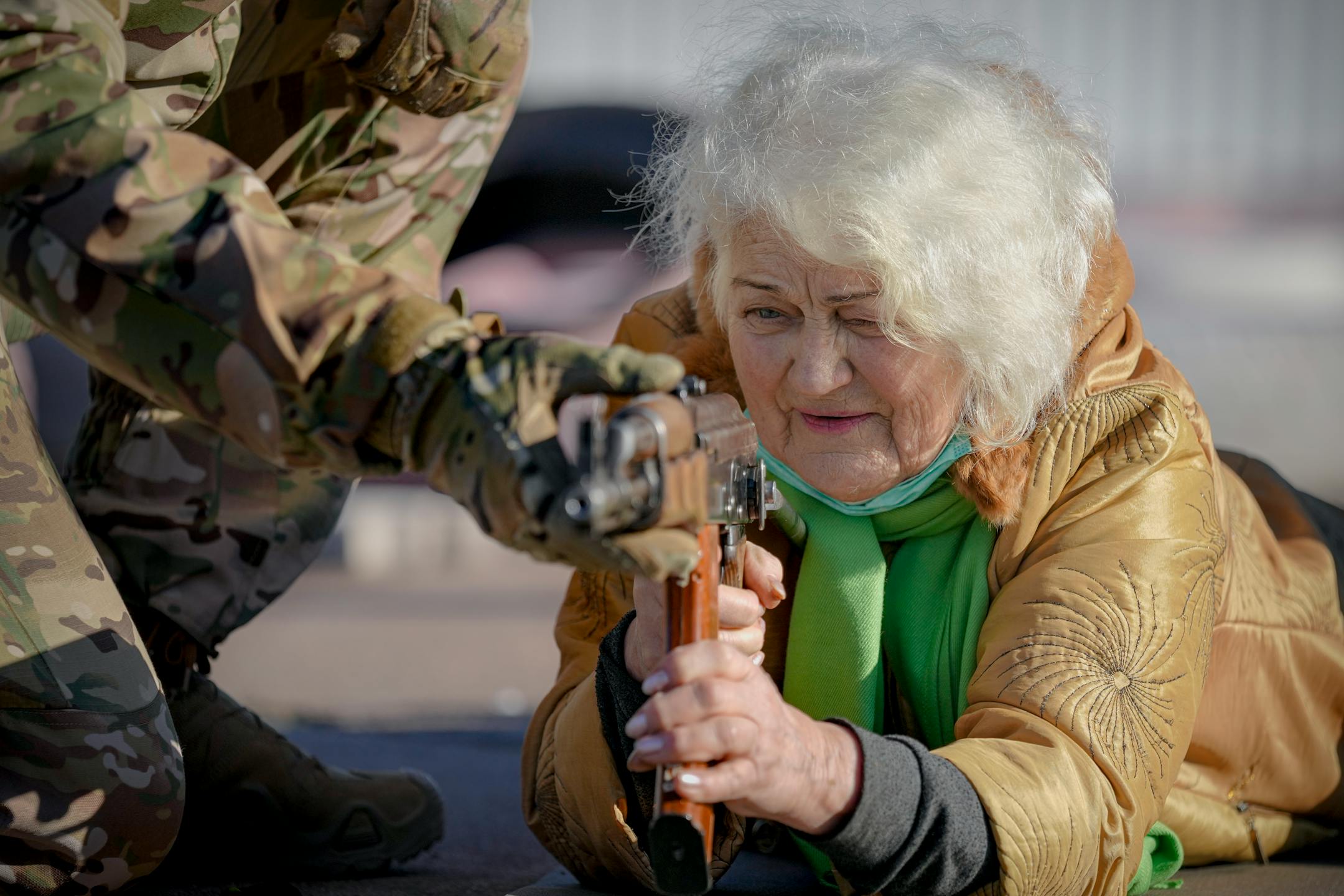
Valentyna Konstantynovska, 79, held a weapon during basic combat training for civilians in Mariupol, Ukraine, before Russia’s invasion began. (Vadim Ghirda | Associated Press/The Minnesota Star Tribune)

In the days since Russia's invasion of Ukraine, plenty of people have tried to predict what it will mean for gas prices or interest rates or your investments.

There is no harm or shame in this — not exactly, at least. Self-preservation — and its attendant instinct, wealth preservation — is an understandable impulse.

It is reasonable for prognosticators to try to settle people and markets down, even though forecasters regularly get it wrong.

But as with any act of military aggression that has the potential to rattle global finance, one immediate question ought to be this: Who is most likely to need help right away?

Chances are, it is the people who are taking shelter in subway stations or fleeing their homes.

If you are reading this, you are probably not among them. We are entering Year 3 of a global pandemic, but you are still alive, even if you may have lost people close to you. The job market is strong for those who want to work and feel safe doing so.

If you own a big, broad basket of U.S. stocks, they have risen about 40% in the past two years, even after the recent correction. If you own a home, those prices are up at least 20% — more than $50,000 for those at the median.

This is incredible. Your net worth may well be higher amid all the death that resulted from disease, and it could stay that way as Russia's invasion of Ukraine threatens to wreak havoc on global markets.

This is not a call for celebration but instead to marvel, briefly, that this may be your reality. And it is true that the ability to dig deep to help others depends in part on preserving what you have.

On the day Russia's invasion began last month, Michael Zawadiwskyi, a Ukrainian American financial planner, said he did talk a few clients out of the idea that they should sell various investments to shield themselves from potential losses. About half his clients share his roots.

But he did not get as many calls as you might have expected. Shared heritage aside, he and his clients subscribe to universal principles of sound financial planning.

They have their money in buckets of investments, some to use now and some for later. They are prudent about risk and diversification. They do not deviate from the plan unless radical changes in their own lives demand it.

And he knows his history. "I don't think war slows the economy down long term," Zawadiwskyi said.

If he and his clients are, for now, more worried about people than the prospects for their investments, you should consider a similar stance. After all, there is one thing that we can forecast with reasonable certainty in the short term: People will need help.

If you have lost little — and certainly if you have gained plenty — hark back to your own family's history of having been helped. Even if your ancestors were never officially refugees, they probably encountered hardship if they moved from country to country. It is an old story, with new protagonists each year.

For decades, Refugees International has focused on public policy and other initiatives that can ease their struggle. HIAS is another stalwart in this area that is sending money to Right to Protection, its Ukrainian partner. Other established nonprofits are likely to mobilize if the situation worsens.

You can donate appreciated stock to many charities and avoid paying capital gains taxes on those winnings. You can move a pile of securities into a donor-advised fund and spend it down over time while capturing any charitable tax deductions that you might be eligible for.

And if you have investment losses, deduct those if you can and imagine any tax savings as a subsidy toward generous donations.

Maybe the invasion will affect your retirement or the price to fill your SUV, and maybe it will not. But other people are suffering greatly right now. Investing in them is one of the best ways to answer the question of what you could do about Ukraine in the immediate future.

about the writer

about the writer

Ron Lieber

More from Business

See More
card image
Jeff Wheeler/The Minnesota Star Tribune

The 8,200-square-foot St. Paul property has been a single residence, shared living space and event center in its nearly 150-year history.

card image
card image