

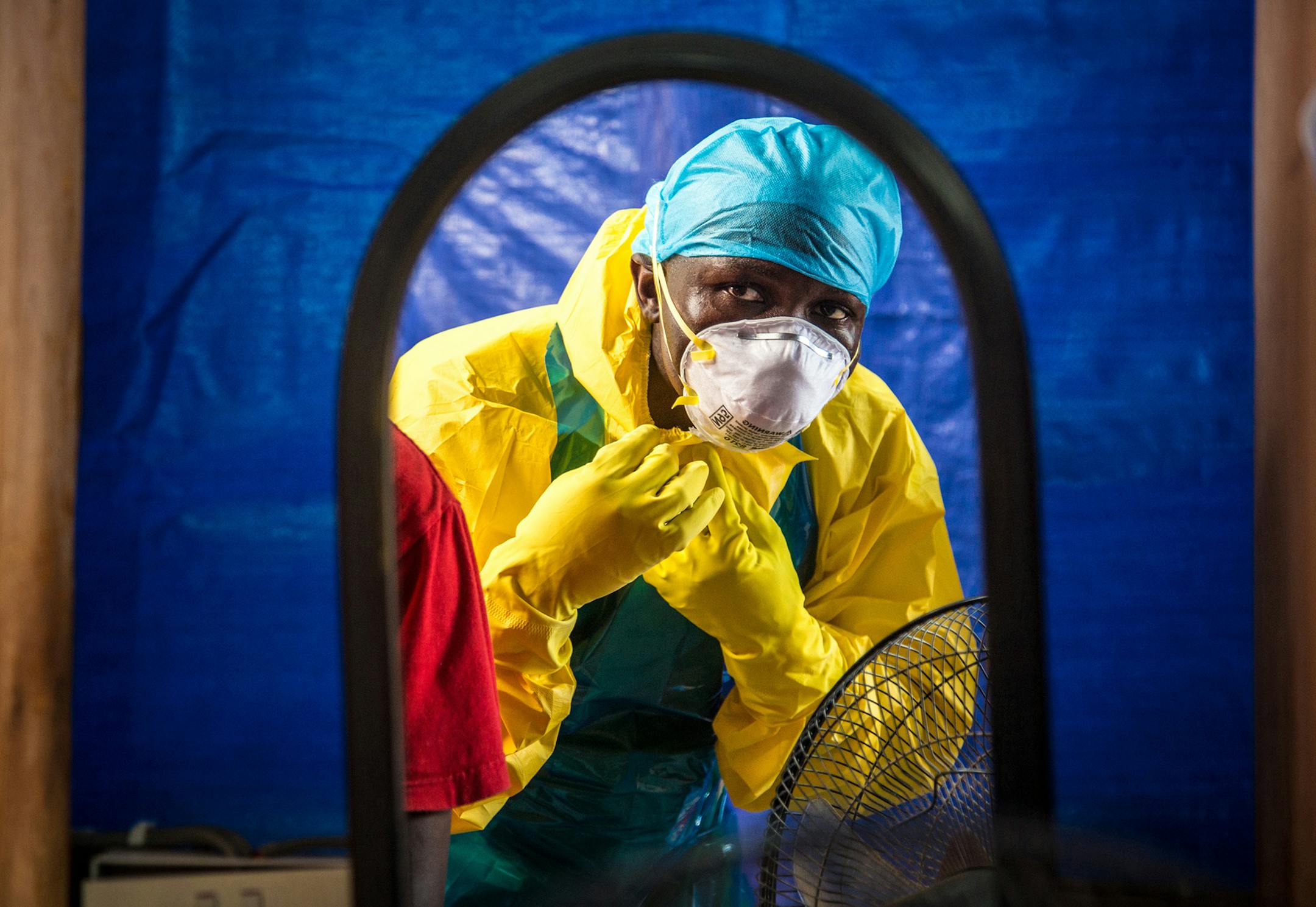
Remember Ebola?
Only two months ago, many Americans were gripped by fear of the uncontrollable spread of an apparently incurable disease that the Centers for Disease Control and Prevention projected could strike 1.4 million people in West Africa before it came under control. Amid such reports, it took only one case to touch off near-panic inside the United States: that of Liberian Thomas Eric Duncan after he was misdiagnosed by a Dallas hospital.
In the weeks that followed Duncan's death, state and local governments reacted — and sometimes overreacted. Schools barred teachers and children who had visited African countries that were nowhere near the epidemic. A teacher was put on leave because she had visited Dallas.
And then election-year politics kicked in.
Members of Congress, mostly Republicans, warned that Ebola could be carried into the country by illegal immigrants or even terrorists, and they demanded a ban on travelers entering the United States from the affected countries. Governors scrambled to draft quarantine regulations, producing a showdown between Gov. Chris Christie of New Jersey and a nurse he tried to confine to a tent. (The nurse won.)
And now? The crisis is all but forgotten. We've moved on. The epidemic is ebbing in Liberia, but still spreading in Sierra Leone. The World Health Organization estimates that there have been about 18,000 cases, including more than 6,300 deaths: tragic numbers, but far below the apocalyptic scenario once predicted.
Only four cases of the disease have been diagnosed in the United States, two of them in people who contracted the disease in West Africa. And we've learned that when Ebola is identified early, in a country with a functioning health care system, the disease is treatable after all.
"What's the one word you haven't heard a politician say since Election Day?" Democratic strategist James Carville asked me. "Ebola!"


