

It can be really bothersome to hear politicians lying. But sometimes it's more alarming to realize they may be telling the truth.
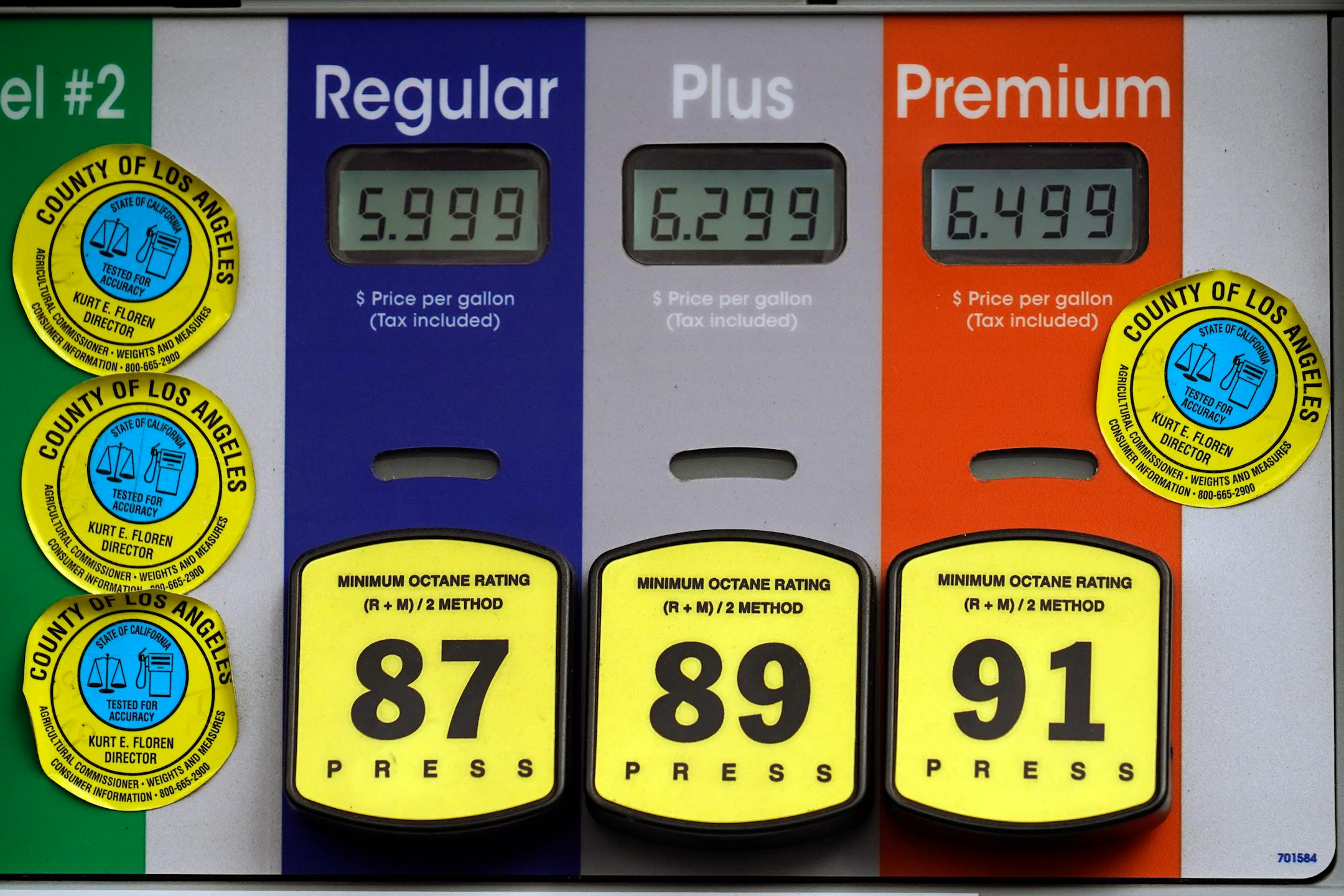
Last week, President Joe Biden sent a letter to the Federal Trade Commission complaining that "gasoline prices at the pump remain high, even though oil and gas companies' costs are declining." He wants the agency to investigate whether this discrepancy is the result of "anti-competitive or otherwise potentially illegal conduct."
The letter is part of a concerted effort by the administration and its allies to escape blame for painful fuel costs. Heather Boushey, a member of Biden's Council of Economic Advisers, said, "It's wrong to price gouge — especially during a pandemic where hundreds of thousands have lost their lives."
The idea that rapacious oil executives dictate the price of gasoline is one of those delusions that arises only when prices rise. If the myth were true, prices at the pump would be high and stay high month after month and year after year.
In reality, a graph of gas prices over any extended period is not a straight line. It looks like a map of a squirrel scurrying about the yard, with frequent zigs and zags and no discernible logic. Sometimes gas prices go up, and sometimes they go down. These shifts can be sudden and sharp.
Saying that gas prices have gone up because oil companies are colluding is like saying that home prices have gone up because real estate agents decided they wanted to make more money.
If oil companies are so powerful, why is the price of gas today far below what it was in 2008, when the national average hit a record of $4.11 a gallon — the equivalent of $5.28 in today's dollars? Why didn't the CEOs just keep it there?
The pandemic has been hugely disruptive to a broad range of goods and services. But no one was holding a charity fundraiser for ExxonMobil in 2020, when it recorded a loss of $22 billion courtesy of low oil and gas prices.


