Leonard Peltier, now mostly free, navigates a new life on the outside

The 80-year-old AIM activist is learning who to trust and rebuilding relationships after 50 years in prison.

The Minnesota Star Tribune
August 20, 2025 at 10:00AM
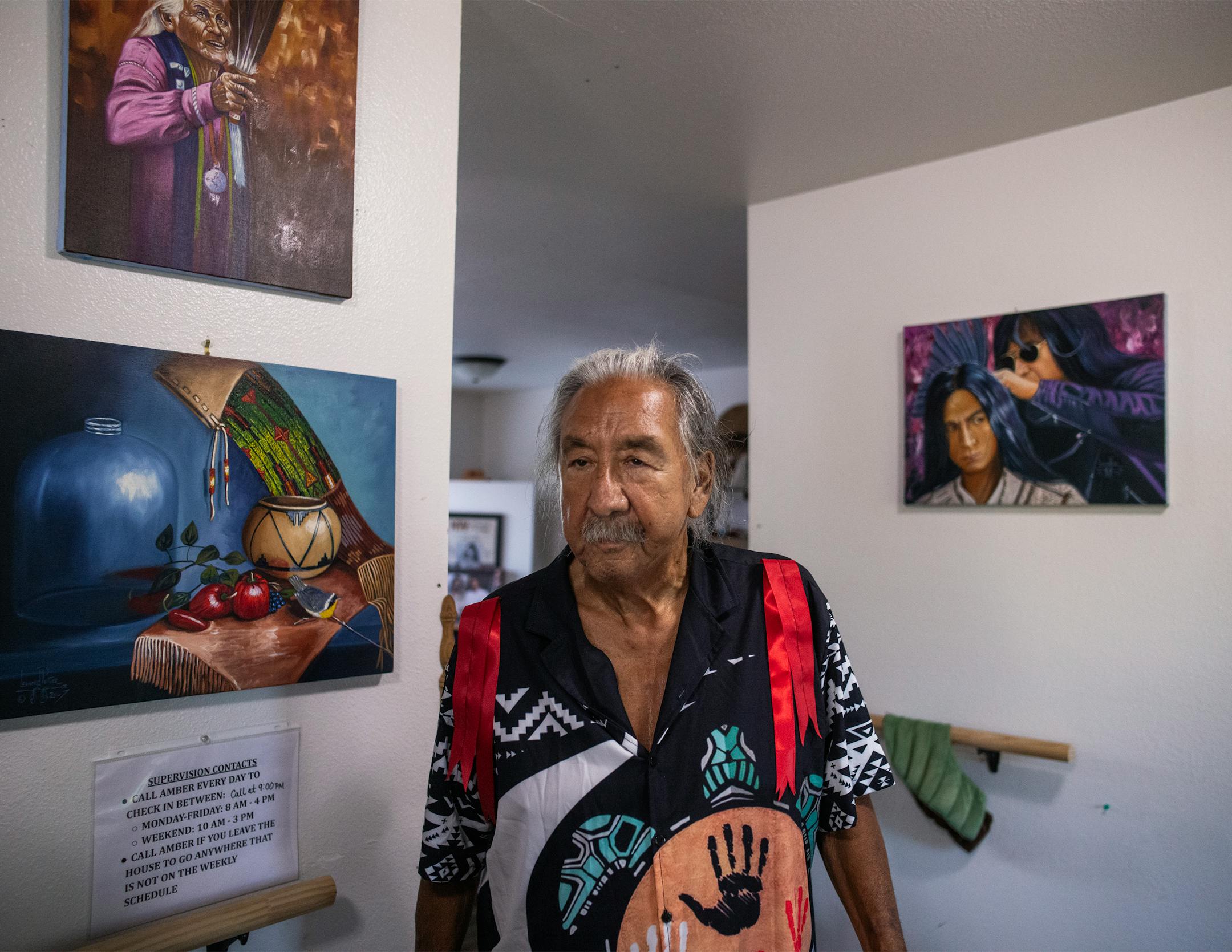
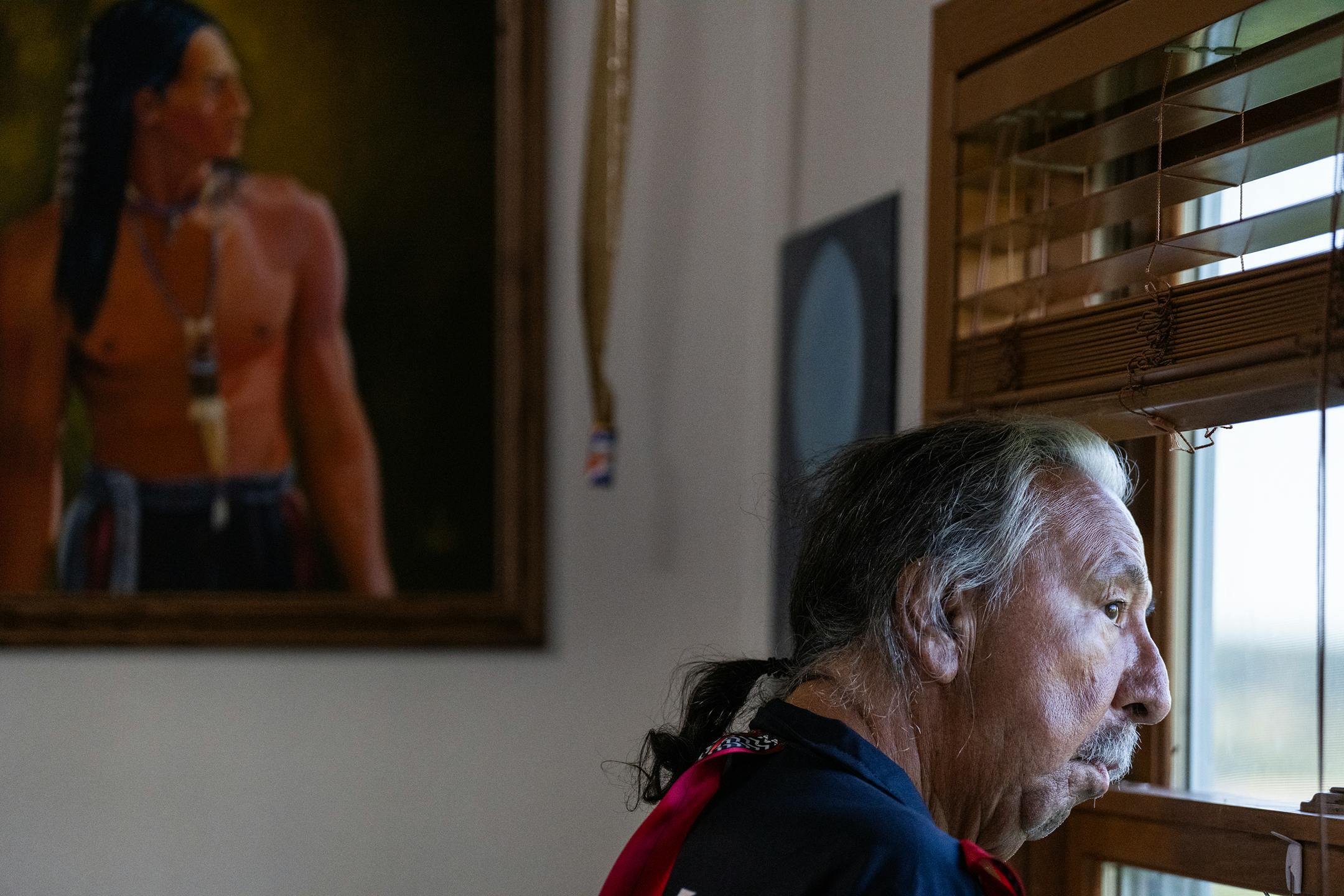
Leonard Peltier, under supervised release, at his home in Belcourt, N.D, on Saturday, with one of his paintings hanging on the wall. (Richard Tsong-Taatarii/The Minnesota Star Tribune)

BELCOURT, N.D. - It’s been six months since Leonard Peltier walked out of prison, and the first family reunion he could attend in 50 years went on without him over the weekend.

Relatives expected him, and said they were disappointed the 80-year-old patriarch didn’t show. Instead, Peltier nostalgically cruised the Turtle Mountain Indian Reservation, telling stories about pretty girls and fast cars. He got takeout chicken, watched CNN and called Willie Nelson’s ex-wife to catch up.

A few miles down the road, relatives from across the country shared a potluck and played games. Peltier drove past the gathering and didn’t stop. Family called him on speaker phone and delivered him plates of food.
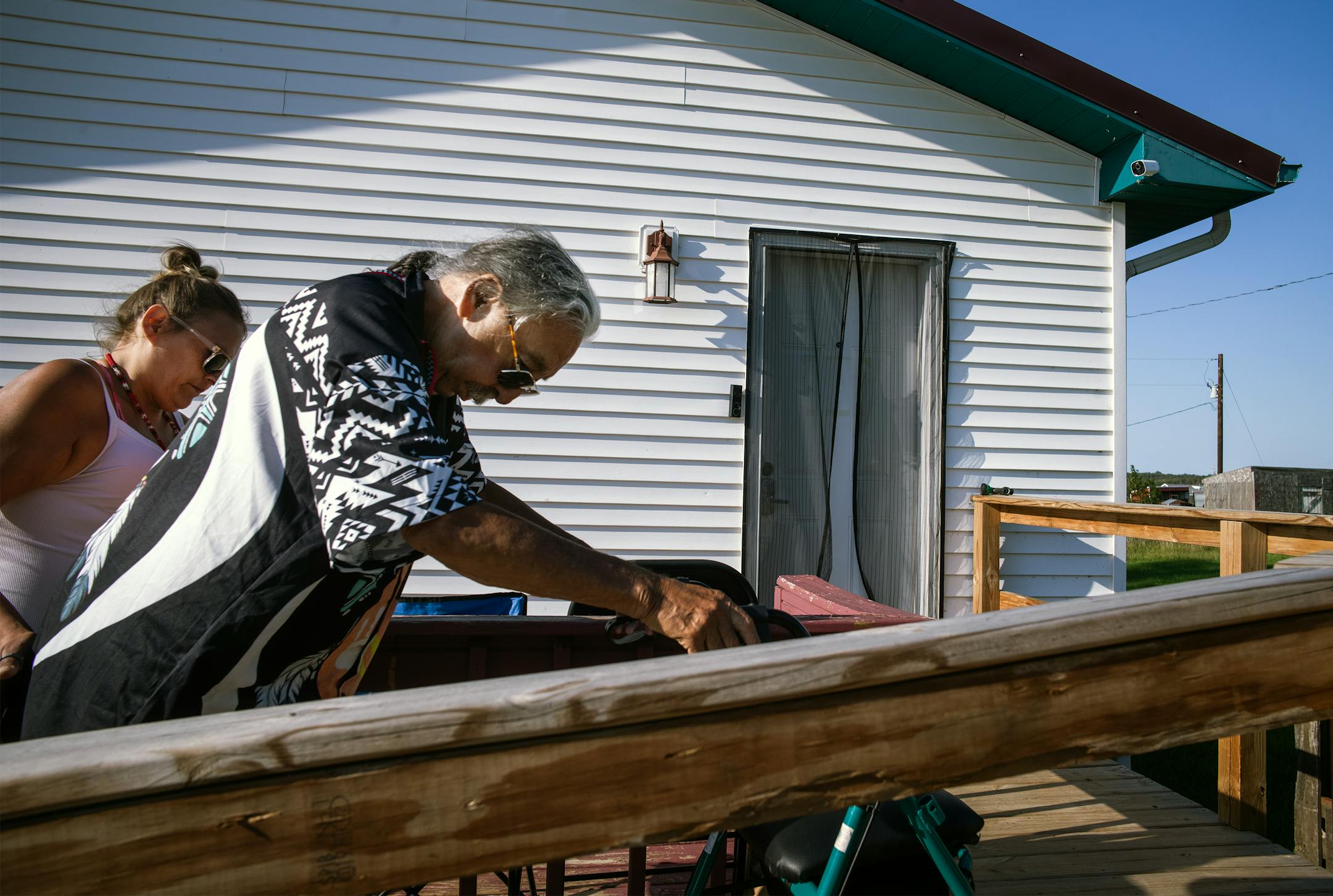
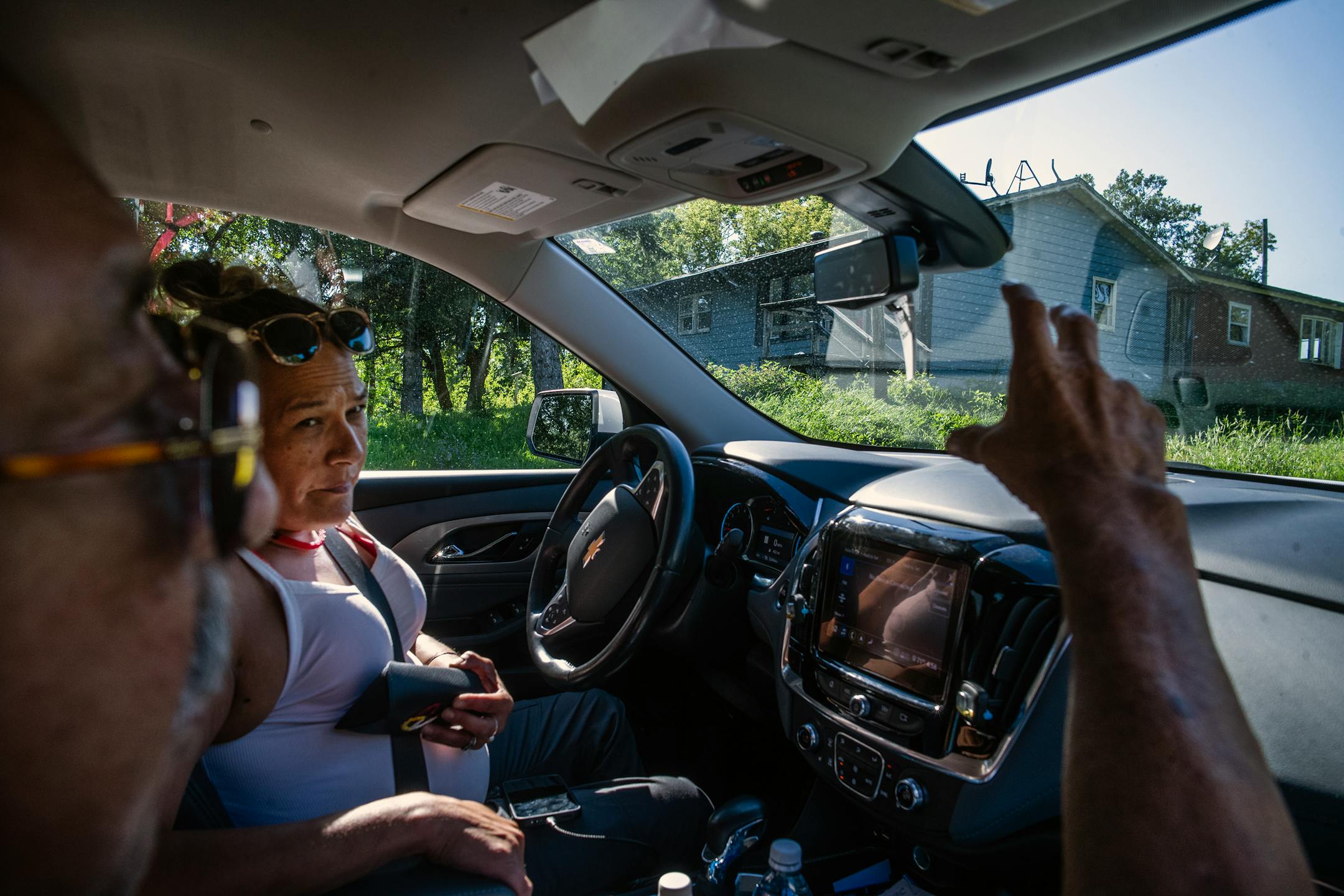
Leonard Peltier heads home with the help of caregiver Misty Vallie in Belcourt, N.D. He has 24-hour home health aides to cook, check his blood sugar, give him medication, make meals and drive him around because he's partly blind. (Richard Tsong-Taatarii/The Minnesota Star Tribune)

The American Indian Movement (AIM) activist said he didn’t attend “for personal reasons.” Accusations of theft have caused a rift between him and a sibling. Peltier is also in pain from a recent fall at home and needs a walker again after regaining enough strength to ditch his cane for a time.

He is aging, partly blind and navigating a completely different world than the late 1970s, when he received consecutive life sentences for the killings of two FBI agents. Like in prison, he is learning who to trust. He sees people didn’t forget him like he feared. In fact, there’s a premium on his name, image and likeness. People want to write books, make documentaries, have him appear at events.

Peltier continues his activism, as much as an octogenarian can. He wants to rename AIM the American Indigenous Movement, and said his biggest concern in Indian Country is an epidemic of overdoses and addiction exploited by drug traffickers.

“Everybody thinks because I’m out, I’m going to be the savior and know how to stop all that stuff,” he said. “There’s only one way I can think of, and I don’t want to be a serial killer. No, I don’t want to be a killer period.”

Controversial release

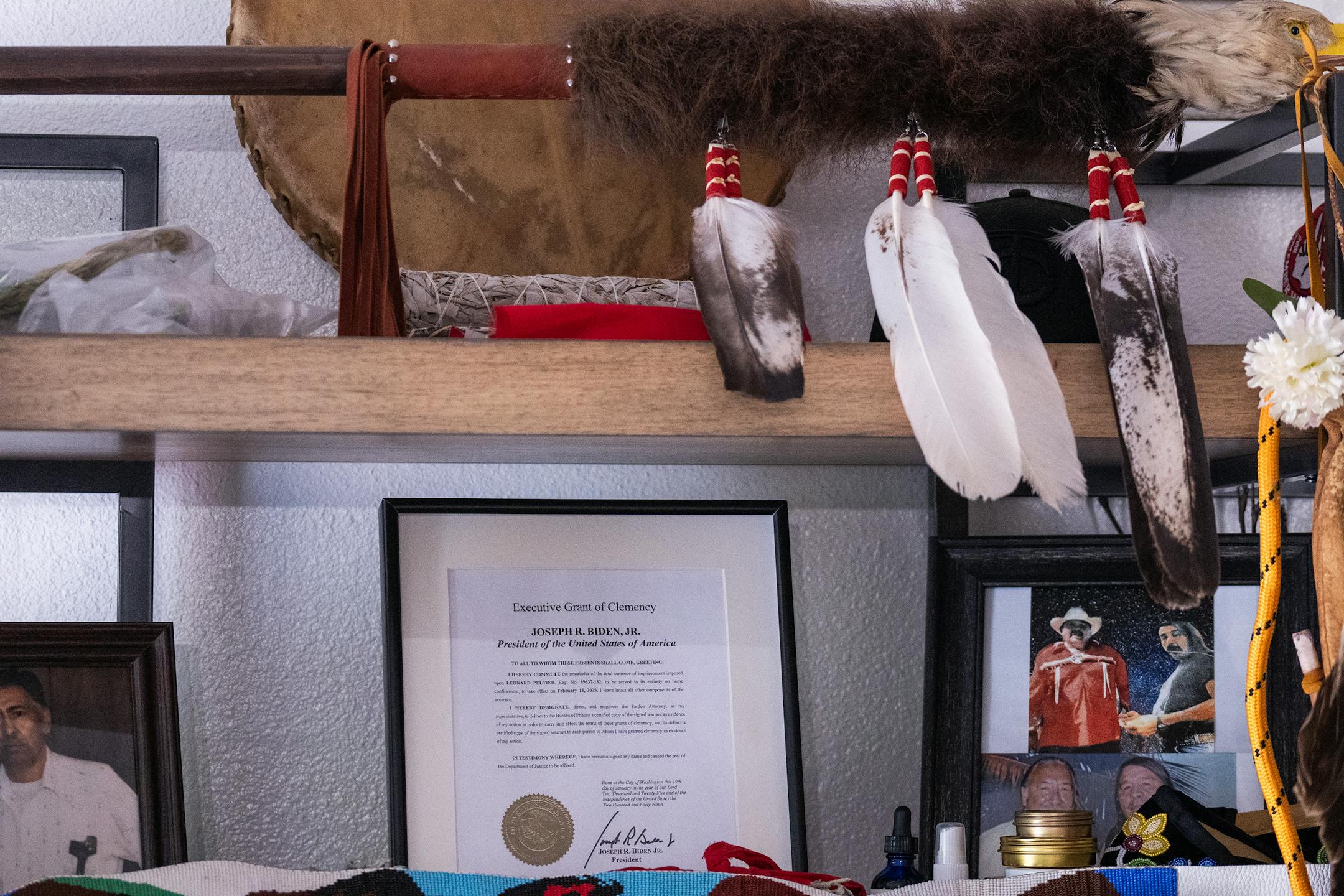
In a surprise move, ex-President Joe Biden granted Peltier clemency to indefinite house arrest in the last days of his presidency. It doesn’t erase his conviction, later reduced on appeal from murder to aiding and abetting murder.

People either think Peltier is “the epitome of evil,” as FBI Director Kash Patel called him, or a political prisoner symbolizing the injustice done to and resistance of Native Americans. Not all in Indian Country celebrated his release, namely the family of murdered AIM member Anna Mae Aquash, who remain suspicious of Peltier.

Aquash’s killing and the FBI shootout that killed agents Jack Coler and Ronald Williams took place on South Dakota’s Pine Ridge Indian Reservation in 1975. Peltier has maintained his innocence, but believed he would die in prison.

“It’s like dying and going to heaven,” he said of being home. “I’m out of that hole. I’m out of that dungeon. I’m out of that, I don’t know what else to call it but hell.”

Yes, he’s free, he said, “to a certain extent.”

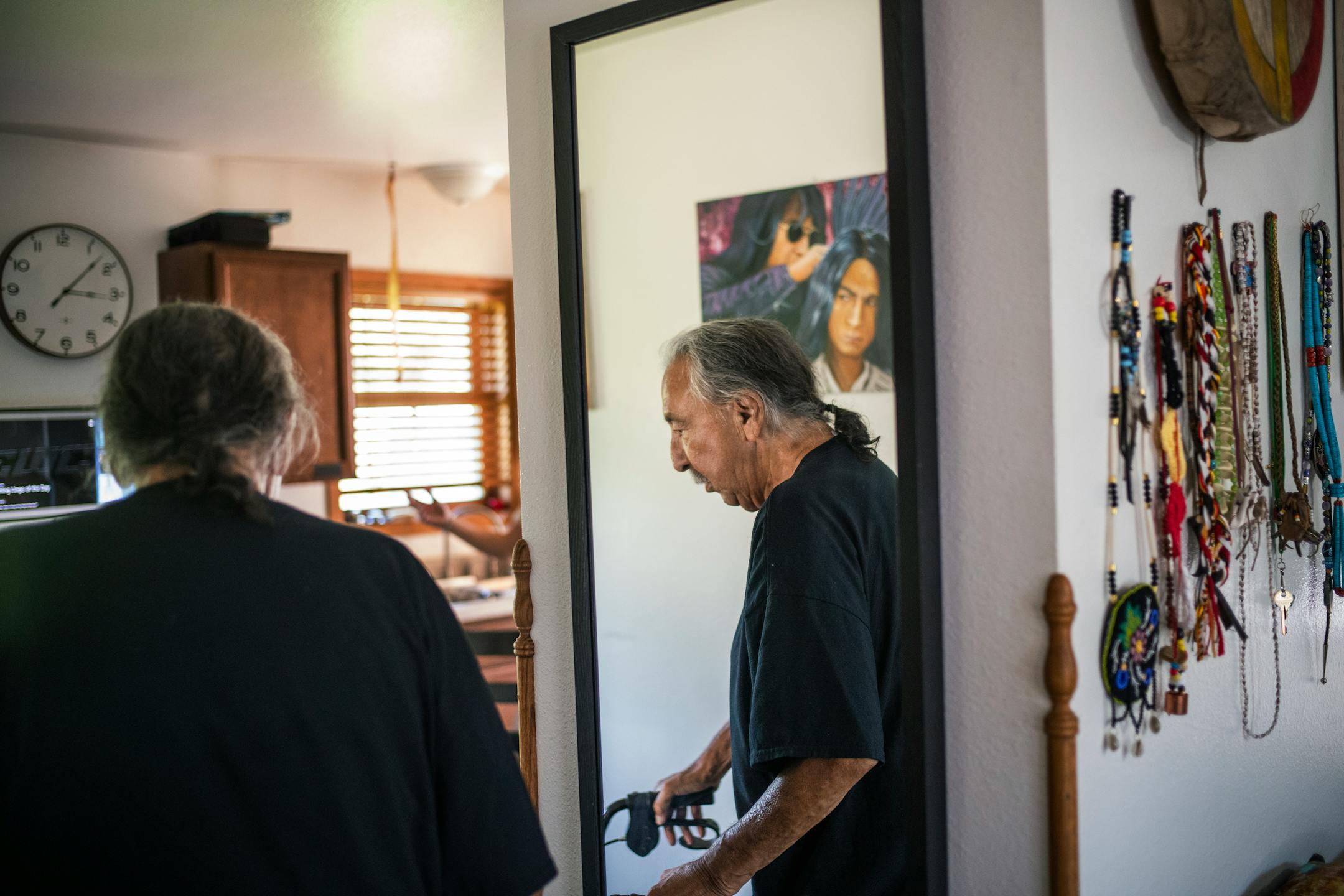
Leonard Peltier among his paintings at his home. (Richard Tsong-Taatarii/The Minnesota Star Tribune)
Peltier keeps a copy of his commutation by President Joe Biden. (Richard Tsong-Taatarii/The Minnesota Star Tribune)

Rules of home confinement restrict Peltier’s travel to a 100-mile radius for errands and doctor appointments. Beyond that, he needs a furlough pass.

He got one earlier this summer to attend a sun dance ceremony on Pine Ridge. Peltier returned to say prayers and give tobacco.

“It brought all that belief back to me. Restored everything,” he said. “Back to where I was before I went to prison.”

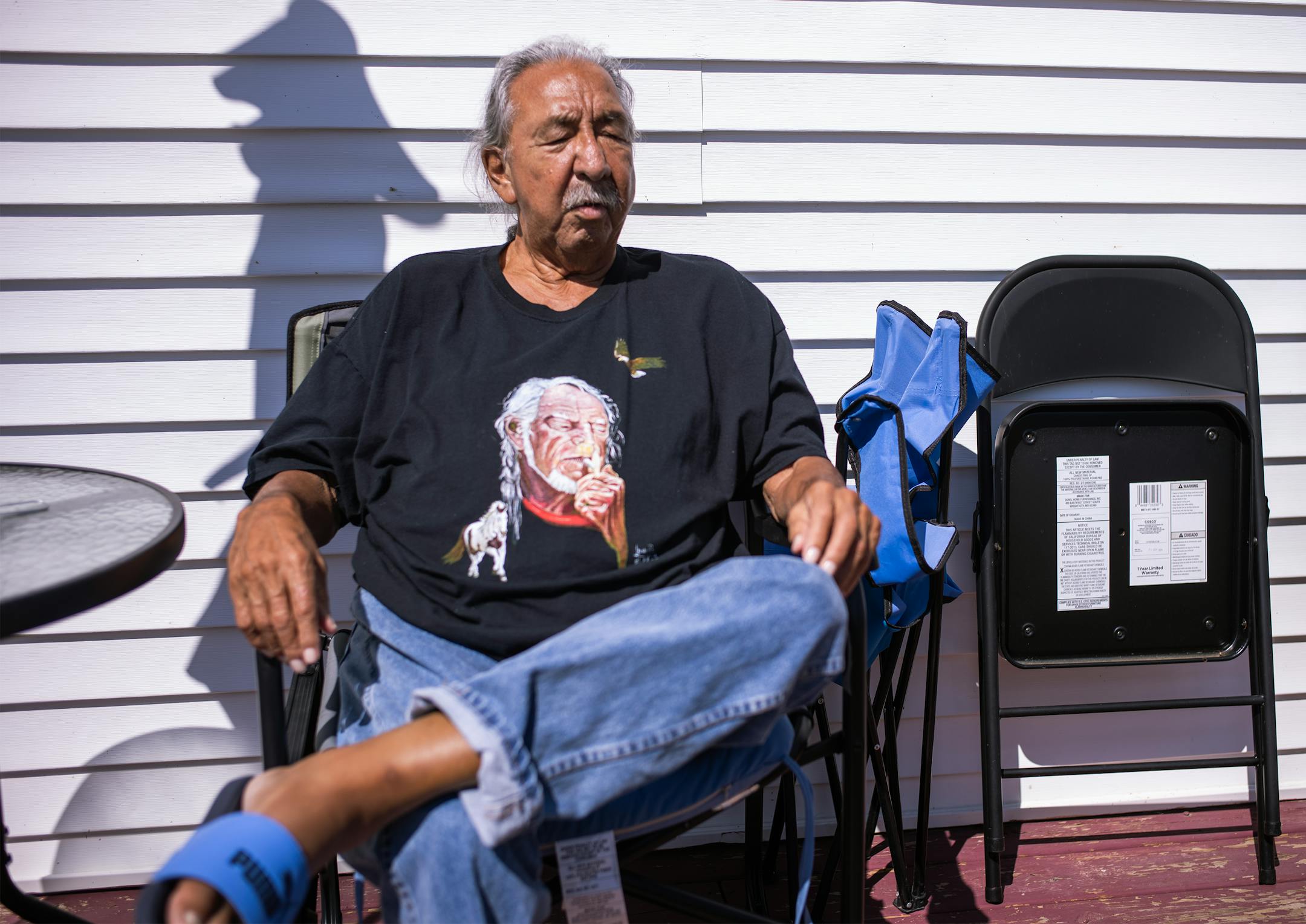
Peltier spends a lot of time sitting in the sun outside his home. (Richard Tsong-Taatarii/The Minnesota Star Tribune)

So many visitors

Much of his time is spent on his porch, shirtless and catching a tan.

Visitors drop by from across the country for coffee. They laugh and cry, overwhelmed that he’s out after decades of unanswered pleas for his release, from the pope to Mother Teresa.

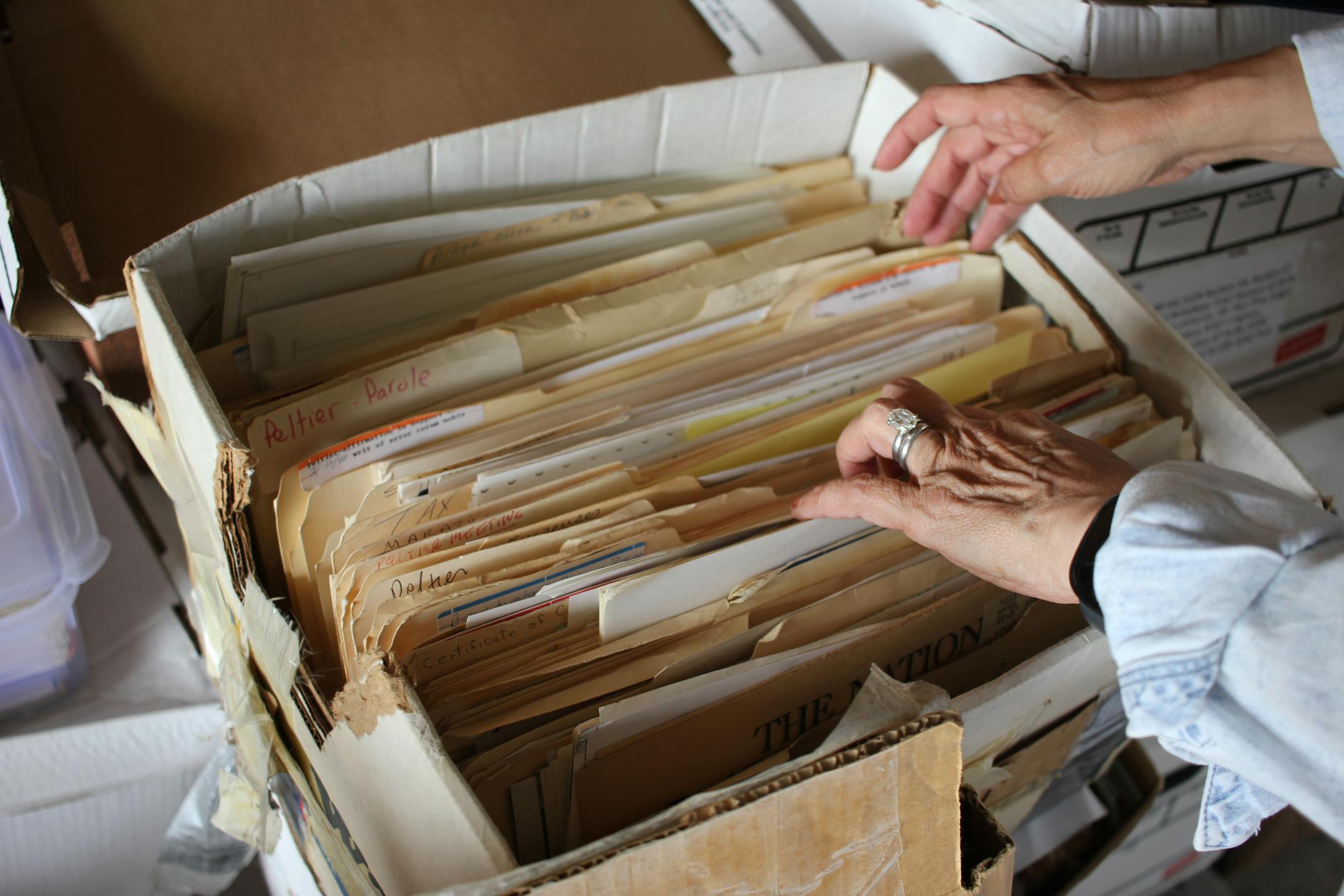
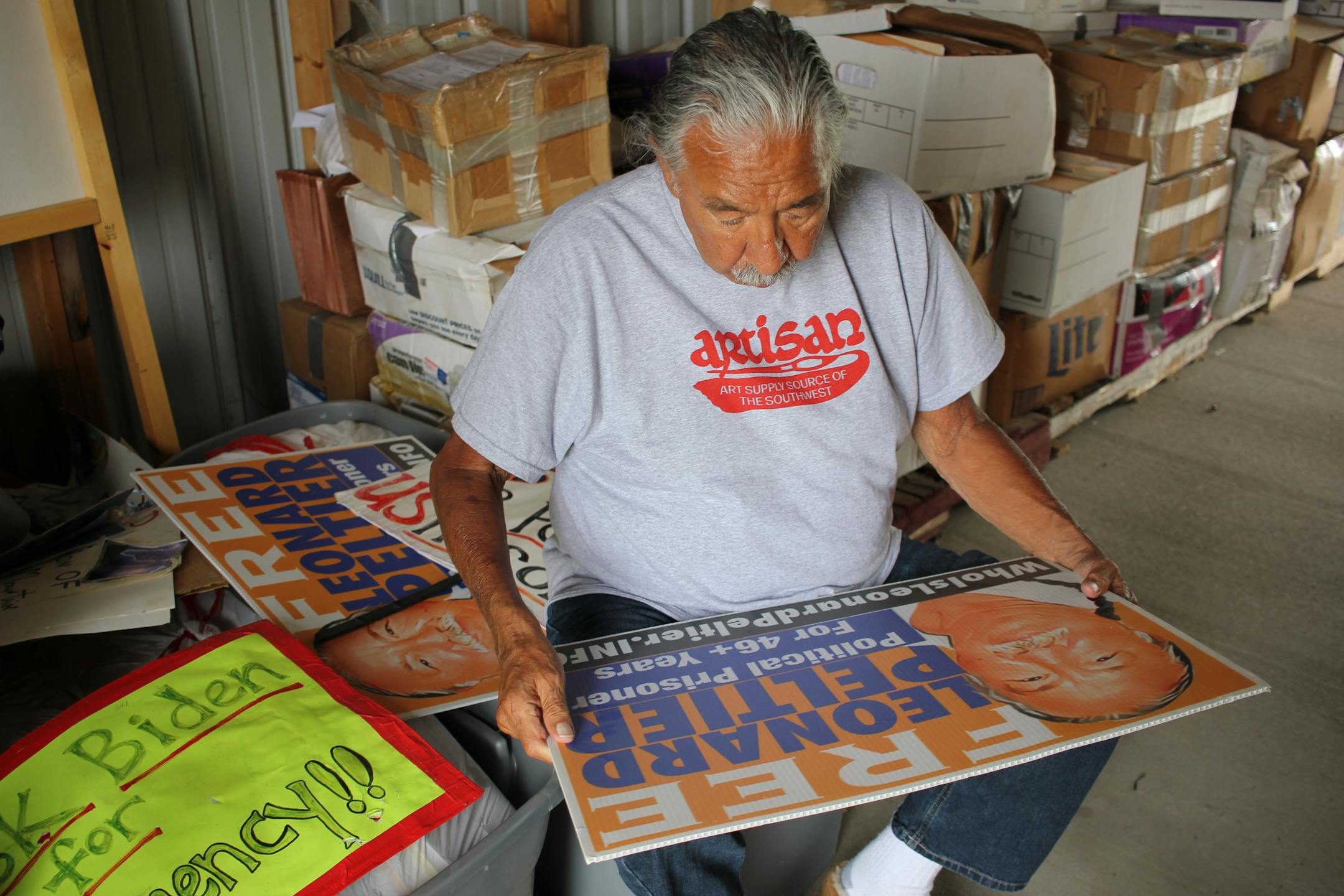
Denied clemency and pardon requests fill dozens of boxes stacked in his garage. They contain FBI interviews and court records spanning his 49-year fight. Archivists will work to preserve the documents, said Holly Cook Macarro, a lobbyist who helped push for Peltier’s commutation and continues overseeing his media relations. She said some 400 pounds of his mail stored in prison made it to Belcourt.

Holly Cook Macarro, who works as a tribal liaison and advocated for Leonard Peltier's release, looks through documents collected throughout Peltier's incarceration in June. (Kim Hyatt/The Minnesota Star Tribune)
Decades of clemency and pardon requests, FBI interviews, and hundreds of pounds of fan mail from his nearly 50 years of incarceration are stored in Peltier's garage. (Kim Hyatt/The Minnesota Star Tribune)

Macarro of Red Lake Nation worked with NDN Collective, an Indigenous rights organization based in South Dakota, to achieve clemency.

“We built on decades of work that people had done. We were, I think, in the right place at the right time to help bring it across the finish line,” she said.

Her husband is the president of the National Congress of American Indians. Deb Haaland, the first Indigenous Cabinet secretary to serve under Biden, was a big supporter. (Haaland’s 2026 campaign poster for New Mexico governor hangs in Peltier’s bedroom.)

“I got a beautiful home [NDN] bought me,” Peltier said. “A nice, big yard. ... Lots of visitors. They all come and always offer me something, whatever I need.”

He still has nightmares that he’s back in prison and battles paranoid thoughts. He soon will install a security fence. He wants two German shepherds. More than anything, he wants a companion. He’s always teasing and flirting with women.

“I figured the right one will come along eventually, hopefully not too long. I am 80,” he said. He turns 81 on Sept. 12.

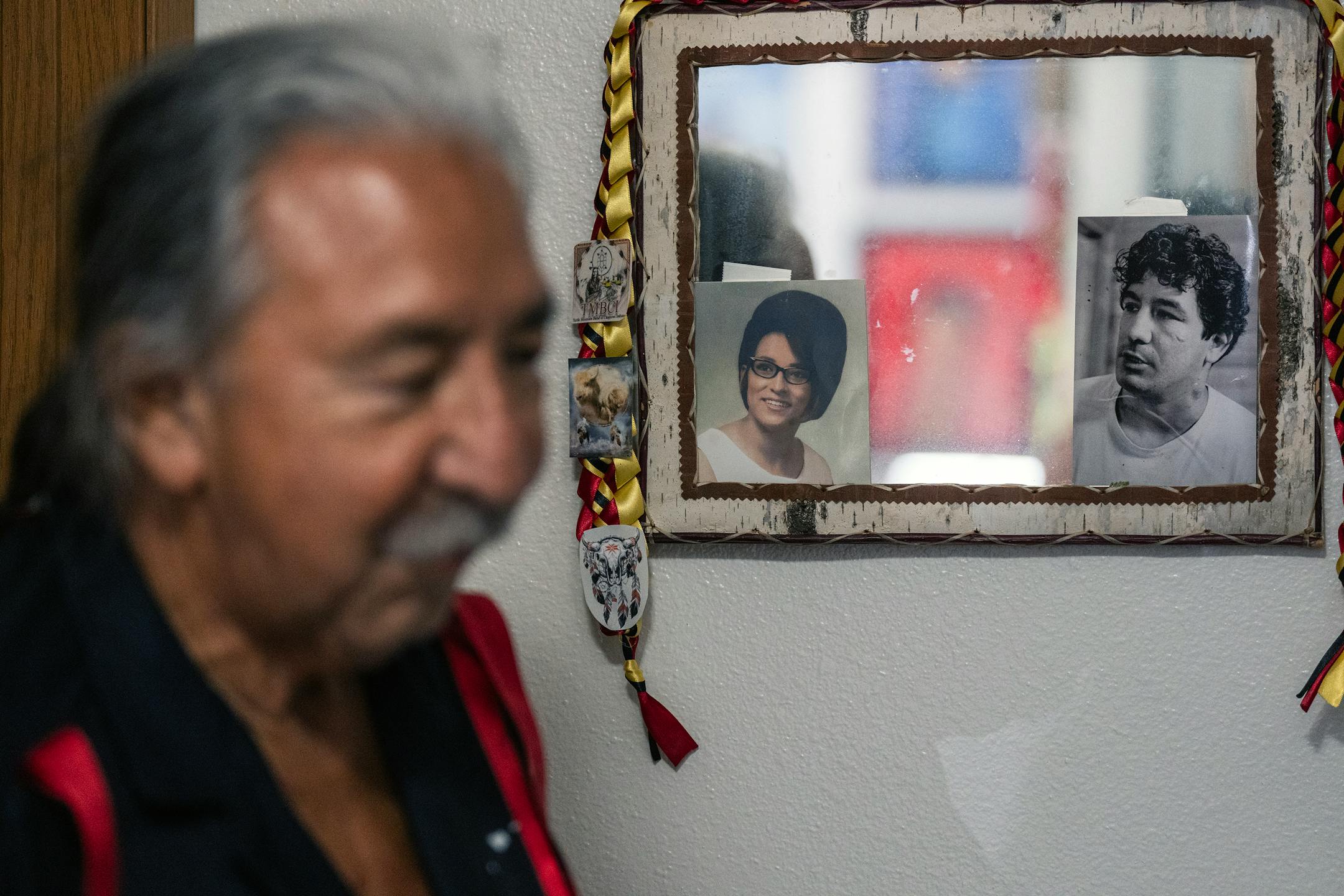
Peltier with a photo of himself as a young man in Seattle, and Sandra Martinez, the mother of his first child. (Richard Tsong-Taatarii/The Minnesota Star Tribune)

Reunification

His absence at the family reunion reopened fresh wounds for relatives who got little access when he was released.

On that bitter cold homecoming Feb. 18, hundreds of relatives and activists greeted him as he crossed the reservation line for a celebration at the casino. Everyone wanted a moment, a photo, to give him a quilt or tobacco.

Family say they know that Peltier doesn’t just belong to them, but the world. Still, many felt sidelined then — and now.

He told one of his daughters to not come to North Dakota for the reunion. Stubborn like her father, Marquetta Peltier, 52, hopped on a bus from Kansas anyway at the insistence of other relatives that she be there and see her dad.

“We have to forgive and move forward. We’re repairing 50 years of damage to our family,” she said. “It’s going to take time.”

She was a baby when her dad went to prison. After he was moved to the Leavenworth penitentiary in 1985, she moved to Kansas to visit often. Then he was moved to Florida, and visits were harder.

“Now I get to spend the rest of our lives together,” she said, adding that she plans to move to North Dakota to be near him. “As a daughter, all I ever wanted was my dad.”

Leonard Peltier’s other daughter is dying from years of alcohol and drug abuse, which he described as “infuriating.” He’s visited her in the hospital several times since his release.

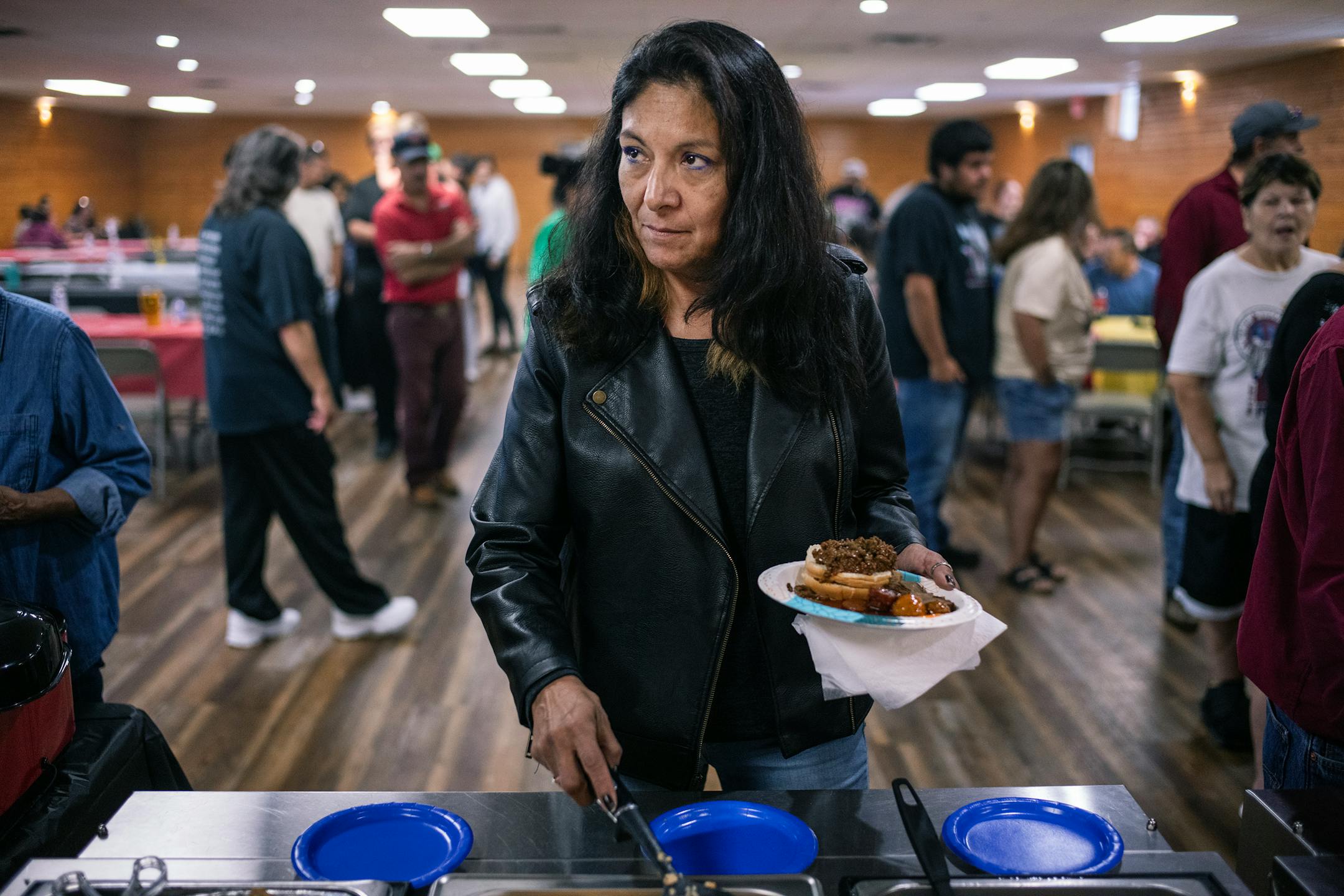
Marquetta Peltier, daughter of Leonard Peltier, gets some lunch during the Peltier family reunion in Belcourt, N.D., on Saturday. (Richard Tsong-Taatarii/The Minnesota Star Tribune)
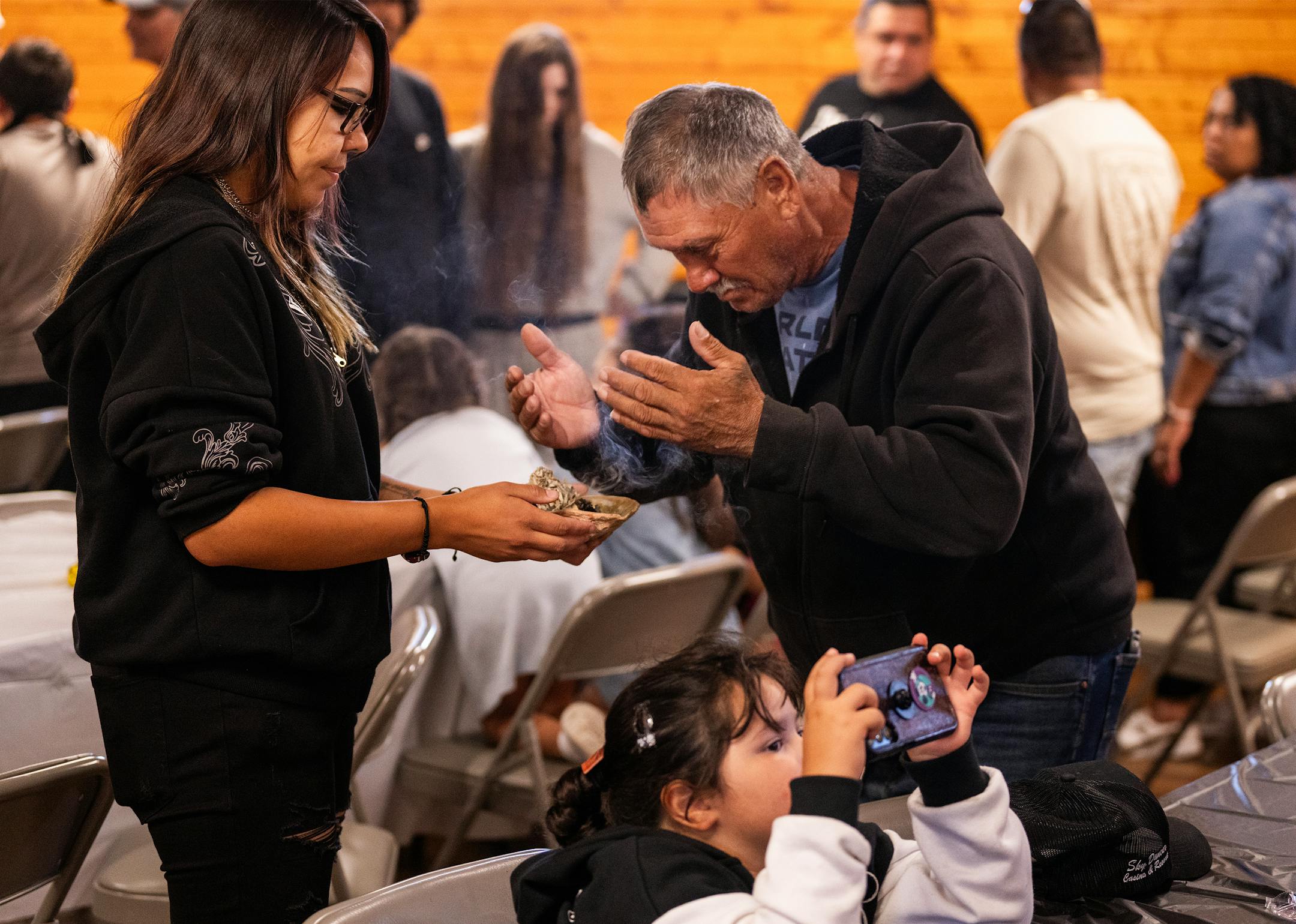
People were welcomed to the Peltier family reunion with a sage ceremony. Leonard Peltier did not attend. (Richard Tsong-Taatarii/The Minnesota Star Tribune)

Other relatives moved to Belcourt to care for Peltier, only to be cut off. Some say they won’t return again until Peltier’s funeral.

“He’s my uncle. I still love him. Family’s family. But I won’t come back,” said Pamela Bravo of Washington, who felt activists and documentary crews pushed family away at Peltier’s homecoming.

Cousin Bev Moronez, of Fisher, Minn., said each visit with Peltier brings more understanding of his perspective: his stolen childhood in boarding school, his stolen health while incarcerated.

“He wasn’t getting the medical care that he needed, and that’s kind of hard to see someone deteriorate,” she said.

Since his release, he’s had several eye surgeries, to no avail. He hopes the Mayo Clinic can improve his vision so he can drive again and paint.

His house is filled with his paintings, which can sell for thousands of dollars. His art behind bars helped pay for his legal defense fund, but he hasn’t painted for five years, his acrylic paints and brushes untouched in a corner of the living room. He said he dreams of turning his garage into an artist studio.

When traveling on familiar roads with home health aides behind the wheel, he can sense when they’re approaching his childhood home or the swimming hole he played in as a kid.

“Even though I’m half blind I still recognize it,” he said.

Peltier points out where the old log cabin of his childhood used to be, with no running water or electricity, while on a ride with caregiver Misty Vallie. (Richard Tsong-Taatarii/The Minnesota Star Tribune)

Where white buffalo roam

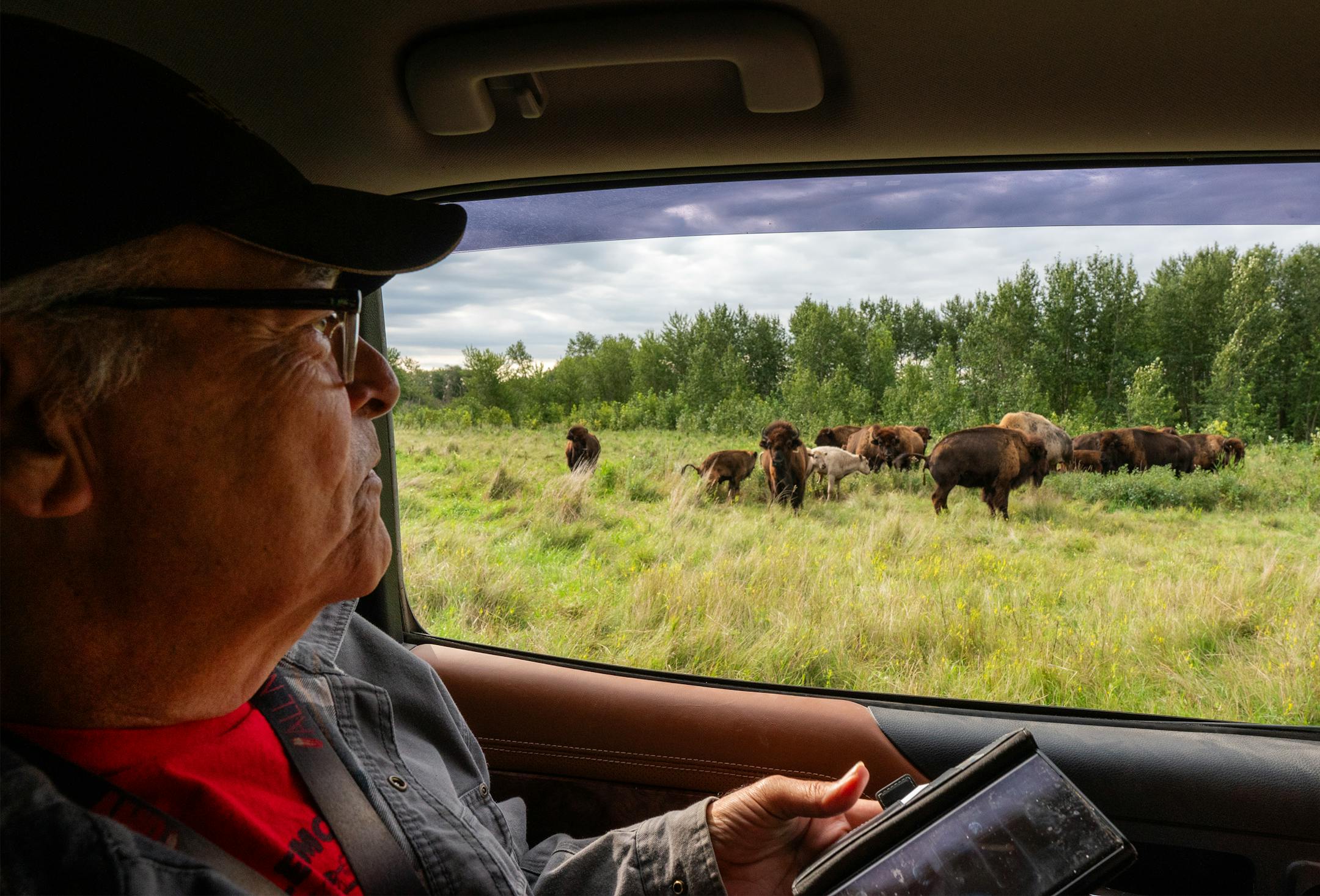
A herd of rare white buffalo roam in Peltier’s backyard, but he can’t see them in the distance.

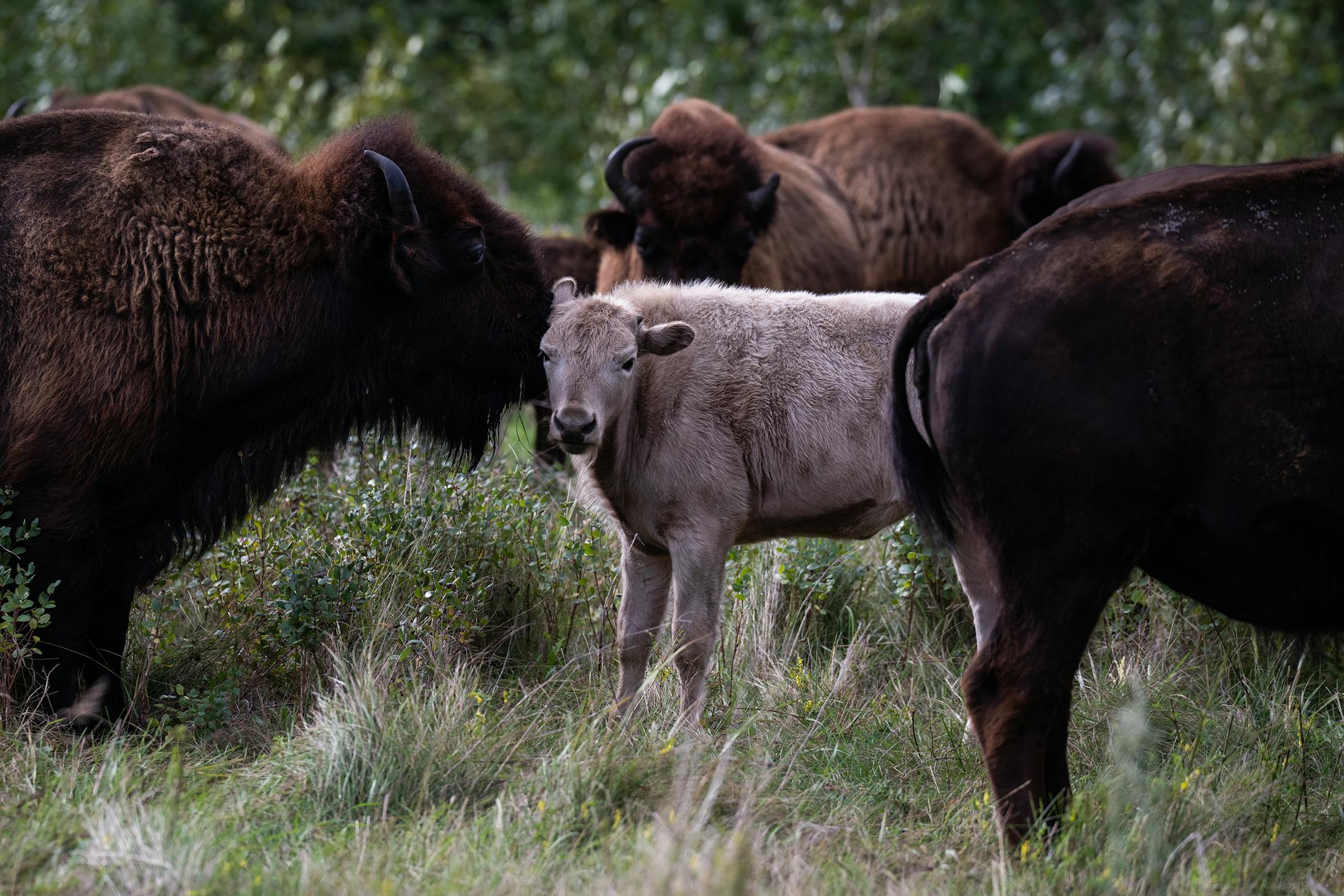
White buffalo, a symbol of hope and restoring spirituality, are deeply sacred in Native American culture, prophesying good things. One in every 1 million buffalo calves is white. A baker’s dozen were born on Turtle Mountain in the last few years before Peltier’s release, so many that several were given to other tribes, like Red Lake Nation.

Ask about the white buffalo and Peltier’s fading eyes twinkle.

“Whatever great mystery, you know, something’s happening,” he said. “So I feel honored that this happened. ... It’s a big, big honor for us as a Native nation to have the white buffalo.”

He recently took photos with them to make prints, with plans to sell them like his paintings.

A white buffalo calf is considered a sacred member of the Turtle Mountain Reservation herd. This one is shown in August in Belcourt, N.D. (Richard Tsong-Taatarii/The Minnesota Star Tribune)
Elder Andy Laverdure visits Turtle Mountain’s buffalo herd, which includes white calves. (Richard Tsong-Taatarii/The Minnesota Star Tribune)

Andy Laverdure, 71, a respected elder and tribal judge whose spirit name is White Buffalo, said Peltier is his friend, but it’s a stretch to say the births foretold his return.

Turtle Mountain, he said, is the heartbeat of Turtle Island, aka North America. It’s the geographic center visible from satellite.

The Creator sees the damage done by boarding schools, the dysfunction of substance abuse, lying, stealing and “not trusting each other,” he said, “and tearing families apart.”

“It brought them here because they want to save us, and Creator wants us to live. That’s why the buffalo are here,” he said.

“Bringing Leonard home is healing. ... But it’s bigger than that.”

Peltier heads outside for some sun. (Richard Tsong-Taatarii/The Minnesota Star Tribune)
about the writer

about the writer

Kim Hyatt

Reporter

Kim Hyatt reports on North Central Minnesota. She previously covered Hennepin County courts.

See Moreicon

More from News & Politics

See More
card image
Renée Jones Schneider/The Minnesota Star Tribune

Her pause comes a few days after she went on TikTok and called Trump supporters “cult members.”

card image
card image